An essay by Father Matthew Hartley
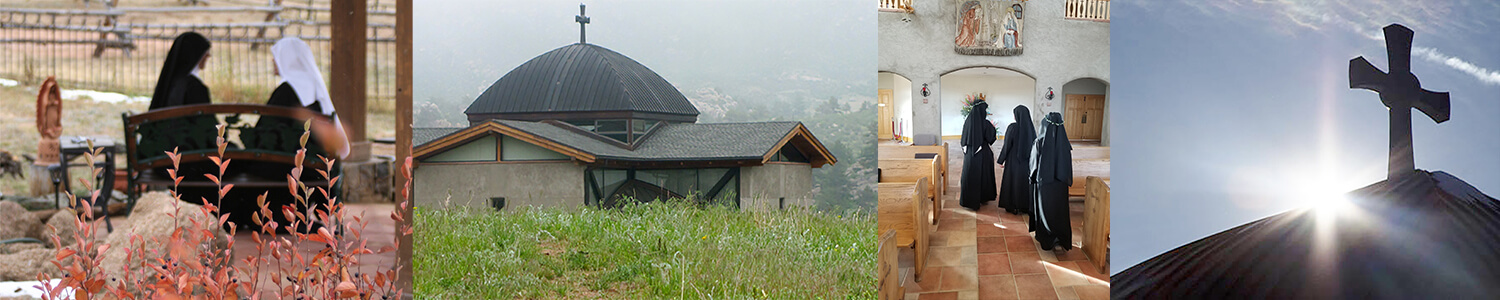
The Congregation for Institutes of Consecrated Life and for Societies of Apostolic Life says that the nuns witness to the Church as the Bride of Christ, “rediscovering themselves individually in the spousal dimension of the wholly contemplative vocation.”[1] They have turned away from the noise, the endless distractions, and vanities of the world to hear the words of love from their heavenly spouse, whether through Sacred Scripture or through nature.[2] They know that they have been invited to “taste and see the goodness of the Lord.”[3] A nun’s poverty, celibacy, and contemplative lifestyle, lifted up by grace, assist her in seeing every creature, including herself, and every aspect of her life as connected to the Lord and caught up in his plan. Christ is king, all belongs to him, and as a faithful bride, a nun wishes to use her time and the earth’s resources temporarily entrusted to her to serve him, his kingdom and his glory. This service within the community is ordered by an “unhesitating obedience,” which St. Benedict says “comes naturally to those who cherish Christ above all.”[4]
With a life devoted to prayer and a heart set on, as St. Benedict instructs, preferring nothing to the love of Christ, one can inquire next about a nun’s relationship to work.[5] Is it a necessary evil to be minimized as much as possible? Should nuns adopt a relationship with creation more influenced by the technocratic paradigm, striving for a greater efficiency in their labor, using technology to maximize profits, and automating as much work as possible? Would whatever processes that make work easier and free up the most time for prayer be best? Looking at The Rule, one can understand the relationship between ora and labora and why nuns, though in the world, strive to not be of the world.[6]
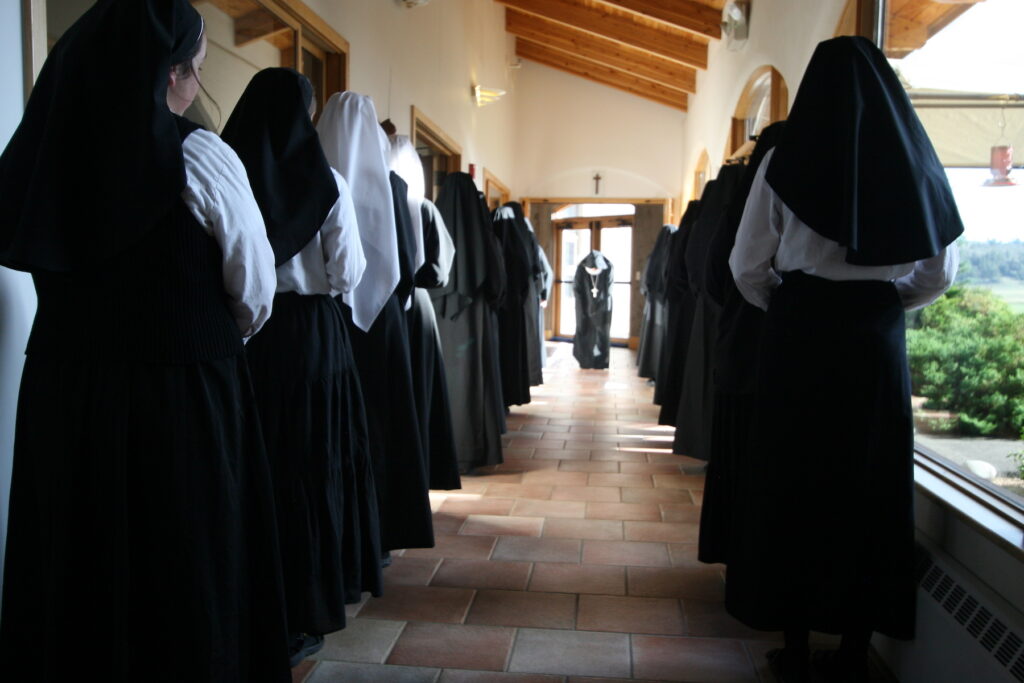
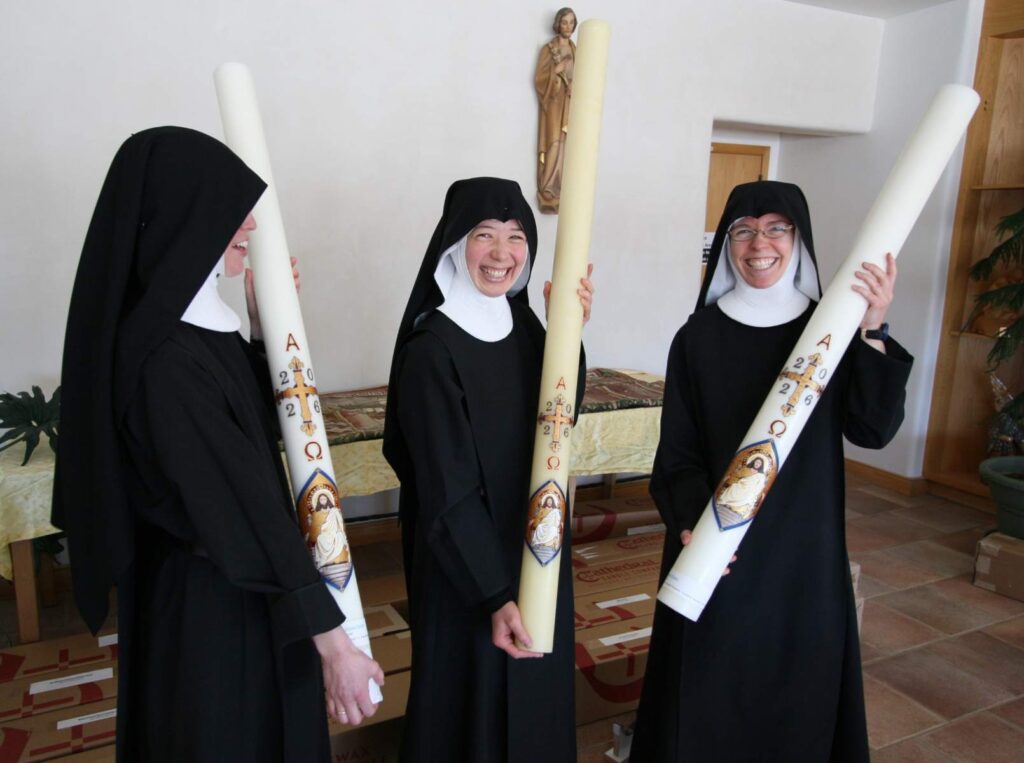
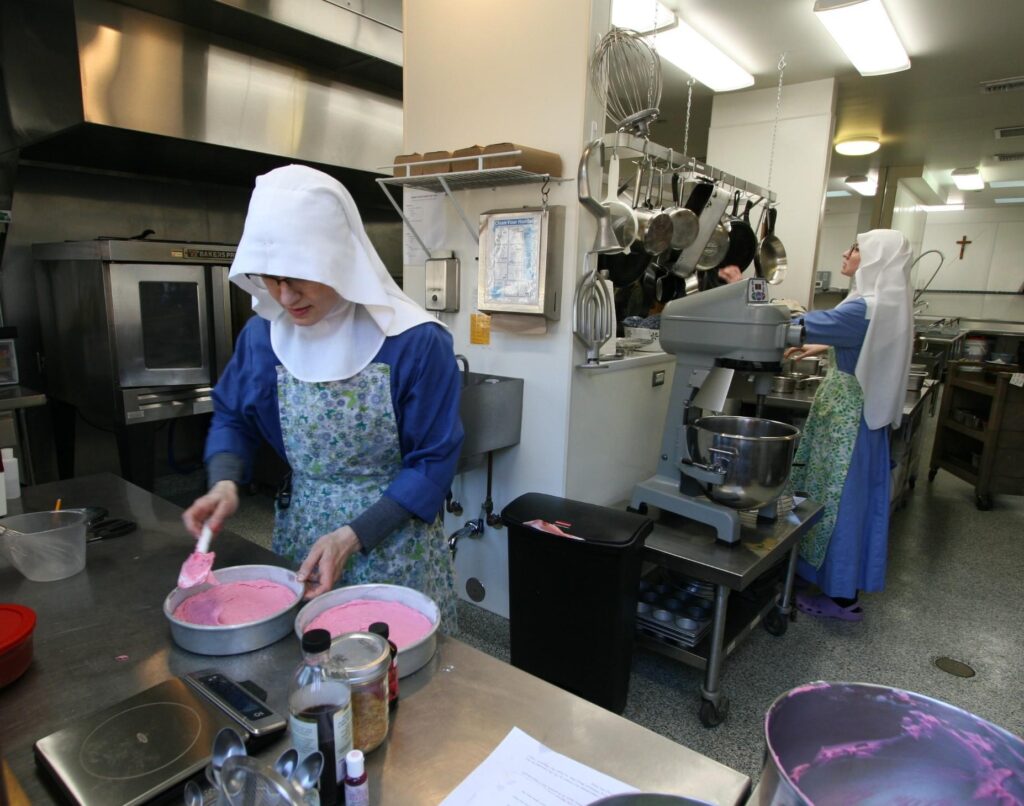
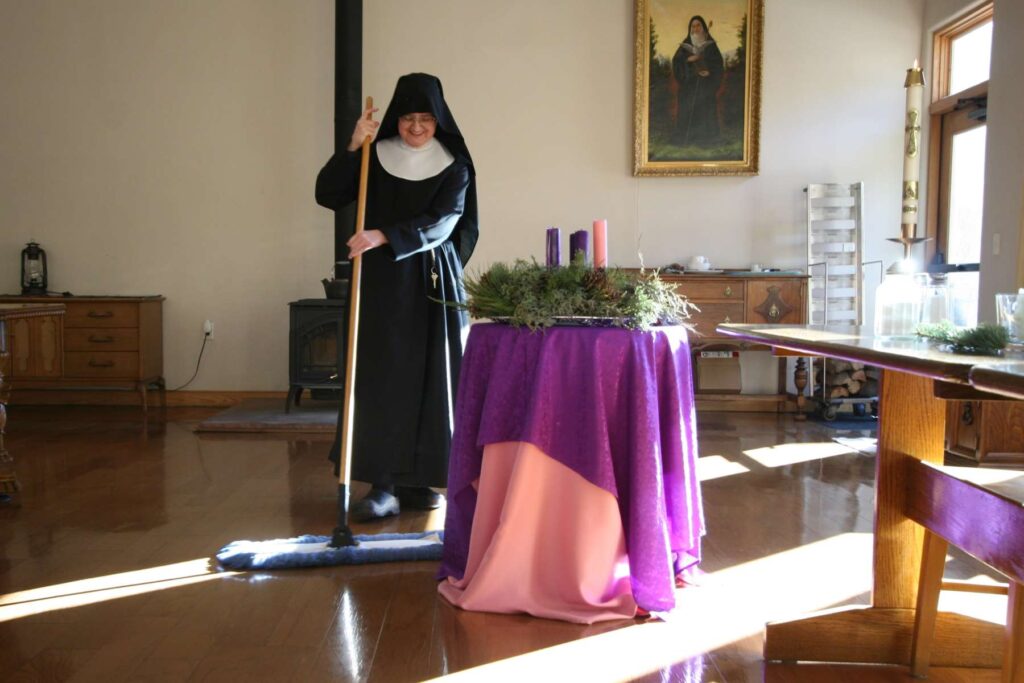
Regardless of what manual labor one is engaged in to support the abbey, when the bell for the Divine Office chimes, it is immediately set aside for the Work of God.[7] What is the Work of God? It is giving God the glory, worship, love, and honor that he is due.[8] It is above all in the liturgy of the Divine Office and the holy sacrifice of the Mass that the nun accomplishes the Work of God.[9] Those influenced by the technocratic paradigm see the maximization of profit as a sufficient reason for any advance in productivity and efficiency, whereas nuns live for a different purpose.[10] They have made the profit that they seek the glory of God. Making the liturgy the center of their lives, the gift of themselves and their work is united to Christ’s offering, where he gives perfect glory to the Father. Nature is not transformed to serve consumerist desires, but to serve the community, prayer, and the glory of God. This way of living also transforms them.[11]
Fr. Jordan Aumman writes, “Theologians generally attribute to God a twofold glory: the intrinsic glory of the inner life of the Trinity and the extrinsic glory that redounds to God through his external works.”[12] God is worth infinite love and honor. In the inner life of the Trinity, each Divine Person infinitely loves the other and makes an infinite gift of self to the other, thus giving each a worthy love. Lacking nothing, God freely chooses to communicate his goodness by creating the universe, ordering it to his own glory. God does not act for an end other than himself. Fr. Aumann continues, “If God had acted for an end other than himself, he would have subordinated himself to that end and that is incompatible with his infinity and supremacy.”[13] The extrinsic glory of God is manifested in creation’s participation in the goodness, truth, and beauty of God.[14] The more God communicates his goodness to a creature, the greater is the manifestation of his glory. Created in the image of God, humans have been created with a higher purpose than plants and animals: to share in the inner life of God, the exchange of the infinite love of the Divine Persons.[15] Thus, Fr. Aumann writes, “While every creature of whatever kind manifests some perfection of God, the rational creature manifests much more: the capacity to share in the very nature and life of God himself and the ability to give back to God, through praise and loving service, all that has been received.”[16] This participation in divine life is made possible by sanctifying grace received in baptism, which enables the believer to enter into communion with Christ’s redeeming life, death, and resurrection.[17] Moreover, growing in sanctifying grace increases one’s participation in divine life.[18] This is why the Catechism references St. Irenaeus’ saying that “the glory of God is man fully alive.”[19]
The more a nun grows in holiness, the more she grows in sanctifying grace, the more she fulfills her purpose of glorifying God. One of the ways to grow in sanctifying grace is through the toil of work, done in union with Christ and for love of him. Inclined to selfishness and laziness after the fall, work can, according to the Pontifical Council for Justice and Peace, participate in Christ’s redemption, combat the “disfigurement of sin” and be “a means of sanctification and an enlivening of earthly realities with the Spirit of Christ.”[20] By growing in sanctifying grace, nuns grow in their participation in divine life, which is a greater manifestation of the glory of God. Moreover, their work, offered as a penance and united with Christ’s suffering, can bring down graces of conversion to souls that can result in more humans glorifying God for all eternity. St. John Paul II wrote, “By enduring the toil of work in union with Christ crucified for us, man in a way collaborates with the Son of God for the redemption of humanity.”[21] A technocratic paradigm that values unlimited growth, automation, and efficiency prioritizes the end product over the means, i.e., the worker, and can lead to alienation and resentment.[22] Working for the glory of God and the salvation of souls in all that they do, whether in the chapel or the fields, unafraid of the toil, leads to a nun’s sanctification.
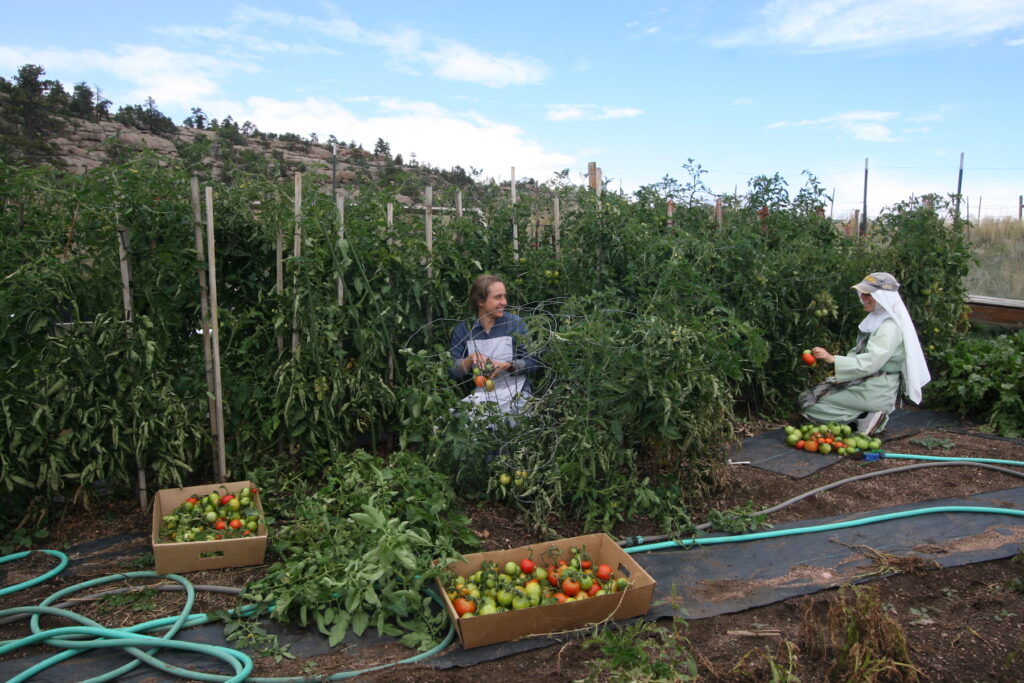
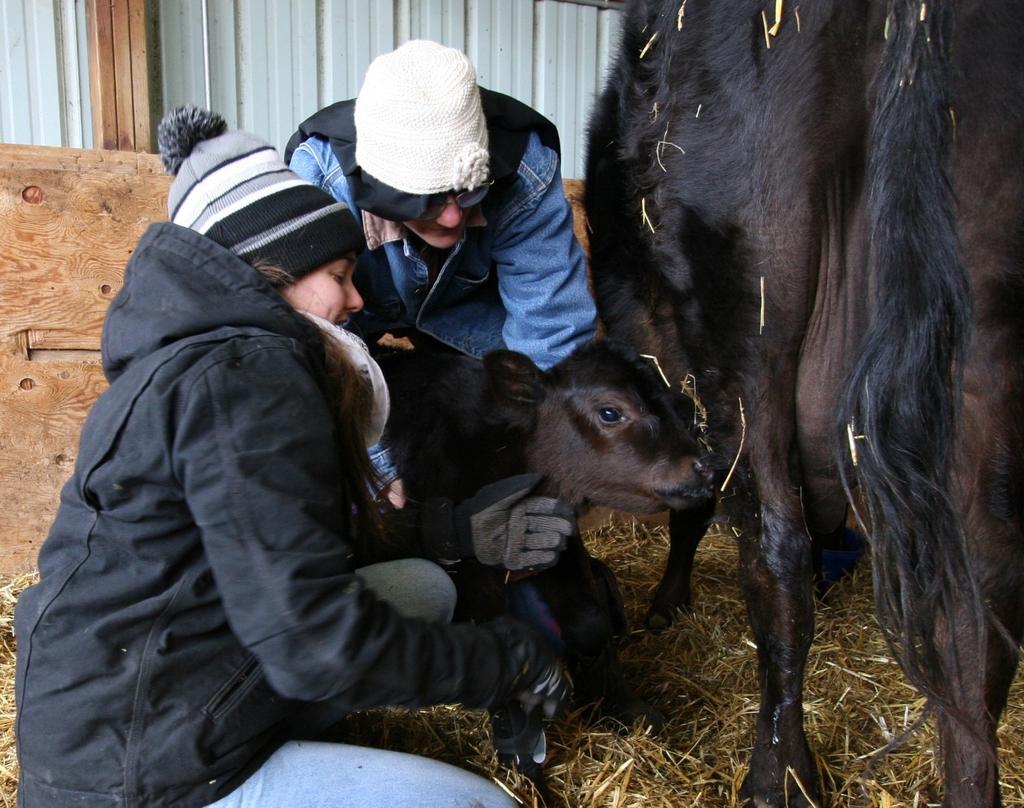
By living simply, using less, caring for their sisters as part of God’s family, and caring for creation as gifts from their Bridegroom, the lifestyle of a Benedictine nun witnesses Christ is enough and every moment of life can be lived out of love for him. Their lives are not isolated but lived at the heart of the Church, affecting Christ’s disciples through their witness, prayers, penances, and works.[23] Whether it is singing the divine praises in the chapel, humanely raising cattle, growing their own produce, or making products to sell, nuns “do all to the glory of God.”[24]
[1]. Congregation for Institutes of Consecrated Life and for Societies of Apostolic Life, Verbi Sponsa, accessed May 3, 2026, Vatican.va, 4.
[2]. Francis, Laudato Si’, 225.
[3]. Ps. 34:8 and Francis, Laudato Si’, 237.
[4]. Benedict, The Rule, 10.
[5]. Benedict, The Rule, 4.
[6]. John 17:14.
[7]. Benedict, The Rule, 43.
[8]. Paul Delatte, Commentary on the Rule of St. Benedict (London: Burns Oates & Washbourne Limited, 1921), 132.
[9]. Delatte, Commentary, 133.
[10]. Francis, Laudato Si’, 109 and 159.
[11]. John Paul II, Laborem Exercens, accessed May 3, 2026, Vatican.va, 9.
[12]. Jordan Aumann, Spiritual Theology (London: Sheed and Ward, 1995), 37-38.
[13]. Aumann, Spiritual Theology, 38.
[14]. Aumann, Spiritual Theology, 39.
[15]. Catechism of the Catholic Church, accessed May 3, 2026, Vatican.va, 221.
[16]. Aumann, Spiritual Theology, 39.
[17]. Catechism, 1227 and 1266.
[18]. Francis, C’est la confiance, accessed May 3, 2026, Vatican.va, 18.
[19]. Catechism, 294.
[20]. Pontifical Council for Justice and Peace, Compendium of the Social Doctrine of the Church, accessed May 3, 2026, Vatican.va, 263.
[21]. John Paul II, Laborem Exercens, 27.
[22]. Pontifical Council, Compendium, 280. See also Francis, Laudato Si’, 18.
[23]. John Paul II, Vita Consecrata, 3.
[24]. 1 Cor. 10:31 (Revised Standard Version).
References
Aumann, Jordan. Spiritual Theology. London: Sheed and Ward, 1995.
Benedict. The Rule of St. Benedict in English. Collegeville, MN: Liturgical Press, 2019.
Catechism of the Catholic Church. Accessed May 3, 2026. Vatican.va.
Congregation for Institutes of Consecrated Life and for Societies of Apostolic Life. Verbi
Sponsa. Accessed May 3, 2026. Vatican.va.
Delatte, Paul. Commentary on the Rule of St. Benedict. London: Burns Oates & Washbourne
Limited, 1921.
Francis. C’est la confiance. Accessed May 3, 2026. Vatican.va.
_____. Laudato Si’. Accessed May 3, 2026. Vatican.va.
John Paul II. Laborem Exercens. Accessed May 3, 2026. Vatican.va.
_____. Vita Consecrata. Accessed May 3, 2026. Vatican.va.
Pontifical Council for Justice and Peace. Compendium of the Social Doctrine of the Church.
Accessed May 3, 2026. Vatican.va.
© 2026 Fr. Matt Hartley