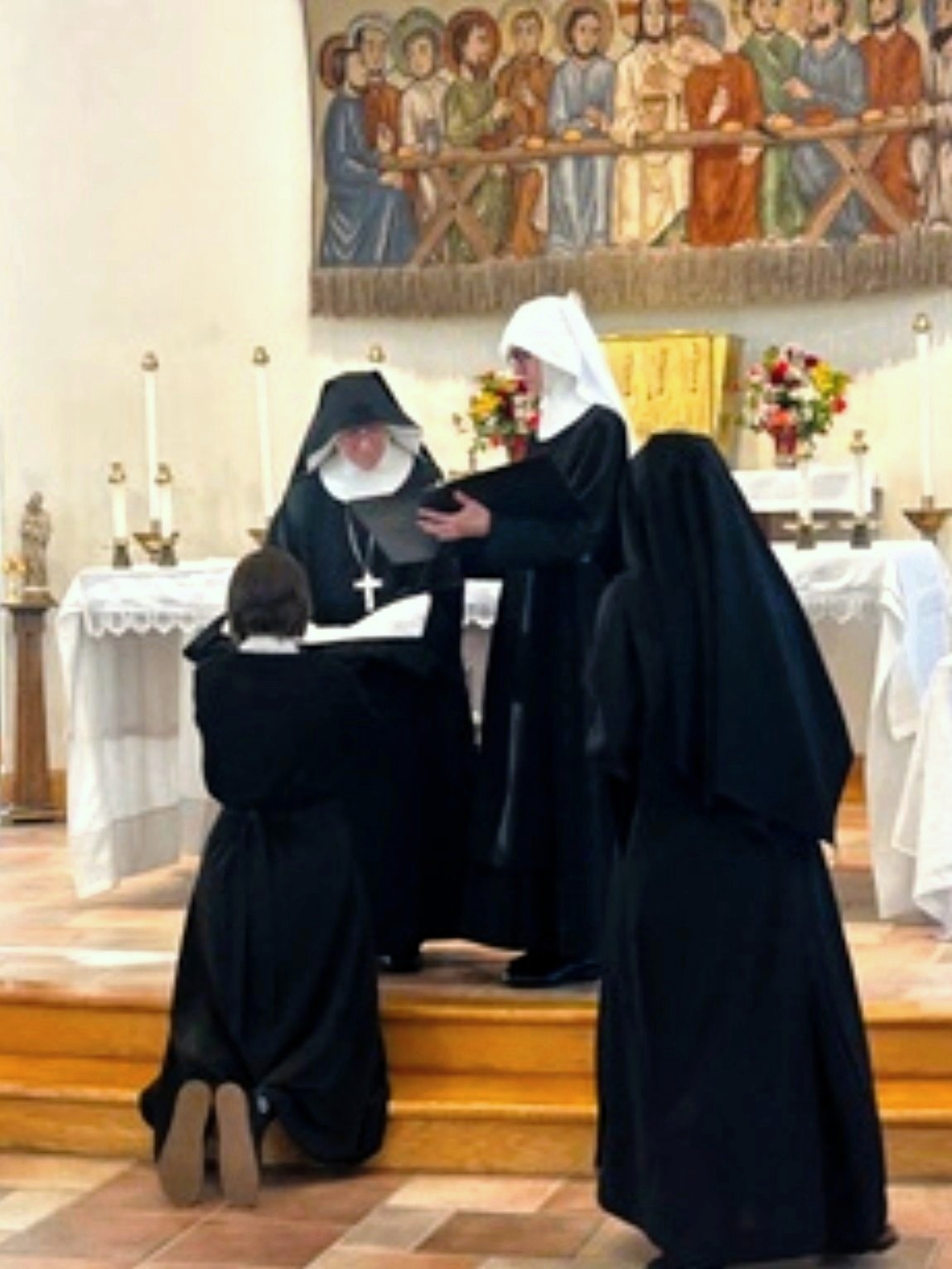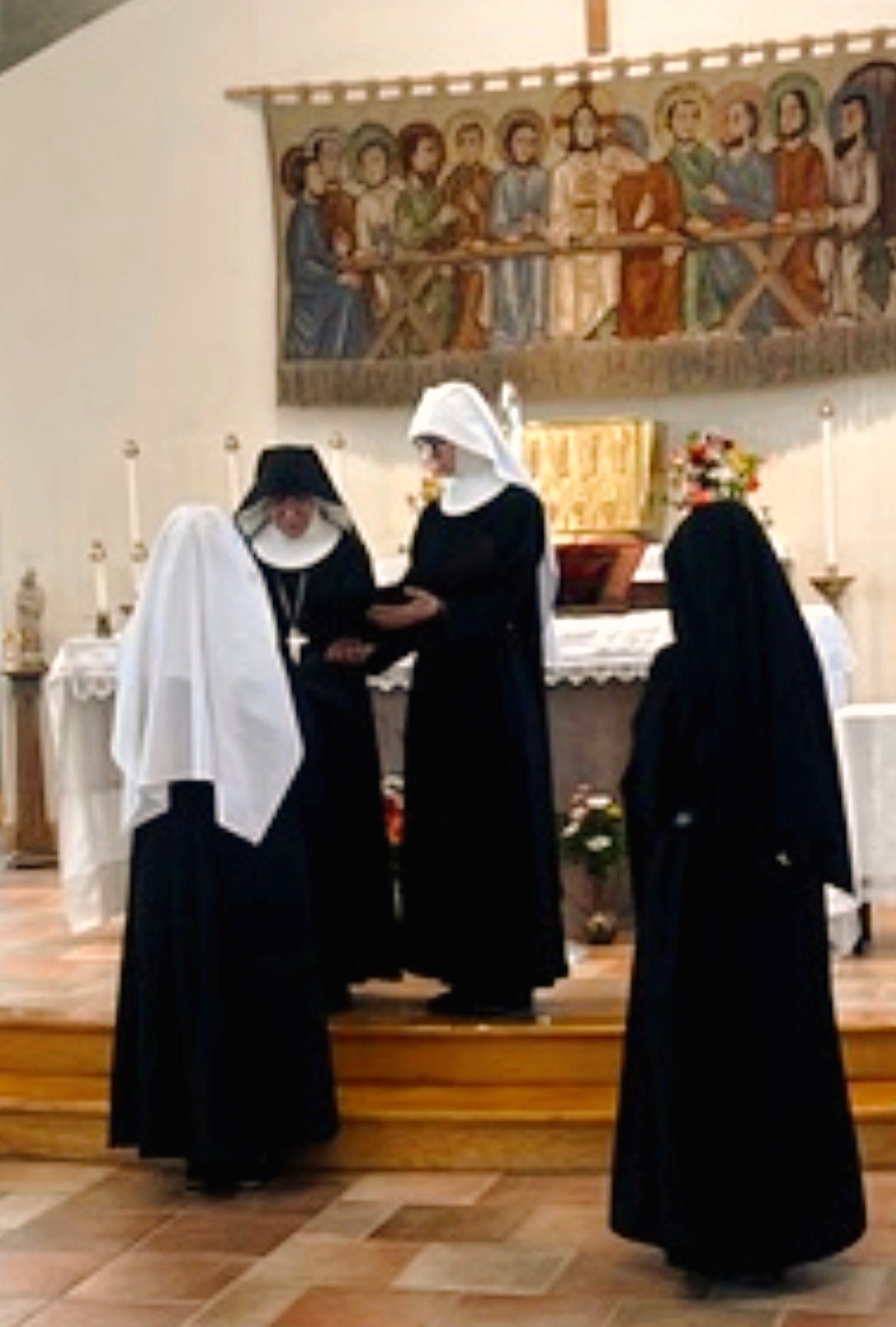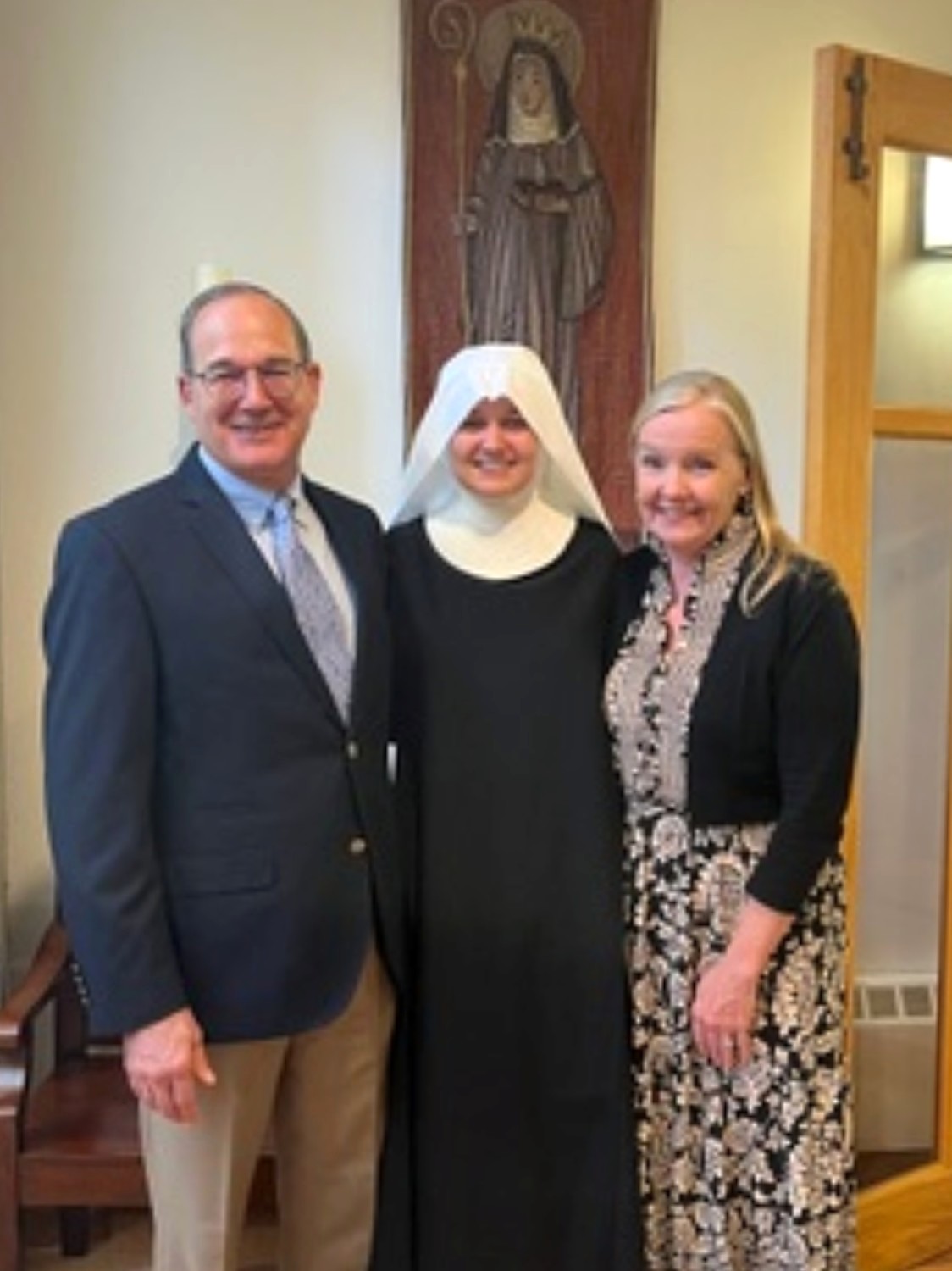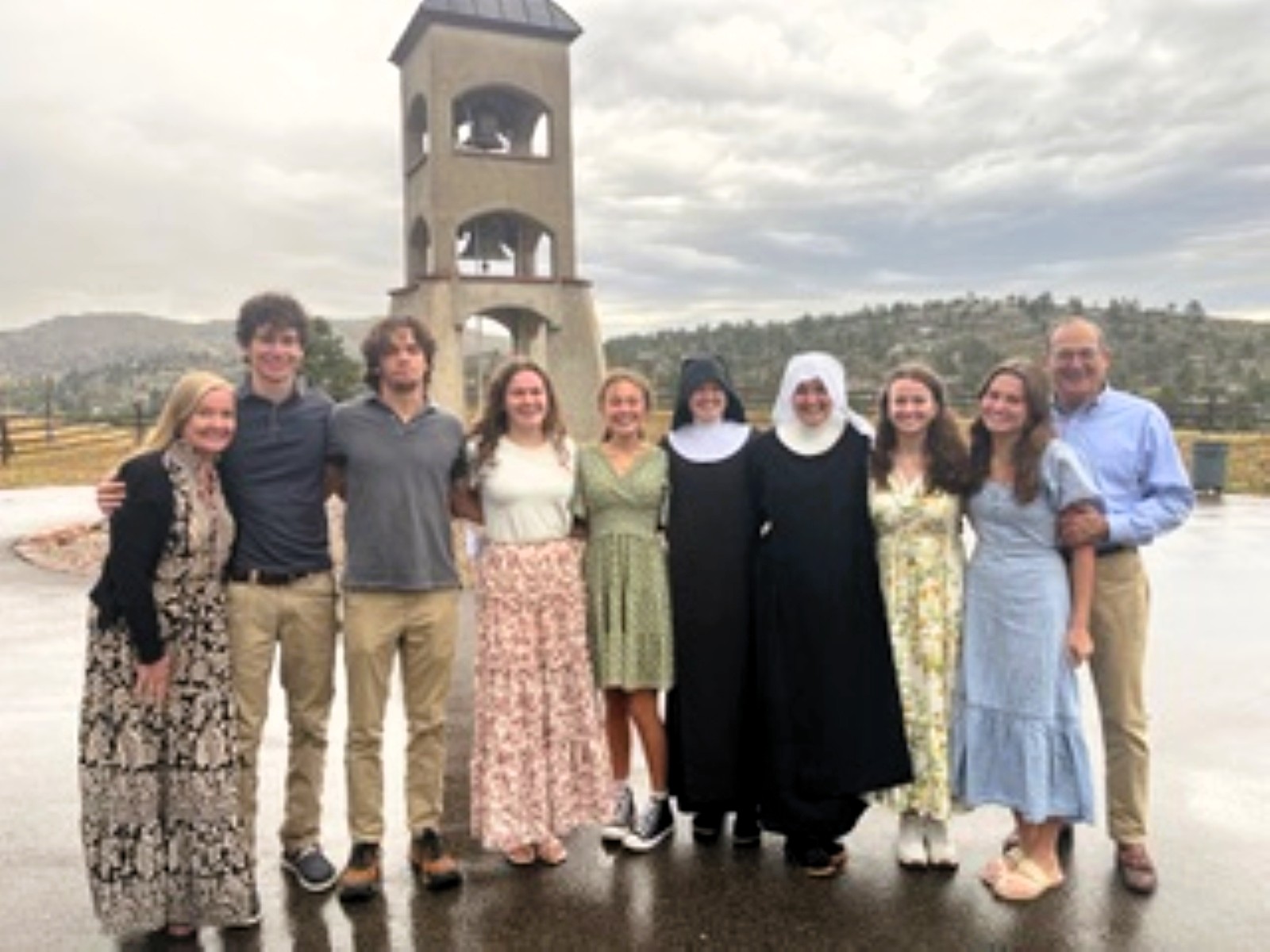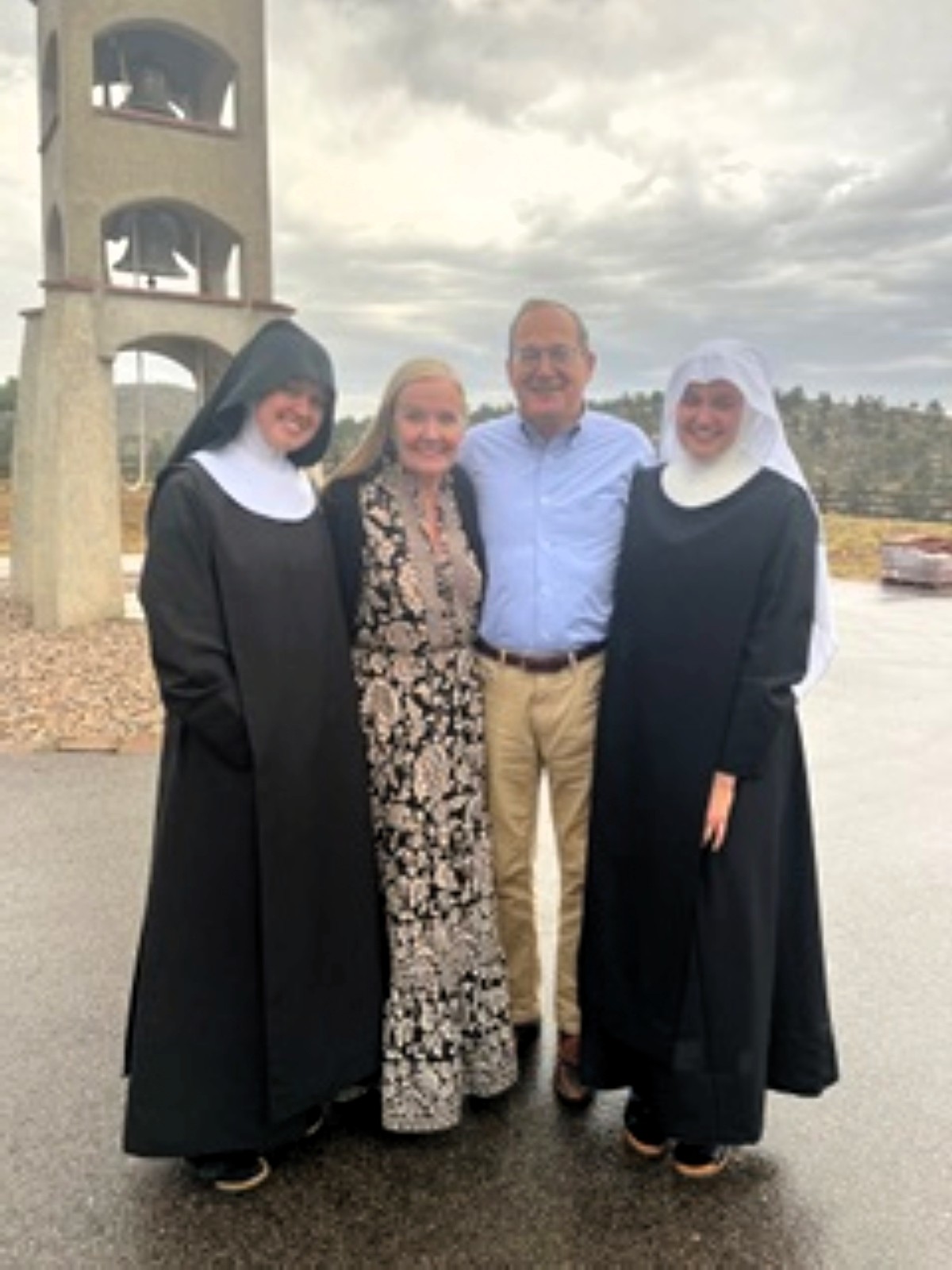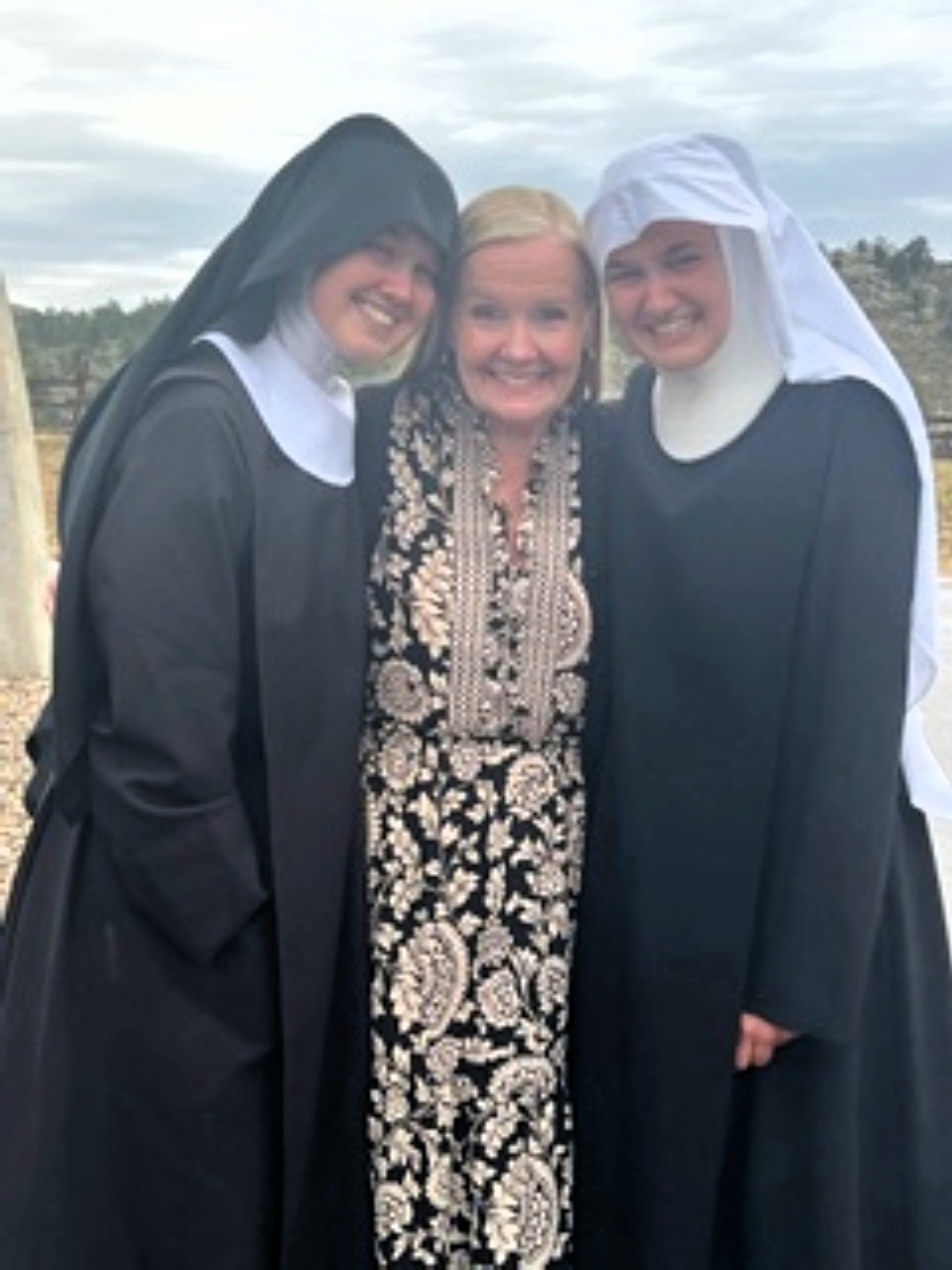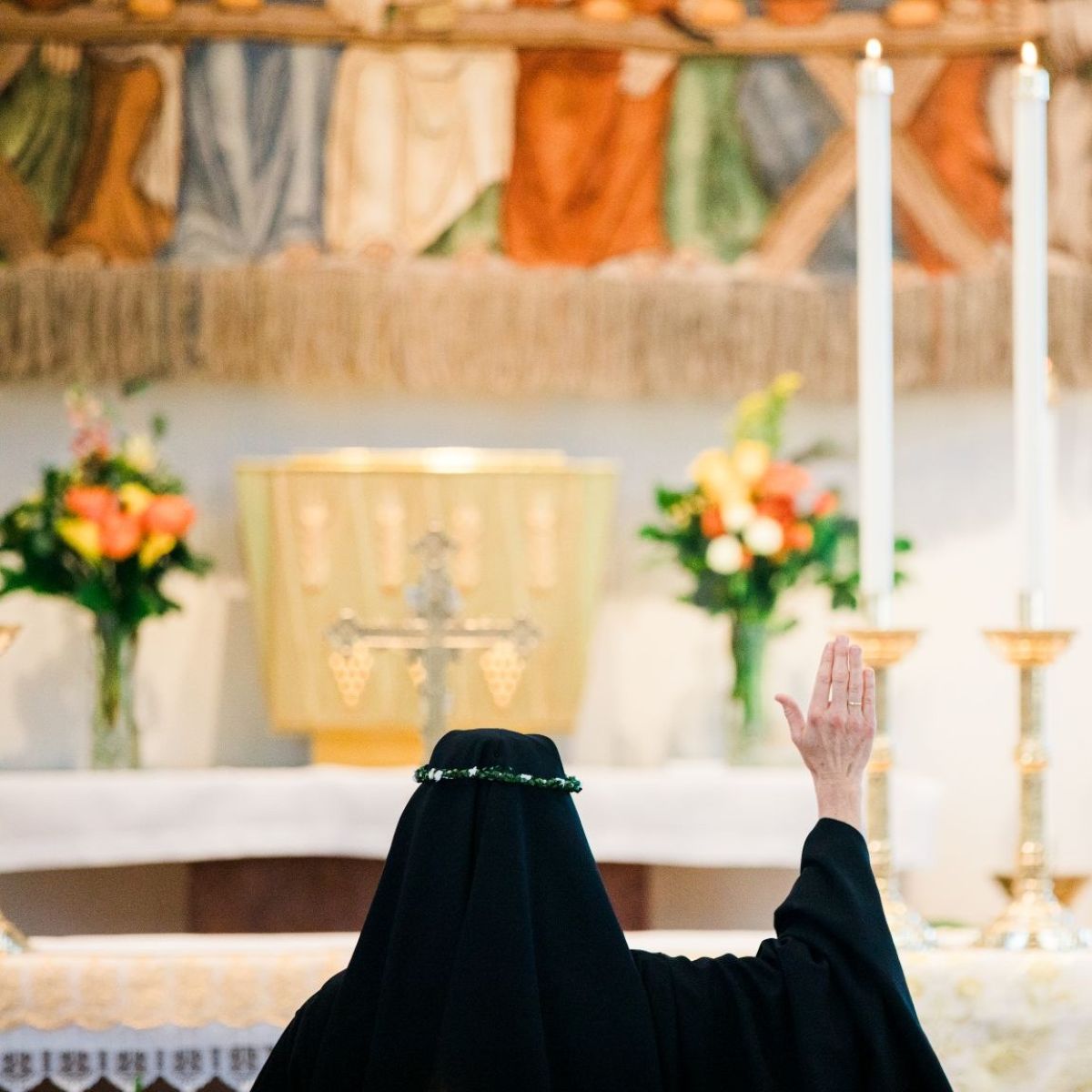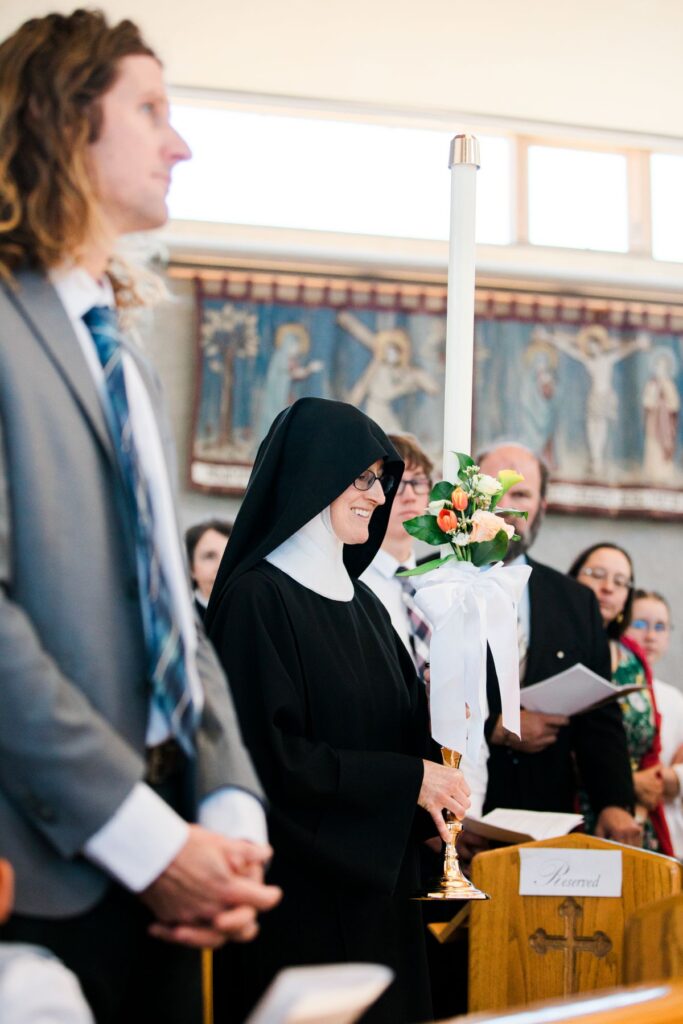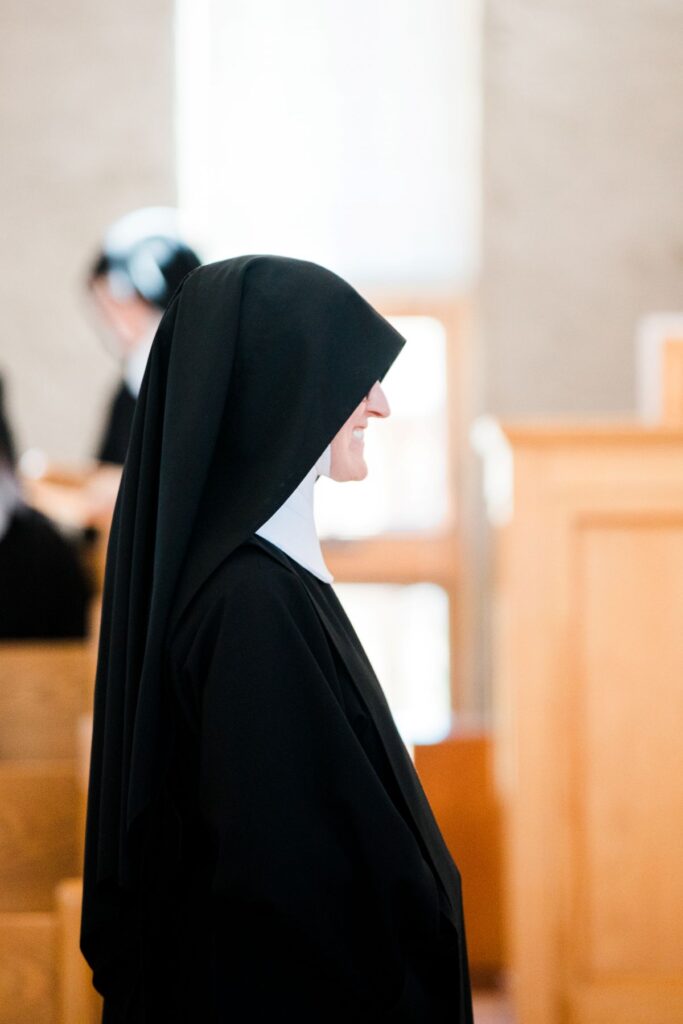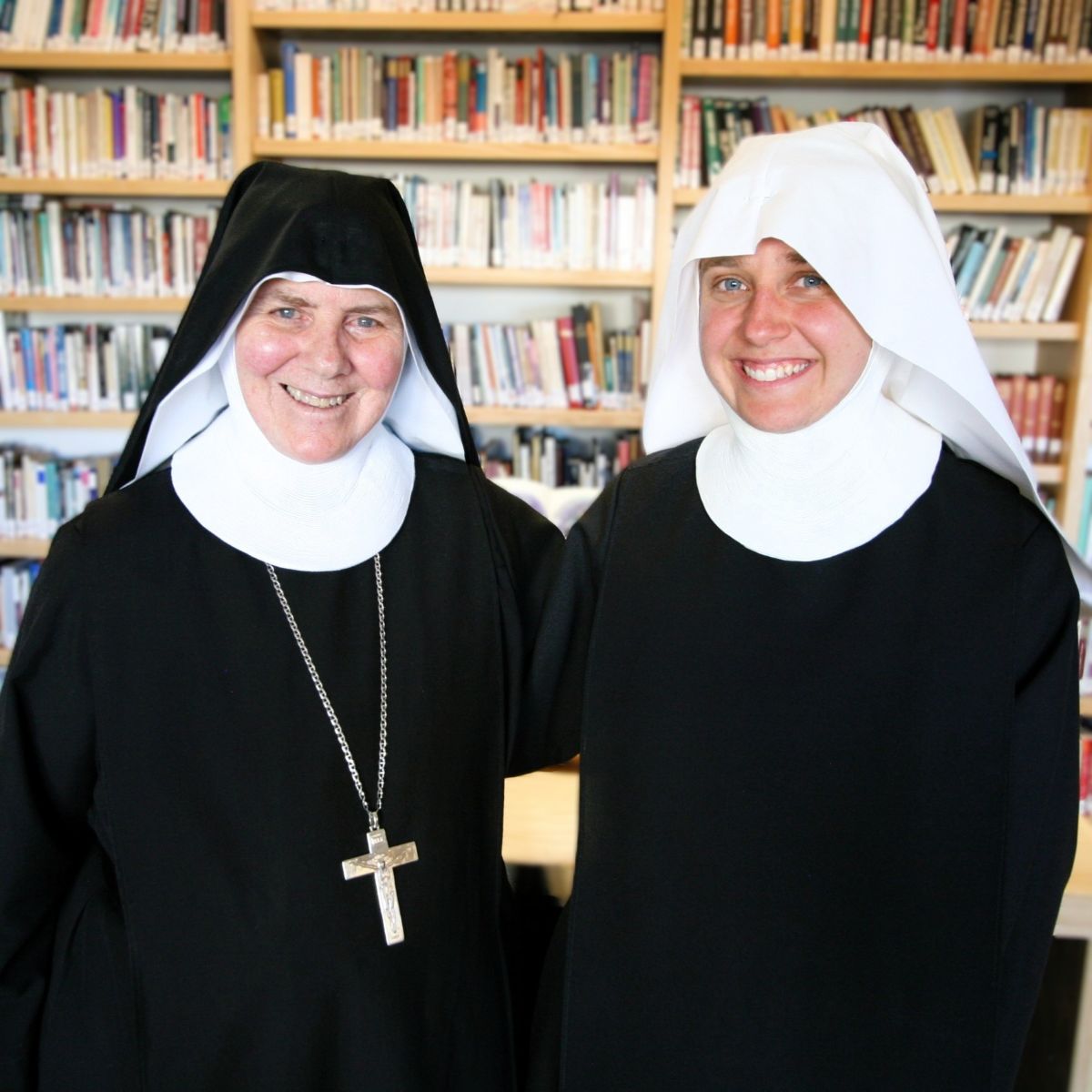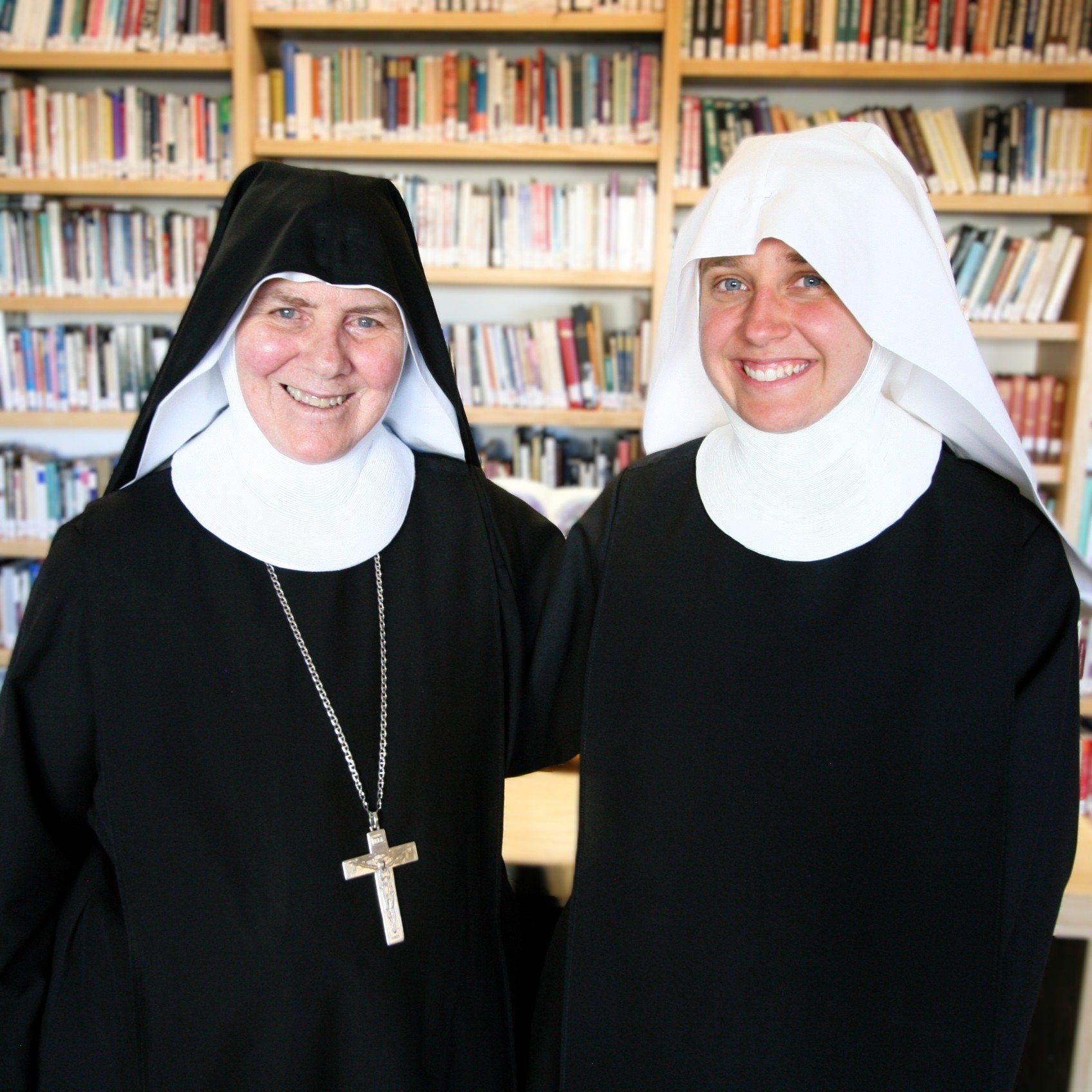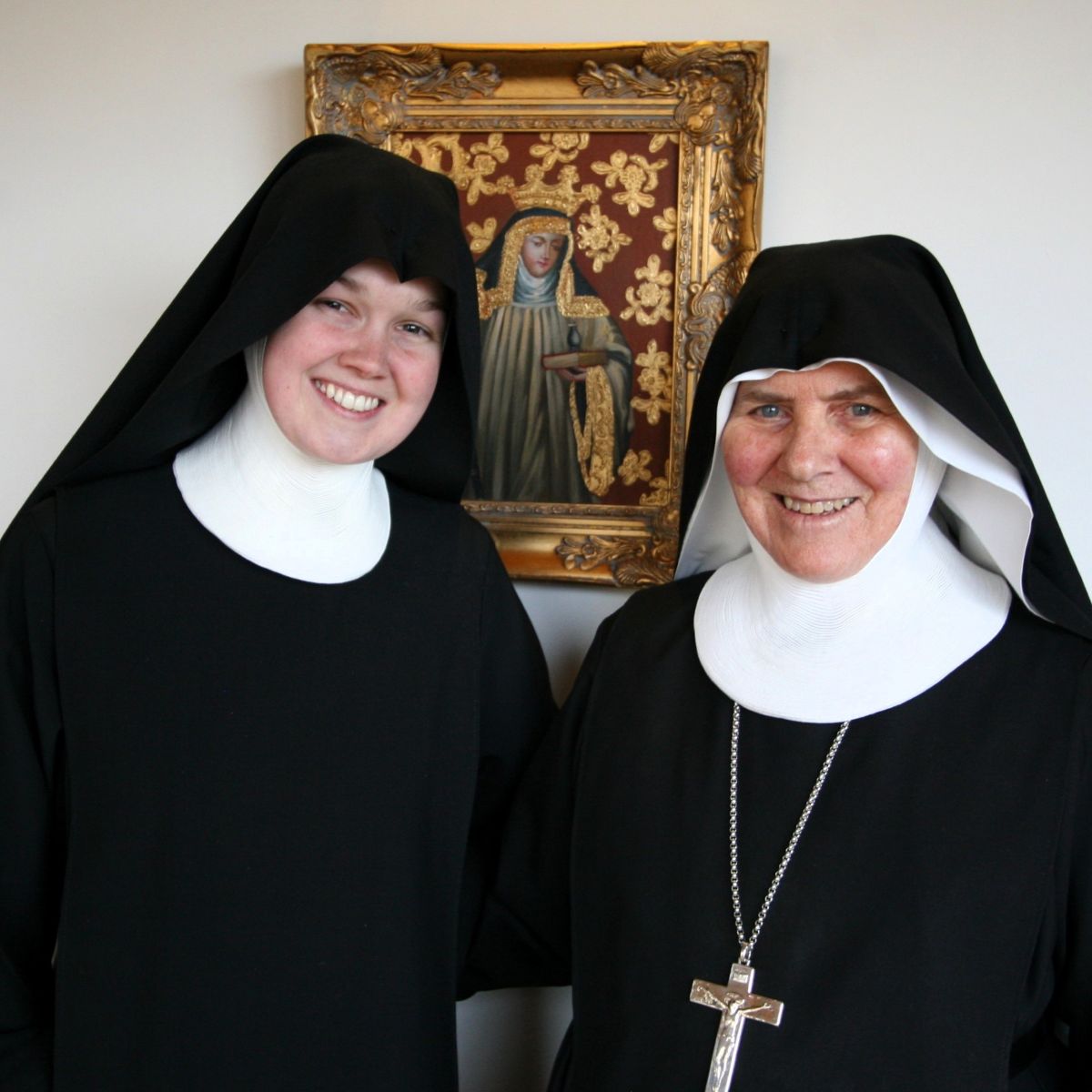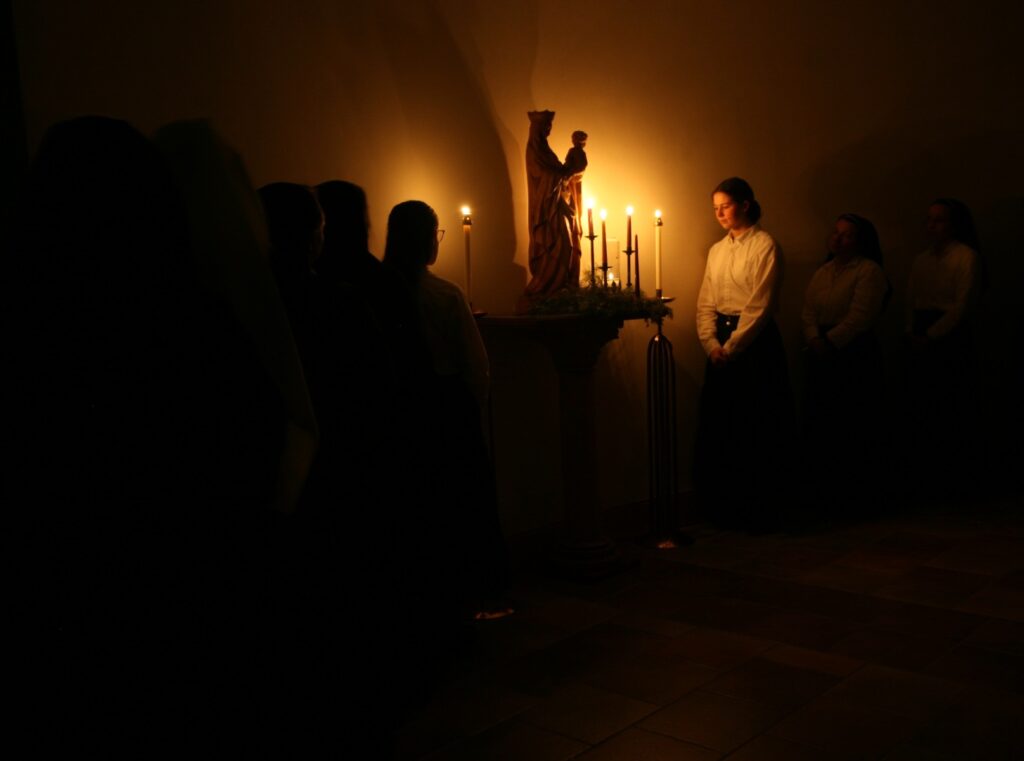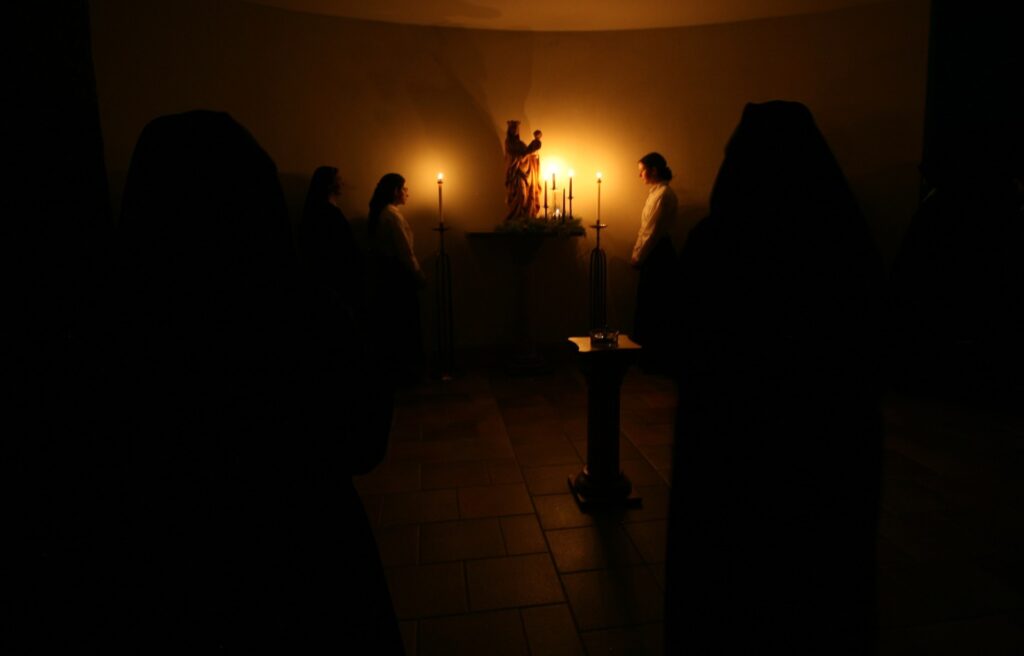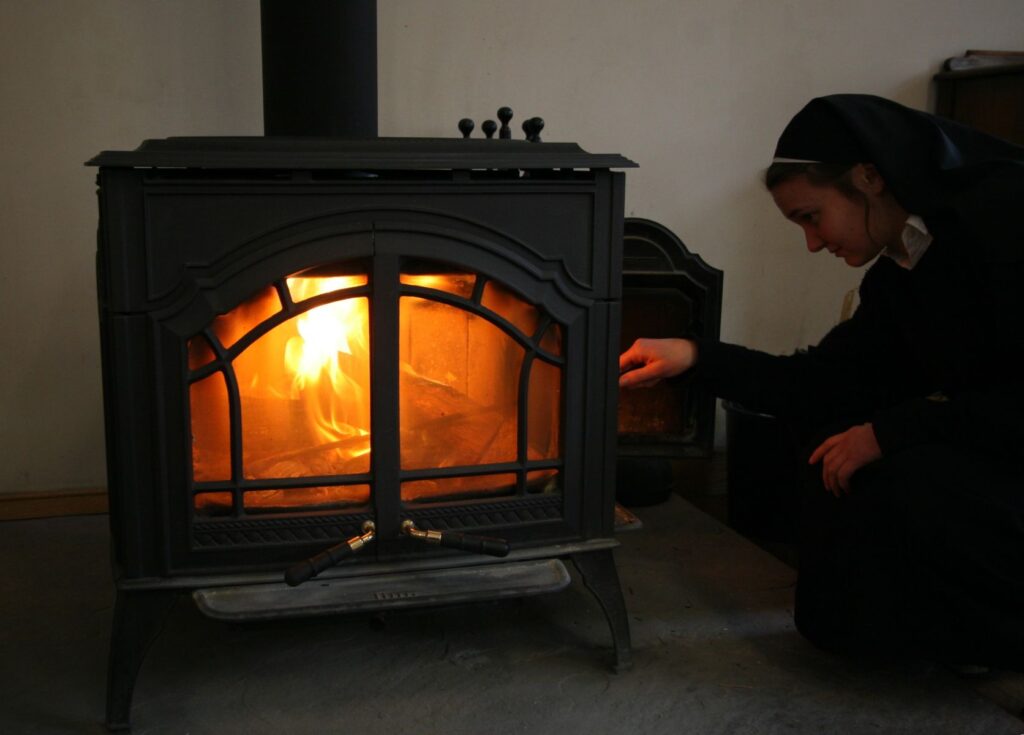
Sister Moira’s Novice Investiture

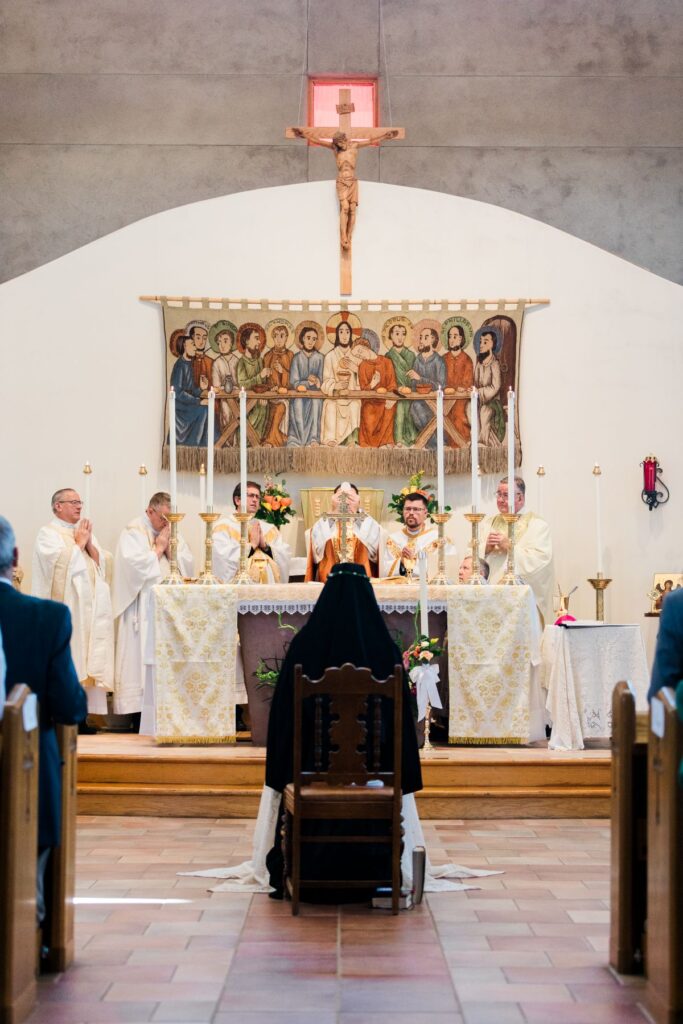
A reflection by Mother Maria-Michael Newe, OSB, delivered to our community on the vigil of the Novice Investiture of Sister Moira
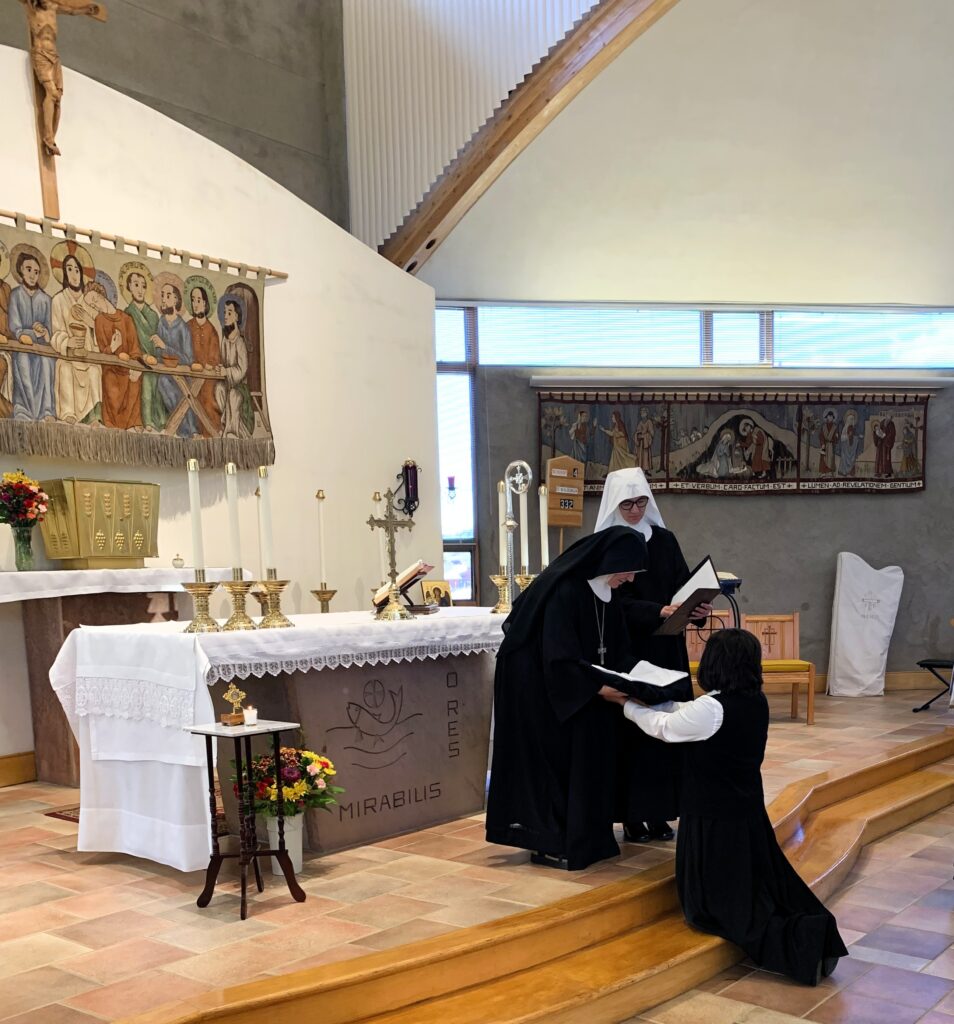
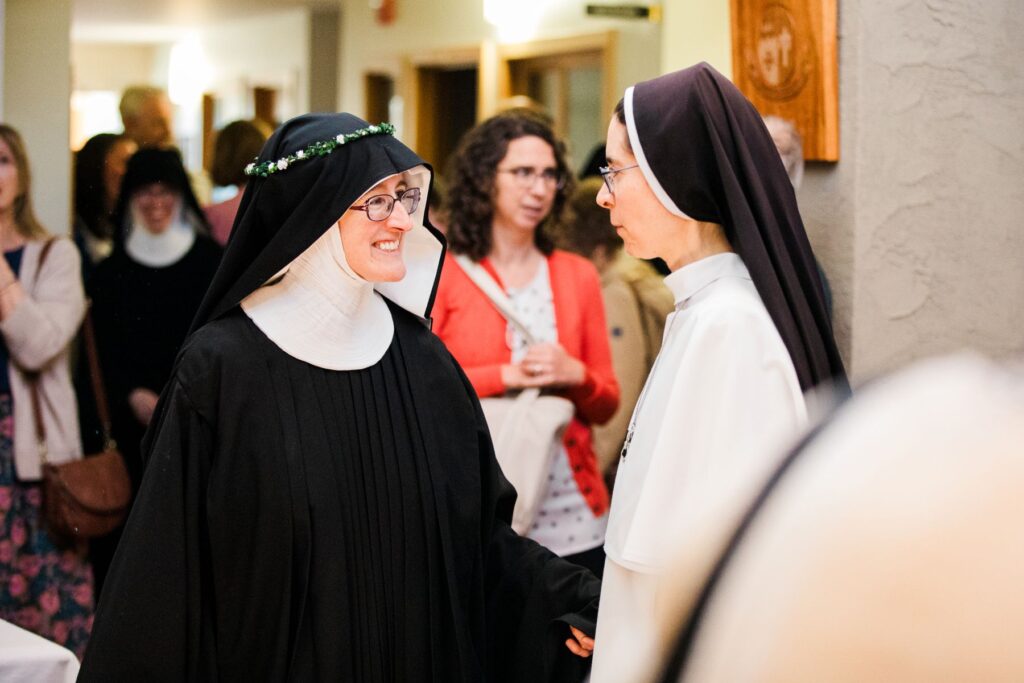
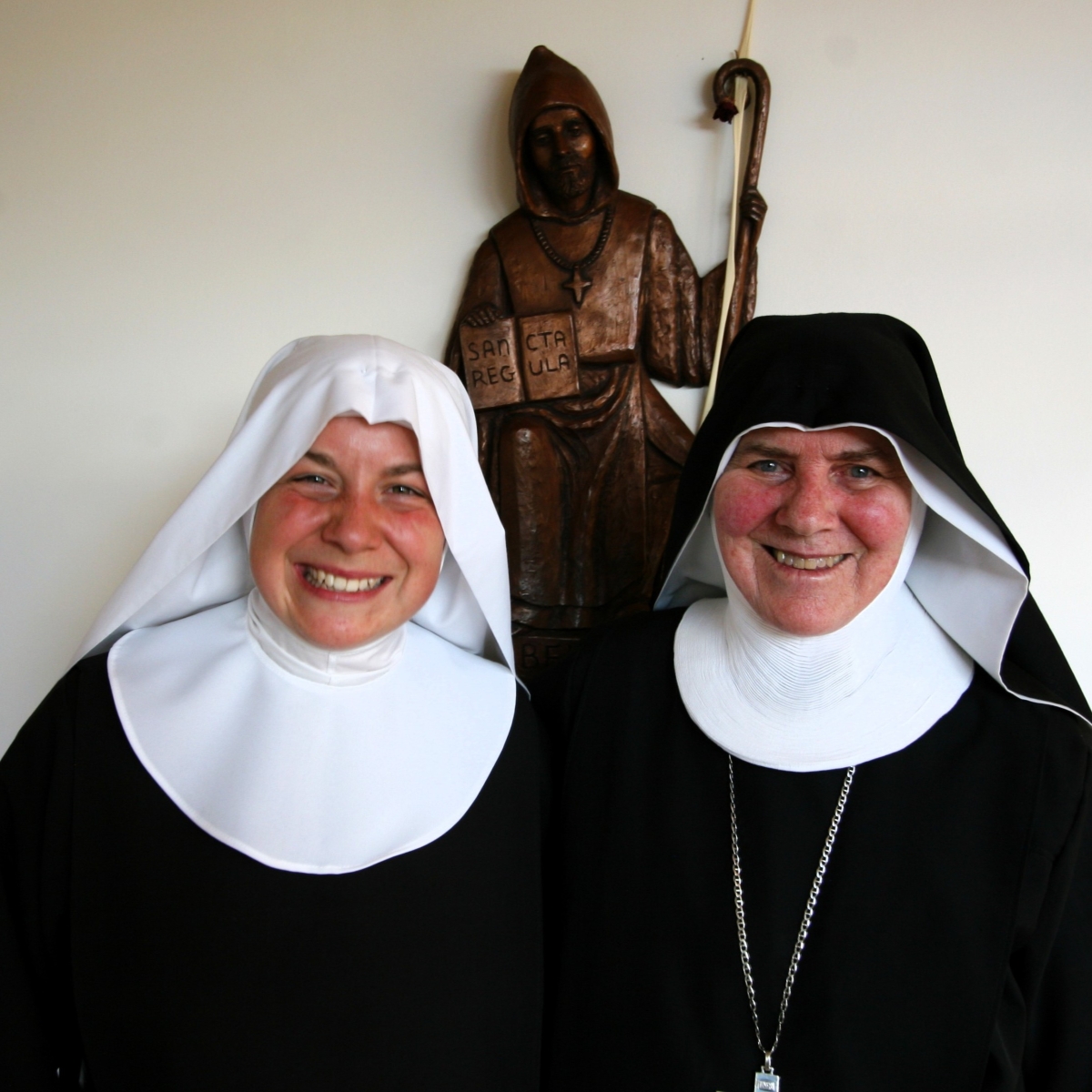
We have Saint Gregory the great, a Benedictine saint, for Moira’s clothing day! Pope Saint Gregory the Great was born in 540 and died on March 12, 604. He was the 64th Bishop of Rome, and is venerated as one of the four Latin Fathers of the Church alongside St. Augustine, St. Ambrose, and St. Jerome. His papacy is considered foundational to the medieval papacy because of his spiritual leadership and legislative reform. Gregory was educated in law and administration and became the prefect of Rome at age 30. However, inspired by the call to poverty he resigned his position, founded a monastery, and became a Benedictine monk in the year 575. He didn’t stay too long as a prefect, and like St. Benedict, St. Gregory must have had a feeling that the typical Roman life wasn’t good for his soul. And, in a way, isn’t that also true of why we come to the monastery? We have a feeling it would be much better for our souls, and we are called to a holiness that we sense we won’t reach outside. We want to live a life surrounded by God — not the world — like St. Gregory.

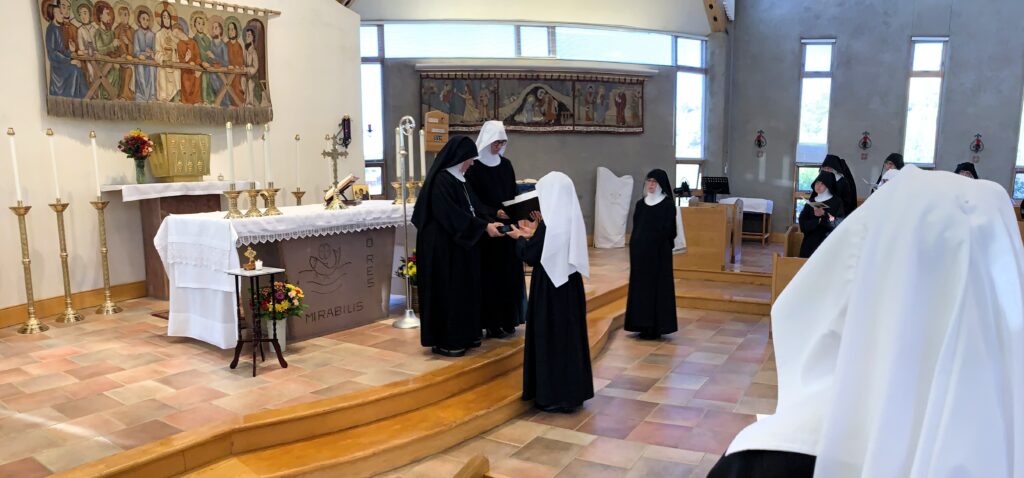
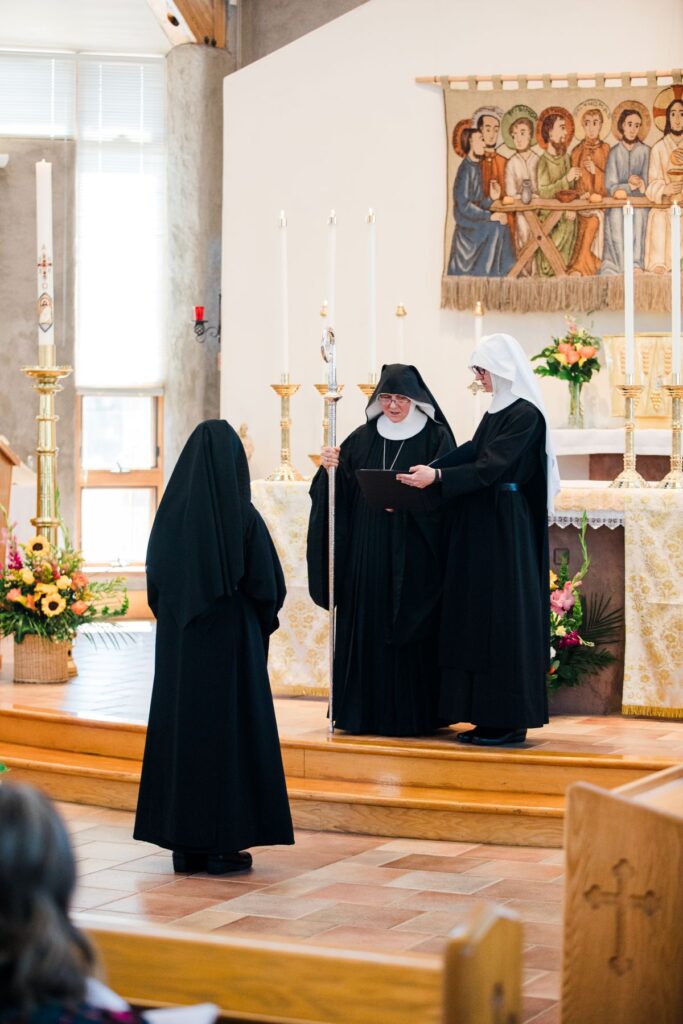
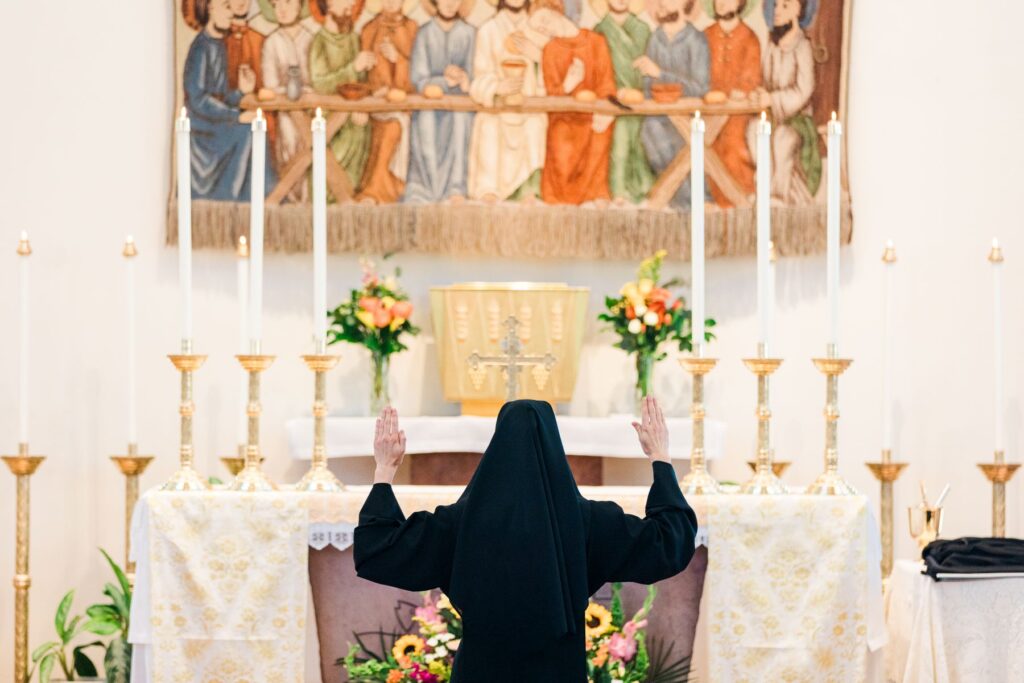
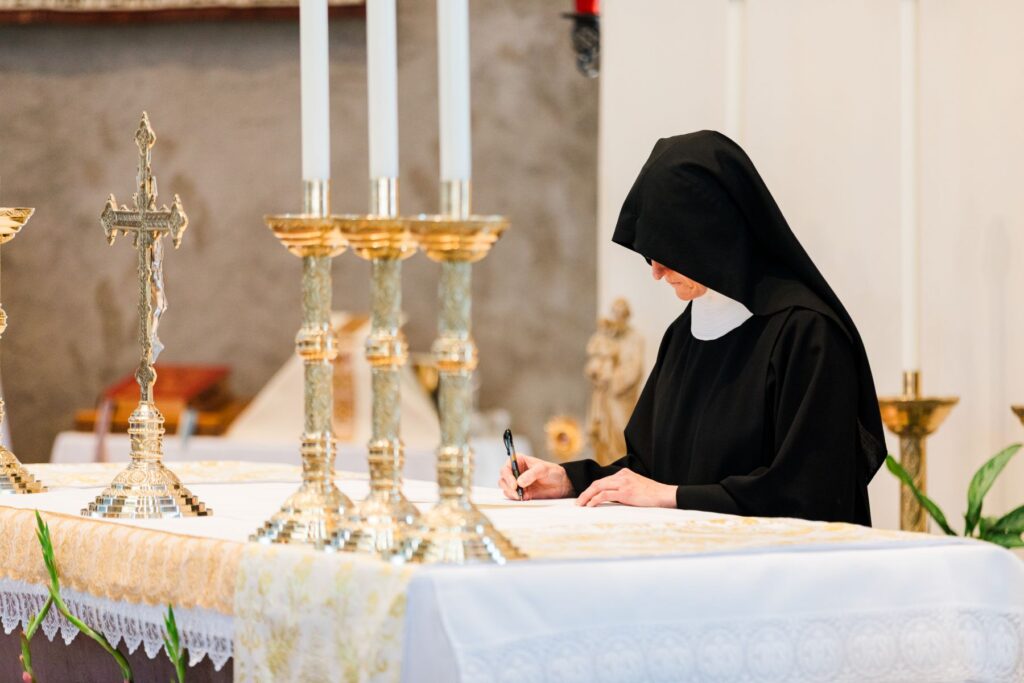
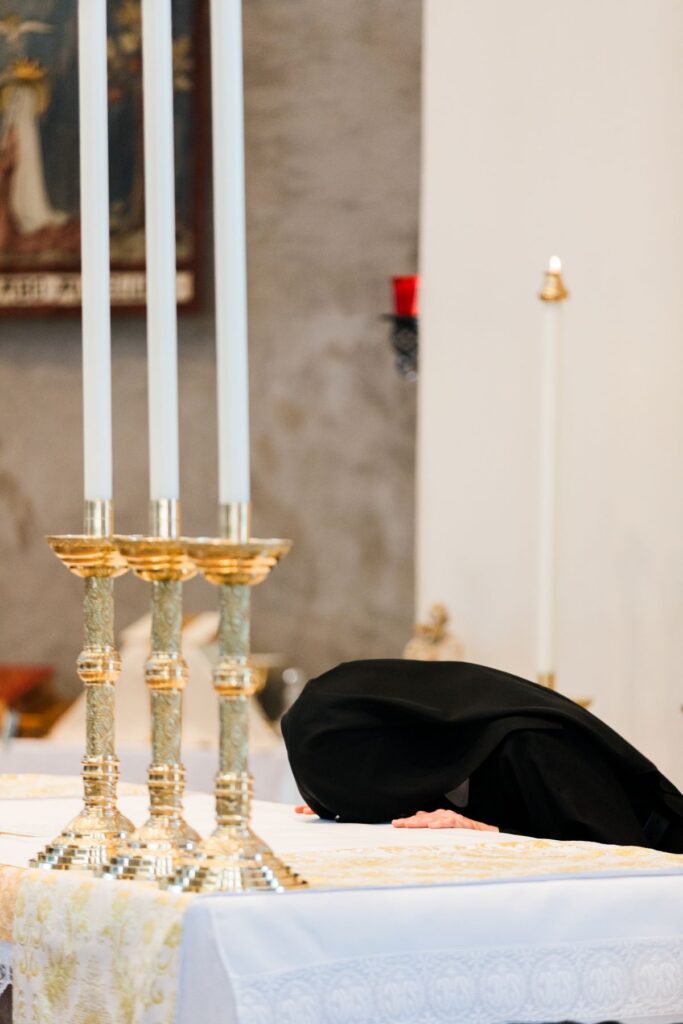
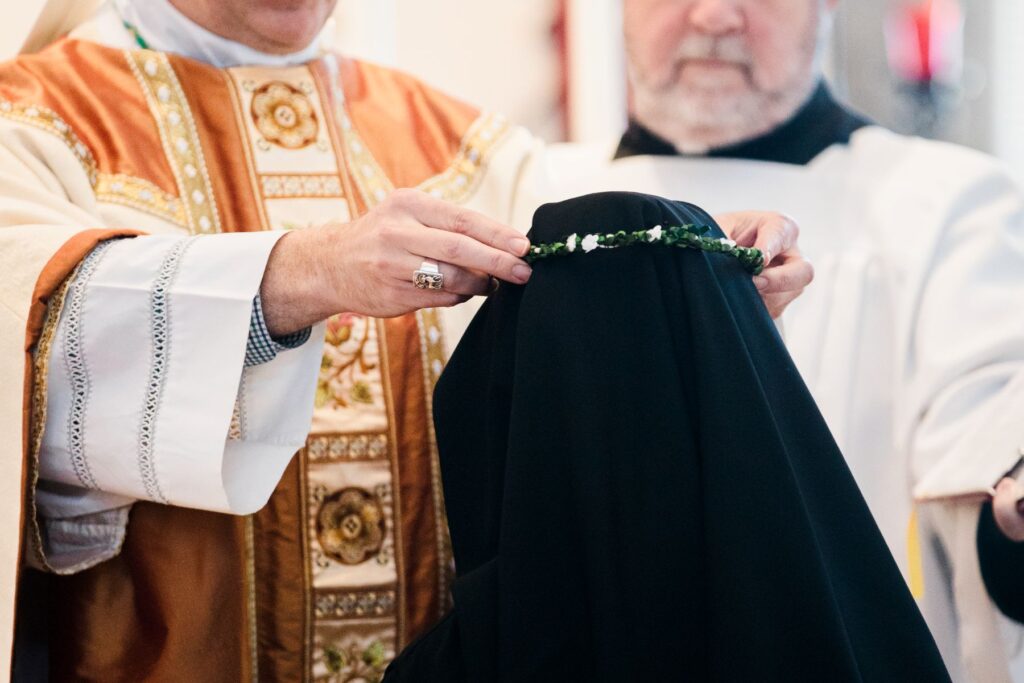
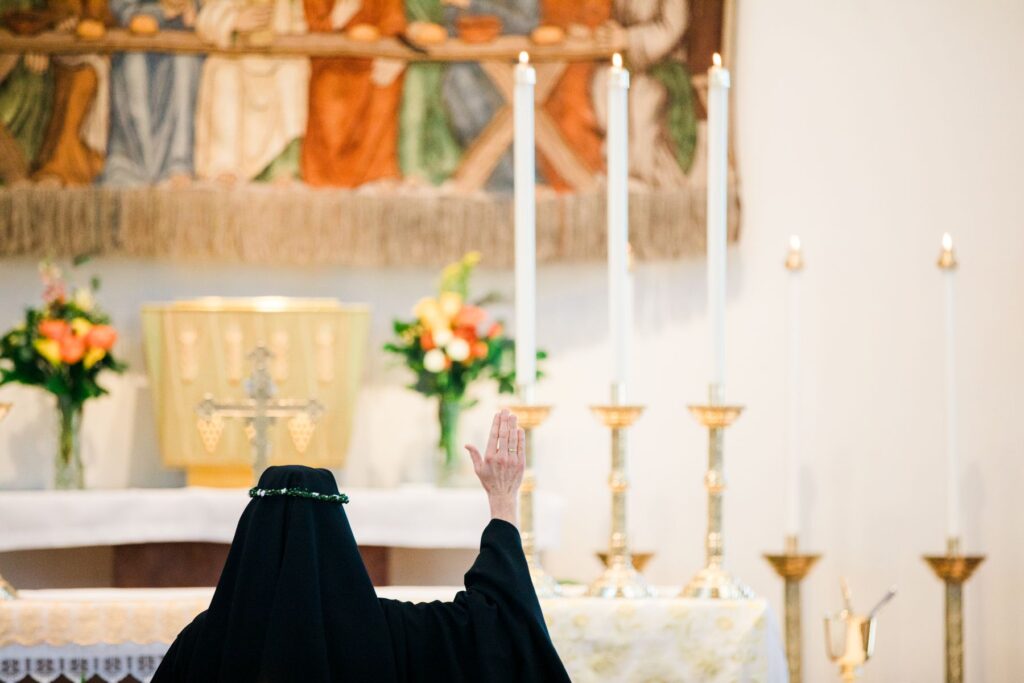
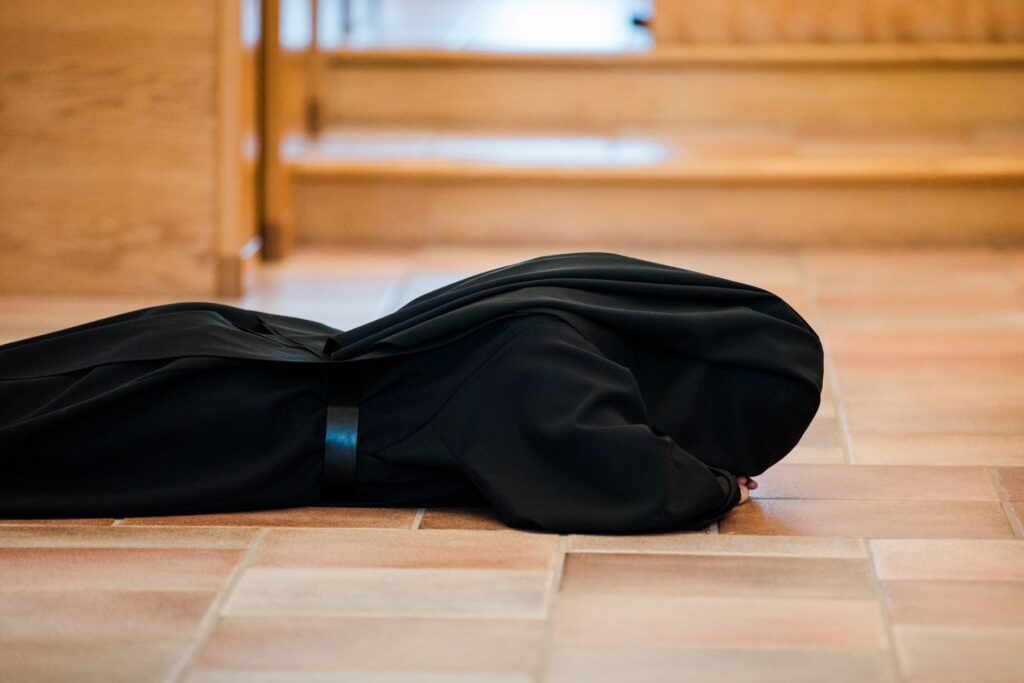
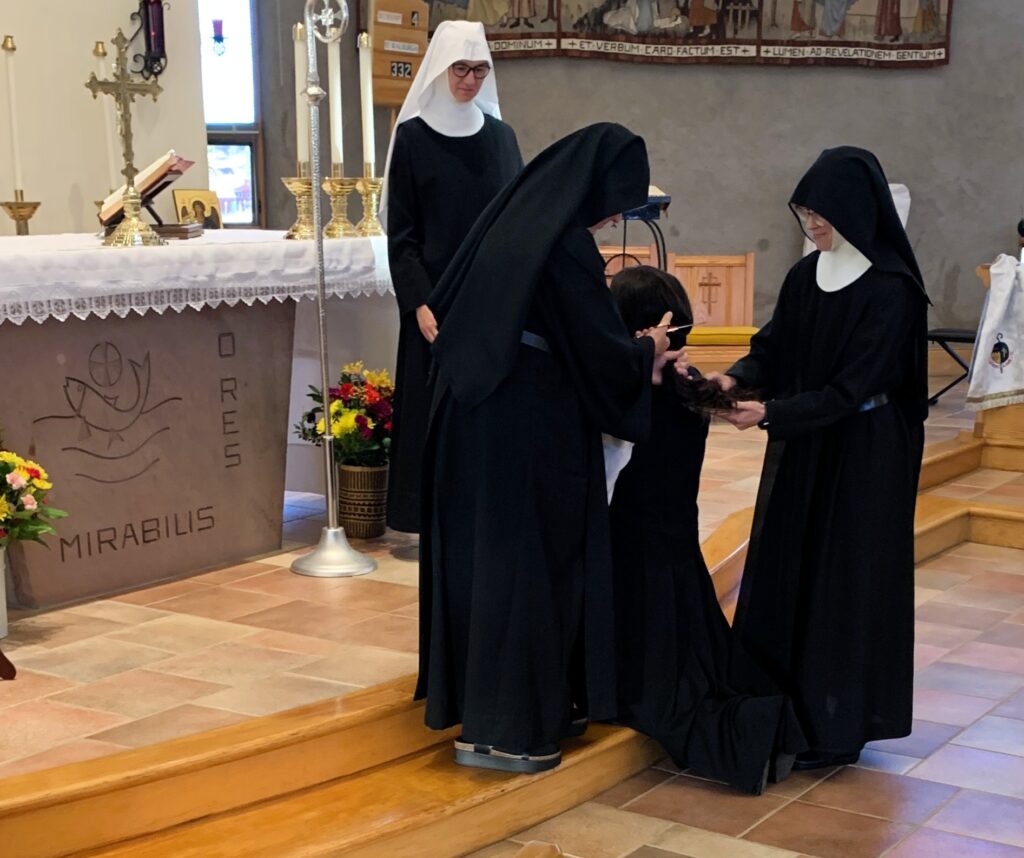
Moira, just as St. Gregory received the habit of a Benedictine, and wore it with love and purpose, so too shall you. It says in Chapter 58 of the Holy Rule of St. Benedict, “At once therefore, in the oratory, let him be divested of his own clothes which he is wearing and dressed in the clothes of the monastery.” That happened even then, as it happens today. So, Moira, tomorrow you are going to receive the habit of our beloved community. In the rite of the blessing of the religious habit it says, “We ask you, bless this religious habit, by which your handmaid who will wear it desires to express her readiness to serve You with undivided devotion.” For the blessing of the religious belt we pray, “O God, You allowed your Son to be bound by the hands of the unjust in order to save the slave. We ask You to bless this belt. Grant to Your handmaid who will wear it the grace to always keep in mind the chains of Your Son, Who was obedient unto death in order to set us free.” For the blessing of the religious scapular, “We beg You, bless this scapular which Your handmaid will wear as a sign of her conversion, so that she may truly follow in Your footsteps as Your disciple.” And finally for the religious veil, “Almighty God, we beg You, in Your kindness, to bless this veil, which Your handmaid desires to wear upon her head as a sign of her religious state, so that she may be blessed, spotless, and holy, and be recognized as consecrated to You.”

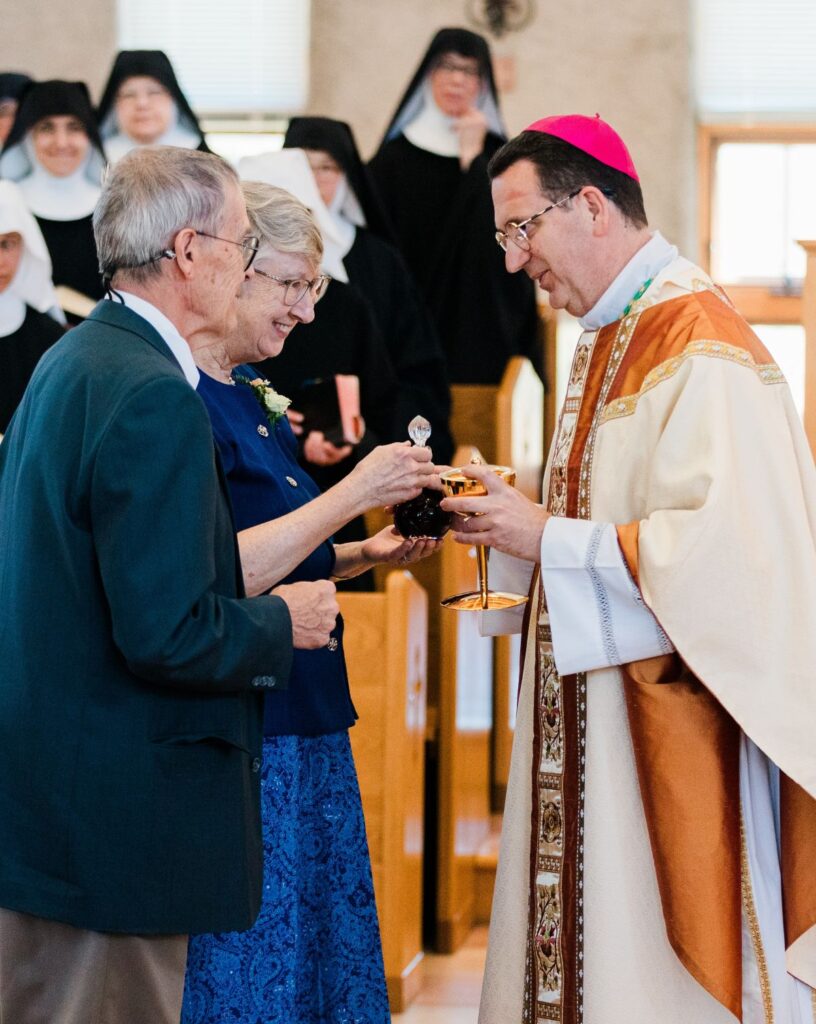
You are receiving the Benedictine habit of our Abbey, Moira. It carries with it the tradition of so many holy souls who have gone before us — saints, beloved of God. You are receiving clothing; you must fill it with life: With the life of a Benedictine, with holiness, with charity, with the praise of God. You must fill it. It is the life in which we honor God. We honor him as one who belongs to him and prefers nothing to the love of Christ. That’s what it says when you wear the habit. In a sense, we are entrusting you with ourselves — the beauty and dignity of the life we live. We are offering the habit to you because we trust you. We trust you to give the image of who we are. So when I give it to you, I am giving you our trust. May it be a joy for God and of us to see you wearing it and to stand among us. May God bless you now and forevermore.
Advent Retreat Registration

The Abbey of St. Walburga will be hosting
a Day of Recollection
with Sr. Maria-Walburga OSB

“Fostering a Eucharistic Life”

Saturday, November 21, 2026
9:30 a.m. to 3:30 p.m.

***This event has reached capacity, but you can still be added to the waiting list***

Prepare for the “holidays” with a holy day of renewal.

Hot drinks, cookies, and good cheer will be provided.

Please bring your own lunch (refrigerator/freezers and microwaves will be available).

The suggested donation is $15 per person.

*There will be an opportunity for the Sacrament of Reconciliation.

Registration is required. Please email our Guest Mistress at aswretreats@gmail.com
to make a reservation.


The Novice Investiture of Sister Hope

A reflection by Mother Maria-Michael Newe, OSB, delivered to our community on the vigil of the Novice Investiture of Sister Hope

Photos courtesy of the family of Sister Hope (and Sister Cecilia, also a member of our community!)

Tomorrow we happily celebrate the Memorial of Martha, Mary and Lazarus (July 29). It is also the day on which Hope will receive the Benedictine habit — the mark of our monastic life. In a sense, Hope is being invited into the house of Bethany, which Jesus loved dearly, and where He was dearly loved as well.

In Bethany, it is Martha who seems to have initiated the friendship of Jesus by inviting Him into their lives. It says in the Gospel that she “welcomed” Him; you could say that her warmth impelled Him. Her sister Mary’s response to Jesus is one of being captivated by Him. She allowed herself to be drawn in, held still in His presence. But we don’t hear that much more about Mary — it seems to be a relationship more hidden. Her tears about her brother’s death is the last we hear of her, and it touches Jesus deeply. Is that not the contemplative life?

The Gospel tells us more of Martha. She apparently allowed her hospitality to become burdensome. Martha instructed Jesus, “Tell her to help me” (Luke 10:40). I read somewhere that whenever a name is pronounced twice in the Gospels, it signals that the one spoken to is someone very dear, so that means something when we get to hear, “Martha, Martha…Mary has chosen the better part and it will not be taken from her” (Luke 10:41-42). In a way it seems like a bit of a rebuke, perhaps because Martha had been invited by Jesus to stay there as well, but she felt like she “needed” to push on to serving.

Hope, tomorrow you will hear during the investiture ceremony, “I accept you as a Novice into this community,” and, “you should strive to live the monastic life.” Strive to truly live in community. You wish to join this community for the love of Jesus Christ? Well, let everything be permeated by love. Prefer nothing to the Love of Jesus. Above all, seek God and the ways in which He guides you to perfection in this life.

Every time you put the habit on, remember, you are a handmaid of the Lord; be ready and eager to serve God with undivided devotion. Let your belt remind you of the chains Jesus wore in His passion. That is actually why we hold our hands down beneath our scapulars. It really is to remind us of Christ and what He bore for us. We can never forget His Passion — nor His Resurrection. Both are needed. When you at last clothe yourself with the scapular, it is a sign of completion. His yoke is easy, His burden light, when born with love. The veil you will wear is a sign of your religious state, may you always be recognized as one consecrated to God. Wear the habit of our community with great dignity. Wear it remembering the centuries of women who have worn this habit, lived the Benedictine life, and have been buried in this habit. It means something. It means we are one body — We don’t live for ourselves; we are in community. We do what we can in community to serve Christ in each other. And when we wear this habit, we remember we have been chosen. We wear it as women who are chosen. We also have chosen. Christ chose and we chose. He puts His hand out, but we also have to put out ours. They meet, but His is stronger I have to say.

Jesus loved Bethany because of Martha, Mary, and Lazarus. Without them, we wouldn’t hear of the town of Bethany; we wouldn’t have that same notion of it. Bethany is a home He loved dearly, where Hewas loved unconditionally. May we too be like Bethany full of love and devotion and ever attentive to the needs of His heart. That’s what it means to be at home with Christ — We are attentive to His heart.

So, I wish you all the joy of tomorrow. You are stepping into a new stage and are giving of the things that meant so much in the world, so you can receive the things of heaven.


On the Sacred Heart of Christ

A reflection by our Abbess, Mother Maria-Michael Newe, OSB

We can’t even begin to touch the depth of the Heart of Christ, so great a love is His.
But yet the Scriptures open His Heart to us:

“Come to me, all you who labor and are burdened, and I will give you rest. Take my yoke upon you and learn from me, for I am meek and humble of heart; and you will find rest for yourselves. For my yoke is easy, and my burden light.” (Matt. 11:28-30).

“As the Father loves me, so I also love you. Remain in my love.” (John 15:9)

“For God so loved the world that he gave his only Son, so that everyone who believes in him might not perish but might have eternal life. For God did not send his Son into the world to condemn the world, but that the world might be saved through him.” (John 3:16-17)

“But God proves his love for us in that while we were still sinners Christ died for us.” (Romans 5:8)

“We love because he first loved us.” (1 John 4:19)

“Merciful and gracious is the LORD, slow to anger, abounding in mercy.” (Psalm 103:8)

“But rather, love your enemies and do good to them, and lend expecting nothing back; then your reward will be great and you will be children of the Most High, for he himself is kind to the ungrateful and the wicked. Be merciful, just as [also] your Father is merciful.” (Luke 6:35-36)

“I drew them with human cords, with bands of love; I fostered them like those who raise an infant to their cheeks; I bent down to feed them.” (Hosea 11:4)

“At the sight of the crowds, his heart was moved with pity for them because they were troubled and abandoned, like sheep without a shepherd.” (Matt. 9:36)

 “Like a shepherd he feeds his flock; in his arms he gathers the lambs, carrying them in his bosom, leading the ewes with care.” (Isaiah 40:11)

 “No one has greater love than this, to lay down one’s life for one’s friends.” (John 15:13) (Note: When you enter the monastery, you lay down your life. You are actually willing to die, because you are no longer living for yourself. You can no longer strive for your own ambitions. You live for God. It’s not about you; it’s about Him.)

Since the beginning, His love hasn’t stopped. Of all the hearts that have ever moved among men, it is Jesus Christ’s that is most sensitive. So quick to respond to those in need. So perceptive to feel the crushing rejection of those he came to save, and did save, despite the hatred that surrounded Him during His passion. Dying on the cross, His Heart was pierced so that the last drop might be poured out for the life of the Church.

The Rule of St. Benedict provides instructions for how to become holy and how to love. He tells us to “prefer nothing to the love of Christ” (Ch. 72), and “prefer nothing to the Work of God” (Ch. 43). In the Prologue, St. Benedict writes, “Therefore we intend to establish a school for the Lord’s service. In drawing up its regulations, we hope to set down nothing harsh, nothing burdensome. The good of all concerned, however, may prompt us to a little strictness in order to amend faults and to safeguard love” (v. 45-47). How do you safeguard love? How do you safeguard your love for Christ? How do you safeguard your vocation? How do you safeguard His life in you? Safeguarding involves caring for something very precious. It means doing everything you can to keep it safe. What do you put into your heart?

It seems to me that the Sacred Heart the tabernacle of our hearts. Can we say that our hearts are tabernacles for His Heart, too? It has been scientifically verified from some of the Eucharistic miracles that the Host is actually heart tissue. It is His Heart that is hidden in the Host. So we truly consume the Heart of Jesus at every communion, but it never takes away from His Heart. Only God can do that.

Everyone wants to be loved. Everyone wants to have someone look at them and say, “It’s you!” Well don’t think Jesus doesn’t do that. And you know, He’s actually jealous when you love something else more than Him (including ourselves!). Mature women have boundaries to safeguard their marriages and families. So should we. Let us learn to love His Heart more than our own. Let us quickly learn to return love for love. He is still looking for those who will comfort Him. May we be among them.

St. Benedict concludes his Prologue with, “Do not be daunted immediately by fear and run away from the road that leads to salvation. It is bound to be narrow at the outset. But as we progress in this way of life and in faith, we shall run on the path of God’s commandments, our hearts overflowing with the inexpressible delight of love. Never swerving from his instructions, then, but faithfully observing his teaching in the monastery until death, we shall through patience share in the sufferings of Christ that we may deserve also to share in his kingdom. Amen.” (v. 48-50).

His Kingdom is His Heart.

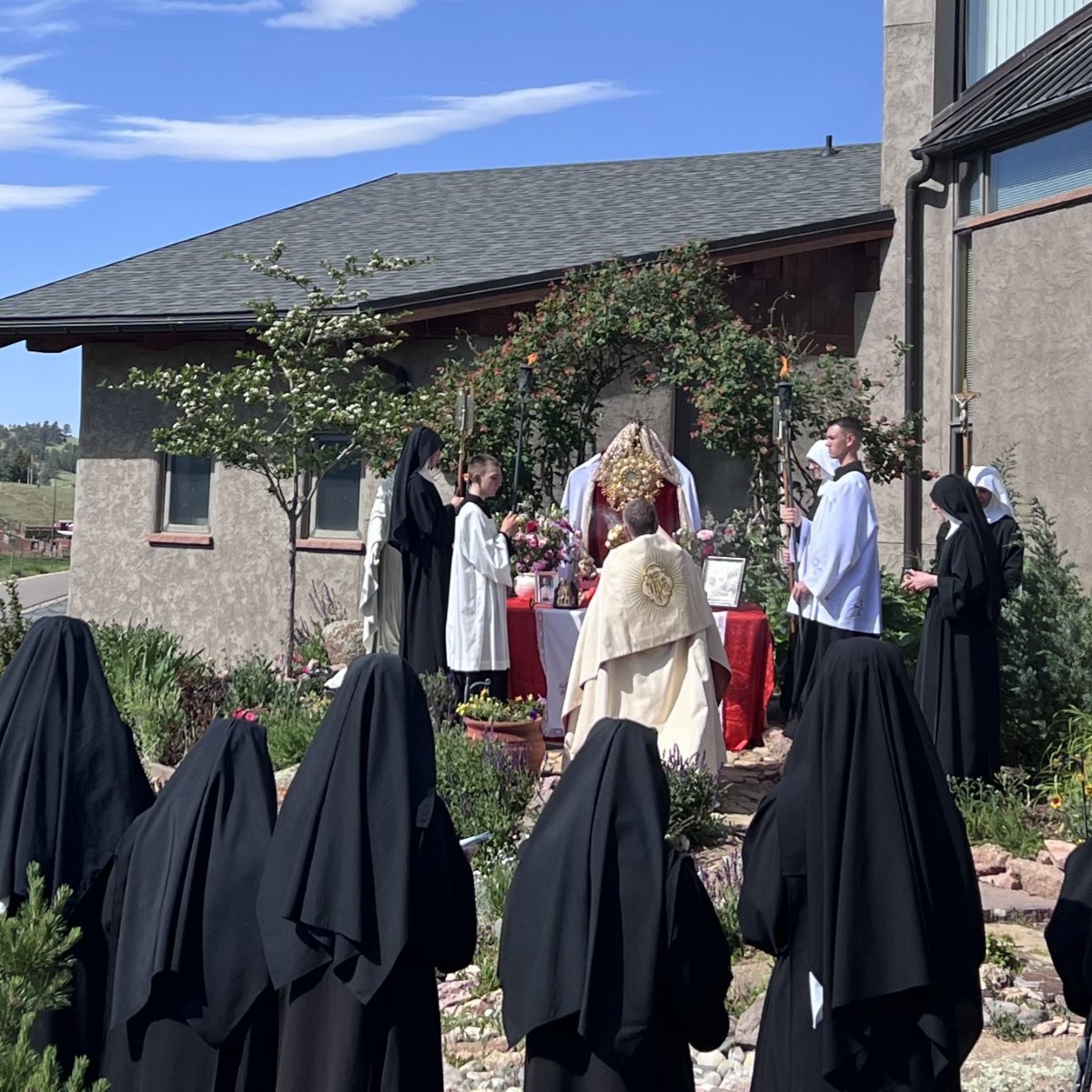
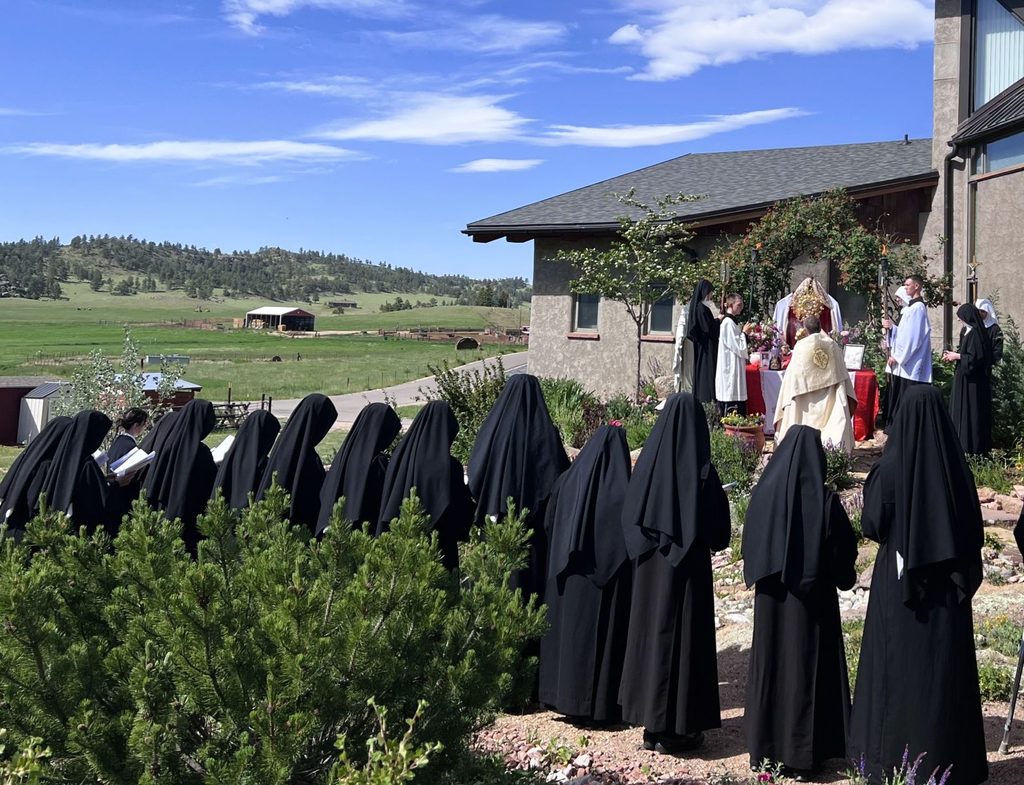
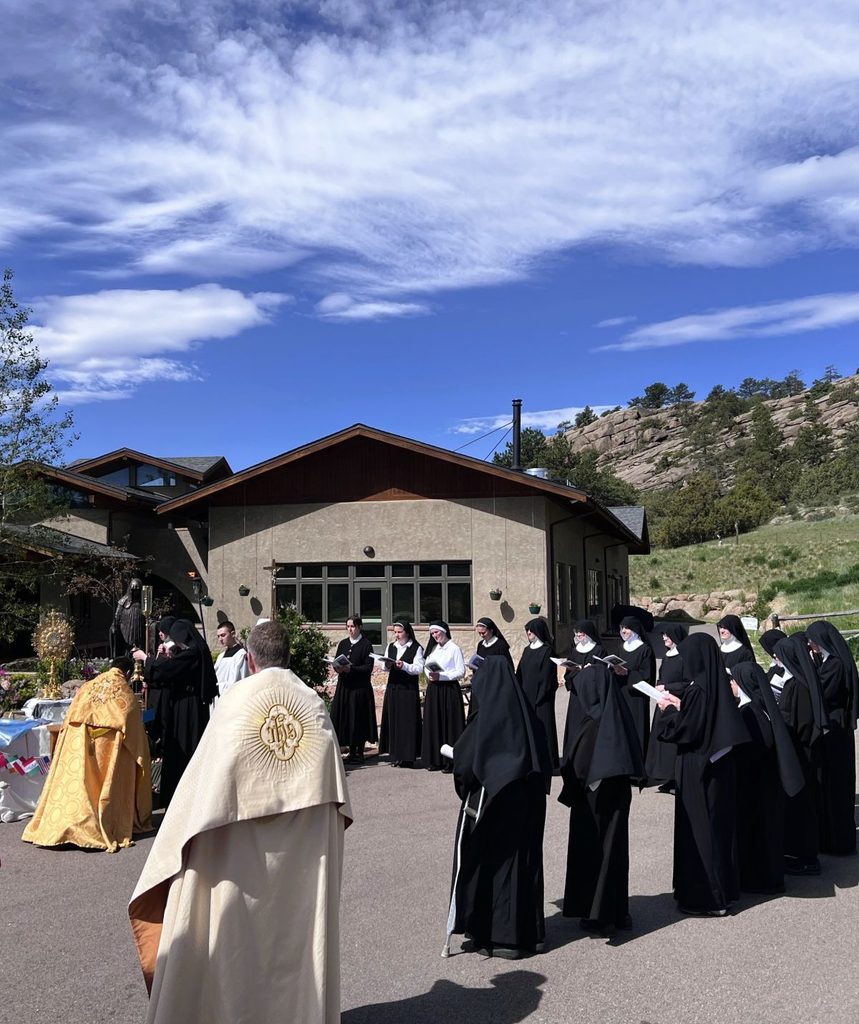
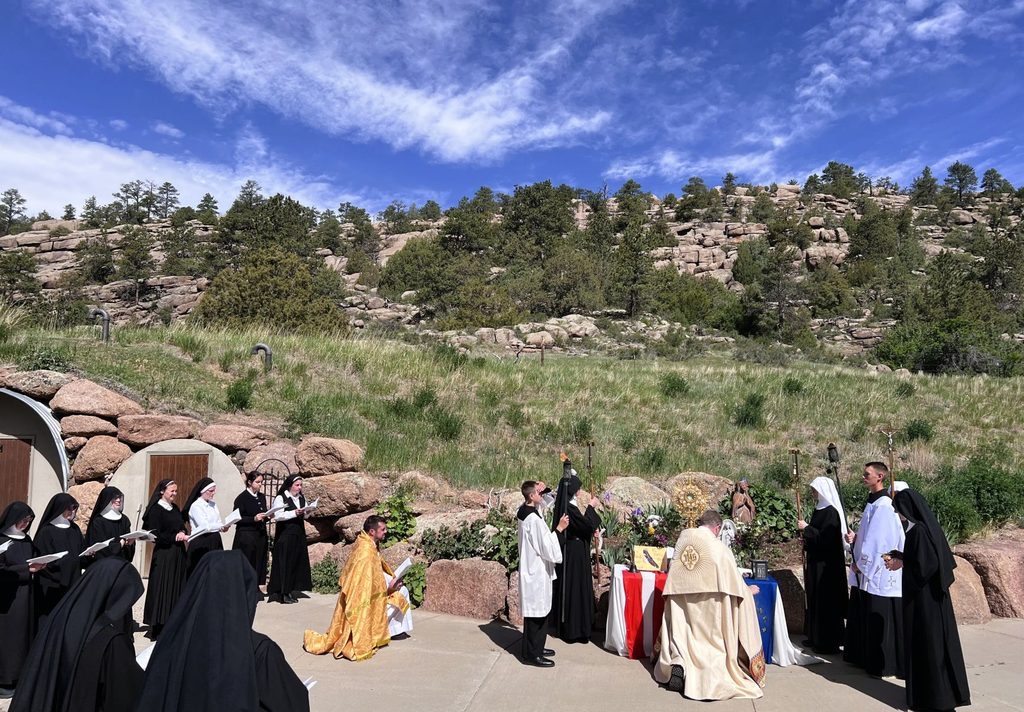
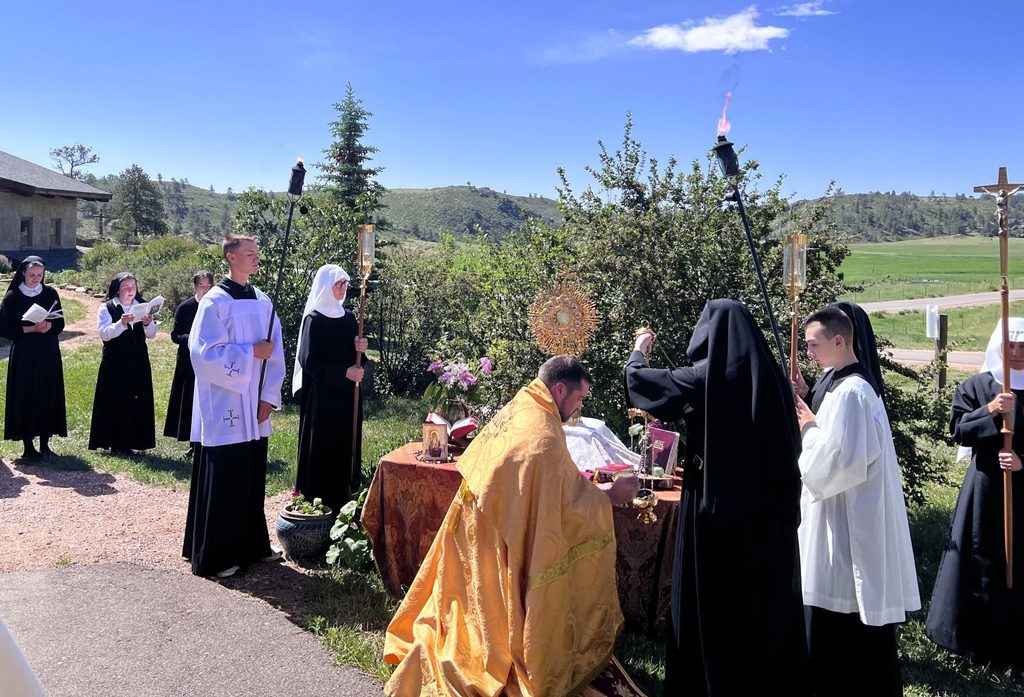
Photos of our 2026 Corpus Christi procession, courtesy of a retreatant

July 2026 Vocation Retreat

Behold, I am with you always…

Retreat weekend at the Abbey of St. Walburga
for women discerning their religious vocation

Ages 18-35

July 17-19, 2026

contact: walburgavocations@gmail.com

“Do not be conformed to this world, but by the renewing of your minds, so that you may discern what is the will of God—what is good and pleasing and perfect.”

Romans  12:1-2

Easter 2026

A reflection by our Abbess, Mother Maria-Michael Newe, OSB, on the first Tuesday of the Easter Season

Mary Magdalene stayed outside the tomb weeping.
And as she wept, she bent over into the tomb
and saw two angels in white sitting there,
one at the head and one at the feet
where the Body of Jesus had been.
And they said to her, “Woman, why are you weeping?”
She said to them, “They have taken my Lord,
and I don’t know where they laid him.”
When she had said this, she turned around and saw Jesus there,
but did not know it was Jesus.
Jesus said to her, “Woman, why are you weeping?
Whom are you looking for?”
She thought it was the gardener and said to him,
“Sir, if you carried him away,
tell me where you laid him,
and I will take him.”
Jesus said to her, “Mary!”
She turned and said to him in Hebrew, “Rabbouni,”
which means Teacher.
Jesus said to her, “Stop holding on to me,
for I have not yet ascended to the Father.
But go to my brothers and tell them,
‘I am going to my Father and your Father,
to my God and your God.’”
Mary went and announced to the disciples,
“I have seen the Lord,”
and then reported what he had told her.

—John 20:11-18

In the Gospel reading at Mass today, Jesus asks Mary Magdalene, “Why are you weeping?” I think Jesus very sweetly sometimes asks us the same thing to make us think: Ok, why are you really crying? Then of course, she hears His voice, and that’s enough, and she starts grasping to hang on to Him.

And He tells her, “Stop holding on to me.” But I don’t think it’s a, “STOP HOLDING ON TO ME.” I think it’s a really gentle, “Stop, you are not going to lose me.” And then, “Go tell my brothers, tell them, I am going to my Father and your Father. To my God and your God.”

What an incredible message. He reaffirms the “Our Father.” It’s Our Father. What a lovely thing, Mary doesn’t question Him, she just takes off. She’s gone. “And Mary went and announced to the disciples, ‘I have seen the Lord.’” She’s the apostle to the Apostles.

I think of the sweetness of doing His will. Mary wanted to hang on to Him, but He helped her to see His will instead of her own. It’s as if He said to her, “We need to do this now. You will never lose me.” What a wonderful way to live. That’s living in the New Testament. That’s truly living with that love that says to Christ, “I trust You. I will never lose You. Teach me to do Your will.”

I hope we all love that much that we want to obey Him rather than our own desires. What will we do for Him? Will we strive for an obedience that isn’t looking at ourselves, that says, “I want to join You in pleasing the Father”? What a precious gift to God this is. What a difference to look at obedience in Easter. It’s a triumphant obedience. One that says, “I live.” I wish that for each one of you — that triumphant obedience. 

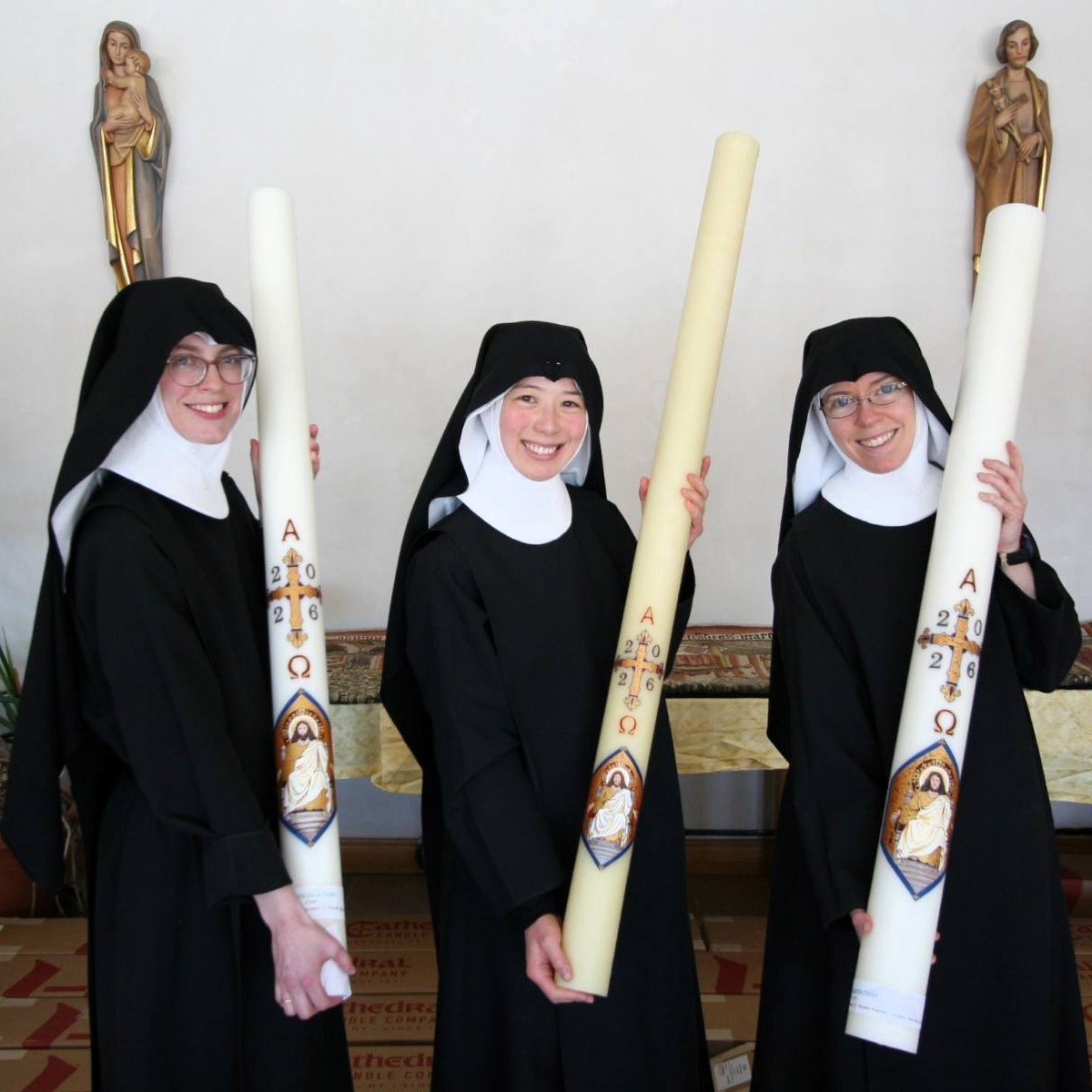
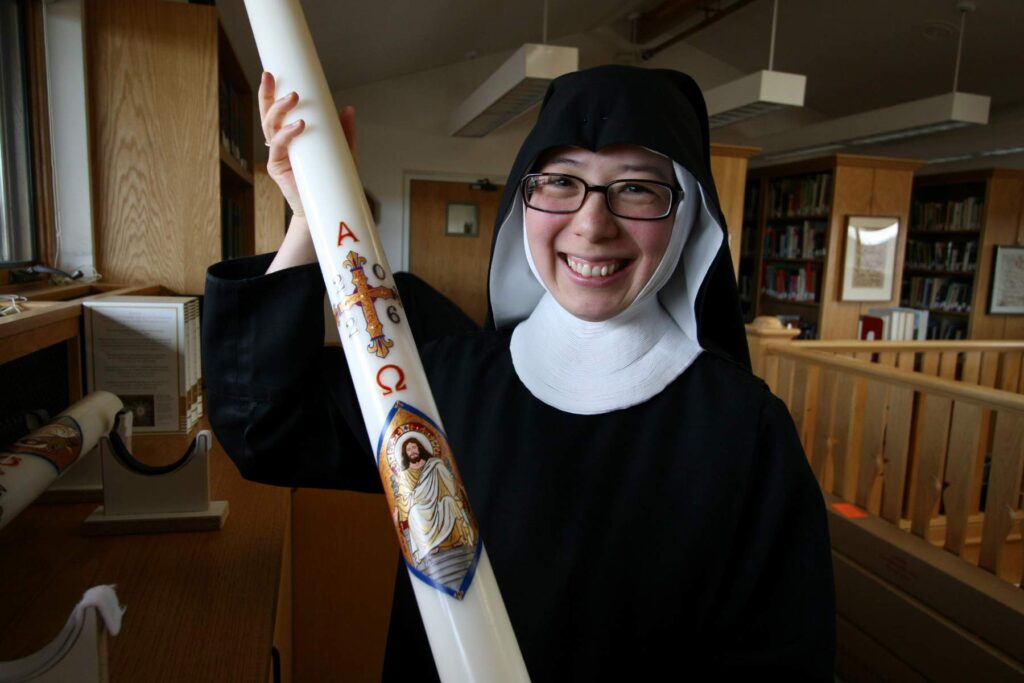
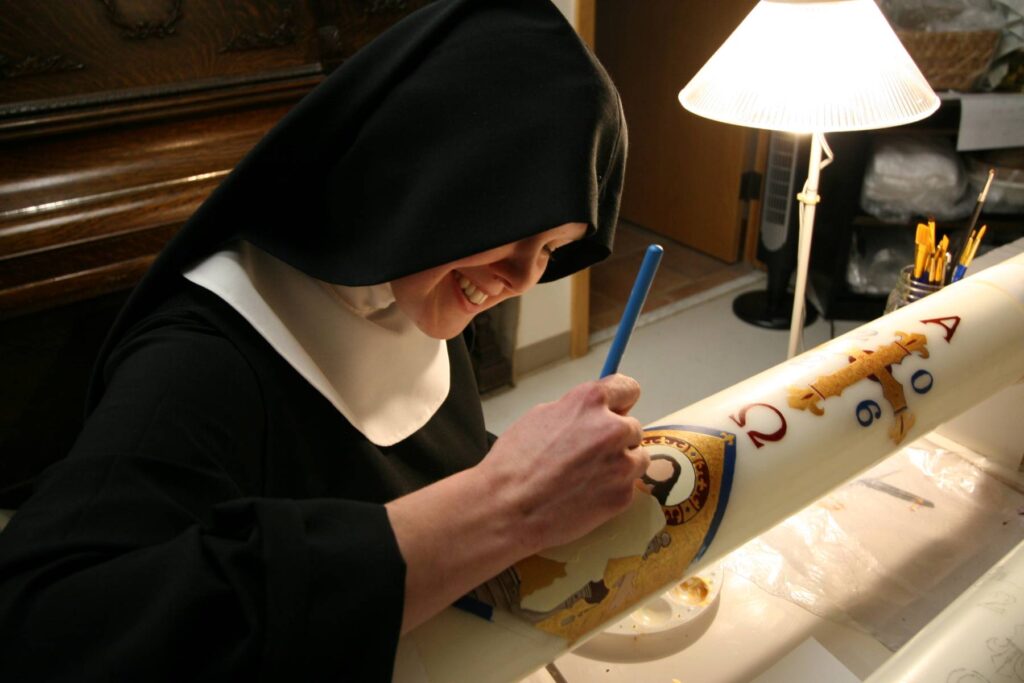
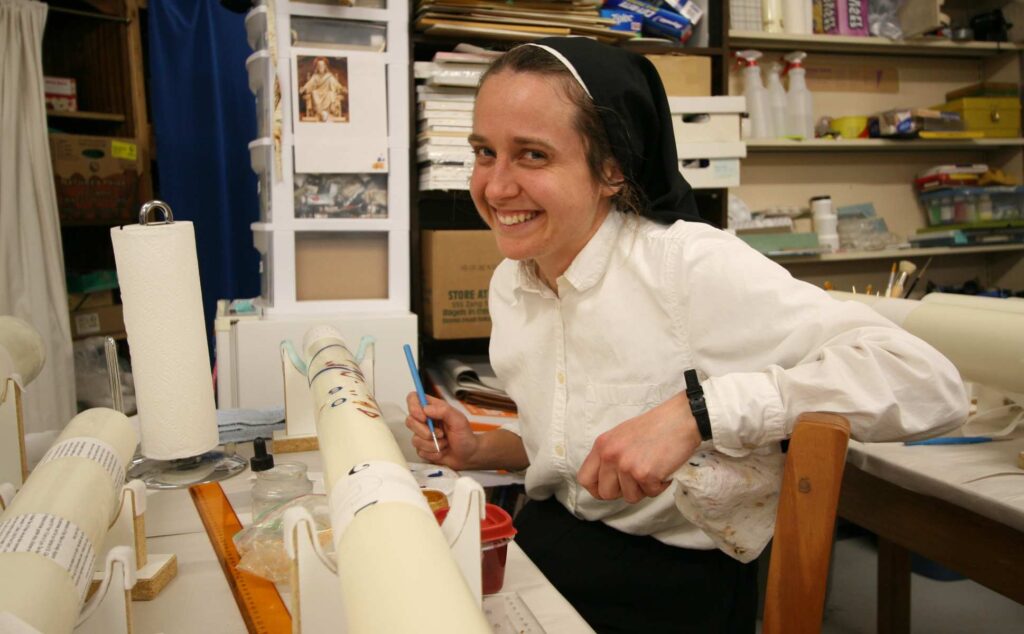
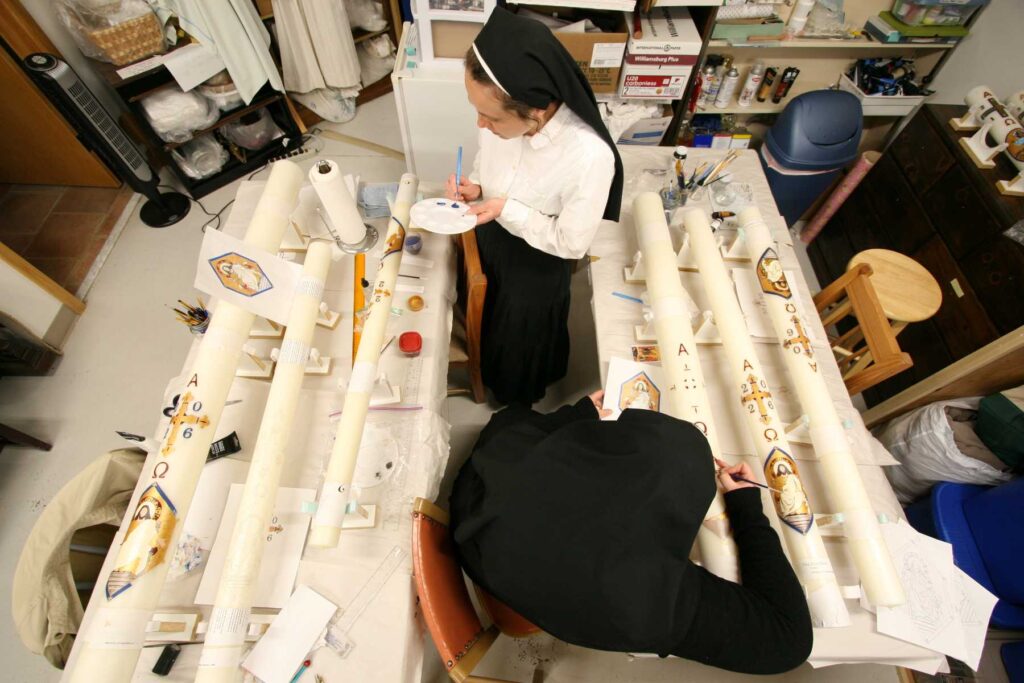
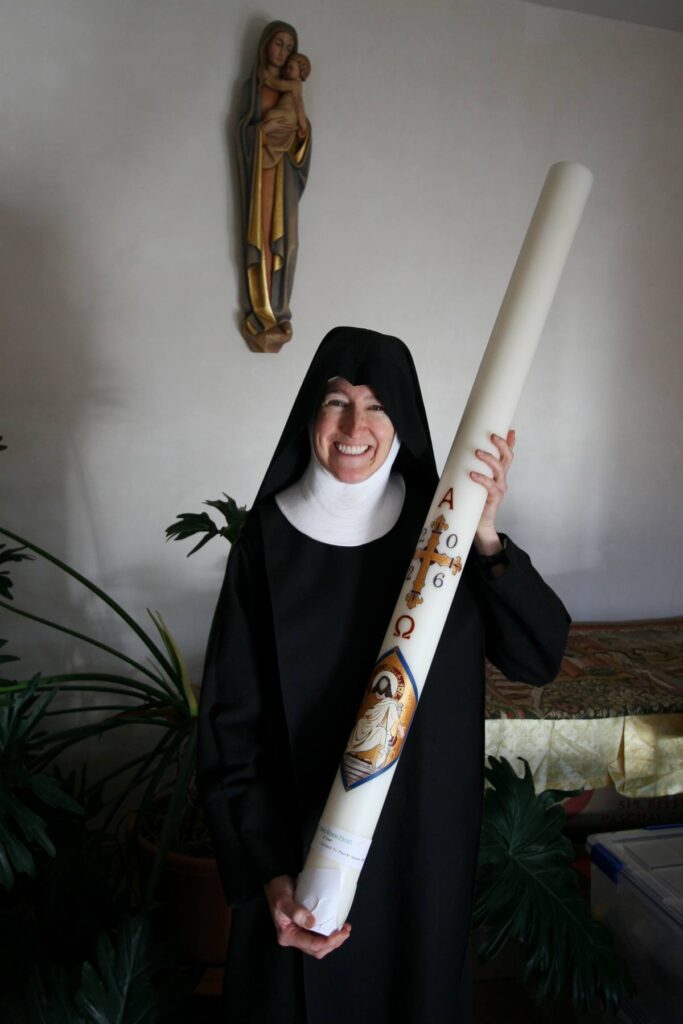
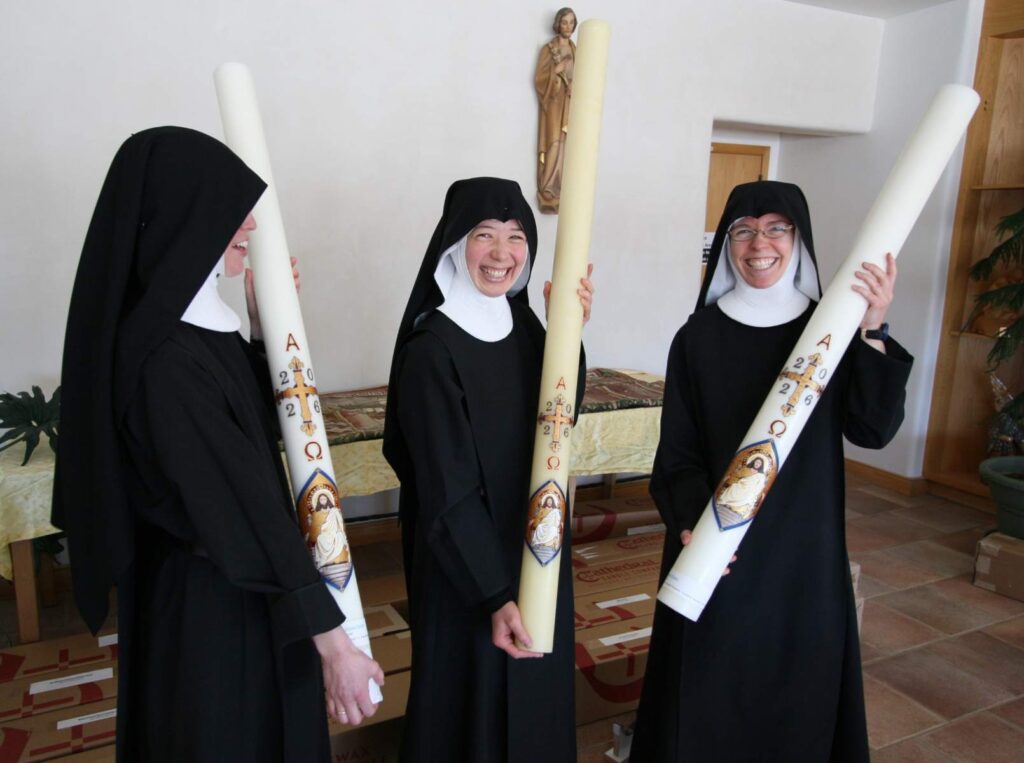
Starting in the fall of last year, the Abbey’s paschal candle department focused on painting over twenty candles of various sizes. The 2026 candle’s design was inspired by the figure of Christ in Pietro Tenerani‘s monument to Pope Pius VIII in St. Peter’s Basilica, Rome. Christ, seated on His throne, is shown with a peaceful countenance and outspread arms, welcoming all who approach Him. We hope this speaks to those who have entered the Church this Easter, and to all the faithful as they encounter Christ in His Church.

Paschal candles are used during the Easter Vigil Mass to carry the flame from the Easter fire into the church, and from which every other candle in the church is lit, as a symbol of Christ the true Light enlightening the world and dispelling the darkness of evil.  

In the News/Media

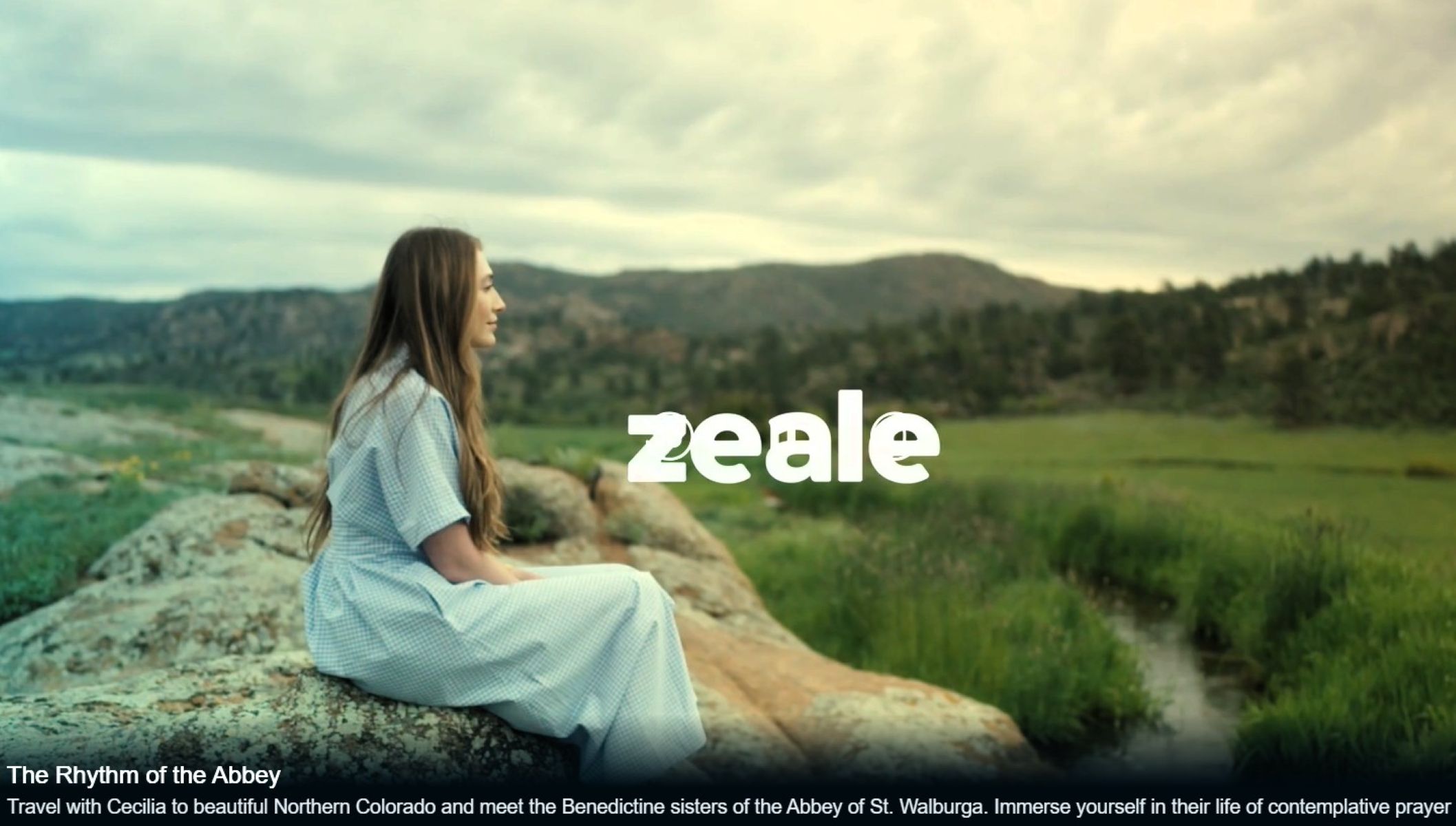
Featured in a Zeale Media Episode of “Flourish”

Cecilia, the host of “Flourish,” visited the Abbey of St. Walburga to shadow and interview the Sisters who work on our farm, highlighting our monastic approach to balancing prayer and work:

Featured in the Augustine Institute’s “How to Lent” Video Series

The video crew from the Augustine Institute visited the Abbey of St. Walburga for the day and had an interview with Mother Maria-Michael about the importance of prayer for Episode 2 of their “How to Lent” series:

From Denver Catholic Online

In Other News

The Abbey of St. Walburga was one of the monasteries chosen to be included in Bishop Robert Barron’s film series “Catholicism: The Pivotal Players” in the episode on St. Benedict:

A Novice Investiture on the Solemnity of St. Joseph

A reflection by our Abbess, Mother Maria-Michael Newe, OSB, on the day before one of our postulants received the Benedictine habit

St. Joseph is one who truly loves and is a father to all. Tomorrow, on the Solemnity of St. Joseph, we will see Mary-Grace clothed in our Benedictine habit, which carries the witness of one who is seeking to serve God as a soul after His own heart. Hear the words we will pray before she receives the various parts of her monastic attire: [Regarding the habit] Bless this religious habit by which your handmaid who will wear it, desires to express her readiness to serve you with undivided devotion. [Regarding the belt]: Grant to your handmaid who will wear it, the grace to always keep in mind the chains of your son who was obedient unto death, in order to set us free. Remember, St. Joseph was ever obedient to the messengers God sent. Always. Quick and fast. [Regarding the scapular]: Bless this scapular which your handmaid will wear as a sign of her conversion, not living according to her own desires and pressures, but walking according to the judgment and will of another. For did not St. Joseph have to do a complete U-turn when he intended to divorce Mary because she was found with child? He was so gentle and compliant to God’s will. His obedience was without delay, for he held nothing dearer than God. There was no hesitation, or lukewarmness, grumbling, or complaining. In fact, he didn’t say a word. He simply did all that God had asked. [Regarding the veil]: …as a sign of the religious state, so that she may be blessed, spotless, and holy, and recognized as consecrated to God. We belong to Him. We are His. Would you want to be anything else? It is the greatest gift and St. Joseph recognized what it meant to belong to God. He was ever chaste, he was pure, and don’t think he didn’t fight for it. Therefore, he is the guardian of virgins. Let us too be as faithful, humble, holy, and pure of heart as St. Joseph, and may you, Mary-Grace, have forever his loving protection. Remember what he did on earth is what he’s doing in heaven. He protected the Holy Family. He protects what is holy. Let us all be a part of that.

To read the responses of our “Sisters in Formation” to a series of interview questions for a recent Denver Catholic Article, click here

Tending the Fire of Advent

Celebrating Sister Cecilia’s First Profession

In this season of joyful anticipation, our community celebrated the First Monastic Profession of Sister Clare, who received the name Sister Cecilia on the Solemnity of the Immaculate Conception (December 8, 2025). She professed stability, fidelity, and obedience to the monastic way of life for the next three years, to be renewed annually until Solemn Monastic Profession.

This Advent, we pray that God would enkindle in Sister Cecilia’s heart an ever-growing love for the sweet yoke of Christ according to the Rule of St. Benedict. In that same spirit, Mother Maria-Michael, OSB, delivered an address on November 29, inviting us to keep the Advent flame alive in our hearts with vigilance in prayer and service. Below is an abridged version of her reflection.

Staying vigilant

Advent is really the life of the monk. It is what we are all about: being vigilant and being ready.

In the Divine Office, we read, “Sober, just, and godly we live in this world as we live in blessed hope for the glorious coming of our mighty Savior, Jesus Christ. Let us be concerned with inspiring each other to love and do good works” (Titus 2:12-13). That is a holy community! That is one that is truly seeking God and not self.

Likewise, in today’s Gospel, Jesus offers us a timely exhortation:

Beware that your hearts do not become drowsy
from carousing and drunkenness
and the anxieties of daily life,
and that day catch you by surprise like a trap.
For that day will assault everyone
who lives on the face of the earth.
Be vigilant at all times
and pray that you have the strength
to escape the tribulations that are imminent
and to stand before the Son of Man.

Luke 21:34-36; emphasis added

He does not say that we “become drowsy because we have been working hard.” It is not a surprise that we are tired. It is not a surprise that sometimes we feel a little worn out. We should! We are putting everything into the life we are living. That is the gift we give to God. Sometimes getting up for Matins is hard, but that is the choice of one who is vigilant — one who is waiting for God.

That is the Gospel we should keep before ourselves this Advent. We have to live with vigilance.

The fire of unity

I have been thinking so much about the fire of the early Church — the love with which they lived their lives. They were aflame. They were standing strong, and they were truly one. They loved the Church.

And I pray that we, too, reclaim again that love. We should be like a community keeping the Easter fire going — the Easter fire from the beginning, the first Easter fire that shot fire into the world.

We should keep Advent as precious as the Easter fire. And let us be that fire for the Church. We need to be the sparks that make everything go afire. It only takes a spark to start a forest fire — that is all it takes. But what if we are a torch?

We have to live with great love for the Church.

How relevant this is for our day! We are not called to tear the Church apart. We are called to trust in God, and we are called to unity in obedience to the Church. And I would ask that we pray specifically for the Church this Advent. It does not need to be torn apart — and, quite frankly, a lot of schisms are tearing parishes apart and pulling people away.

That is not the Church.

I think it is going to take a lot of prayer to bring it back. But isn’t that our life? It is one of prayer. It is one of obedience. It is one of sacrifice.

St. Benedict was very clear on this when we hear about the kinds of monks:

Third, there are the sarabaites, the most detestable kind of monks, who with no experience to guide them, no rule to try them ‘as gold is tried in a furnace’ (Prov. 27:21), have a character as soft as lead. Still loyal to the world by their actions, they clearly lie to God by their tonsure. Two or three together, or even alone, without a shepherd, they pen themselves up in their own sheepfolds, not the Lord’s. Their law is what they like to do, whatever strikes their fancy. Anything they believe in and choose, they call holy; anything they dislike, they consider forbidden.

RB 1.6-9

I think we should go back to this chapter and read it again, because it has such great wisdom in it. It shows us what unity means. It shows us how you have to be ever vigilant to be good monks.

Do not be afraid to know what you do wrong. Be afraid that you don’t. And be willing to change it. We must say to ourselves, “No, I am not going that way anymore. Is it not God’s call to bring me to holiness? I must continue on the straighter road. I must continue to strive for holiness.”

If we all strive for holiness this way, we become one in unity — one in community. We strive to live well by inspiring each other to the good things.

Eagerness in prayer

I love going to Matins early every morning and seeing everyone coming. It makes me think, “I’ve got to get in there — I want to be a part of that!” I love when the bell rings and everyone is in a hurry to get to chapel. I think that is such a grace.
I also think it is such a grace when we serve each other at table. That is one of the most beautiful things of the monastic life. The world needs to return to serving one another. We need to keep that strong.
And we need to remember, during this Advent, that we are going to serve each other as best we can and keep our minds on prayer.

Let us dive in with joy. Let us pick up this season and run with hearts open wide. Jesus Christ is the King of Kings and Lord of Lords. When we pray “Your Majesty,” we must remember that He is the most majestic. I pray that everyone will have a holy and spiritually uplifting Advent that leads to prayer in which we are full of gratitude for Him who came so humble that He chose to be a child.

There’s nothing more humble.

/