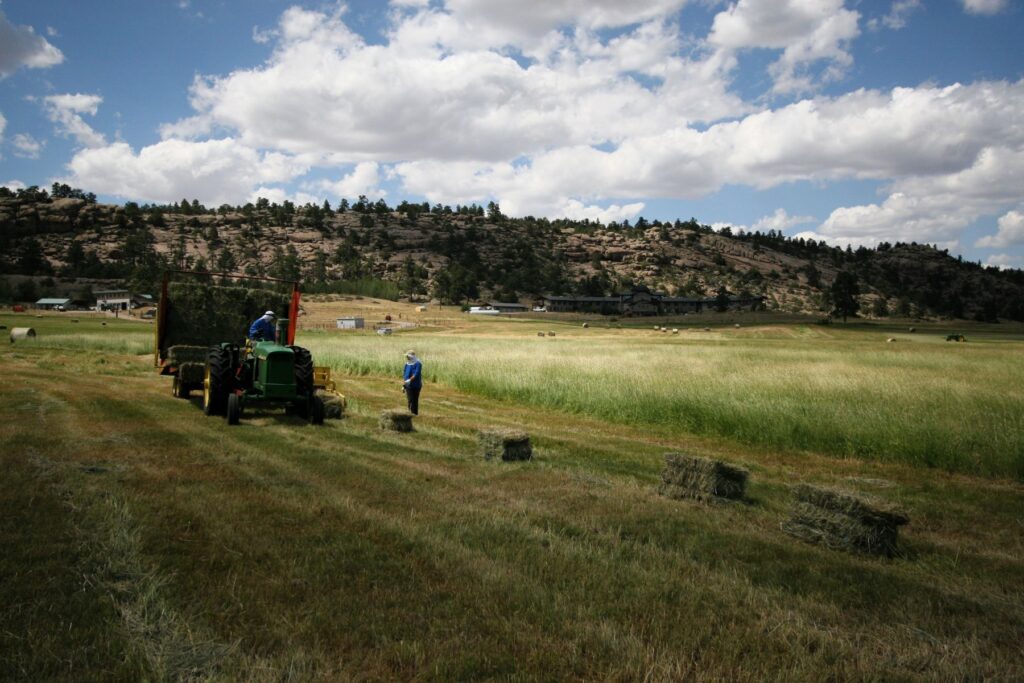
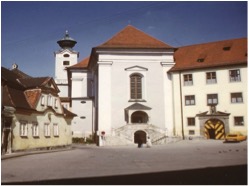
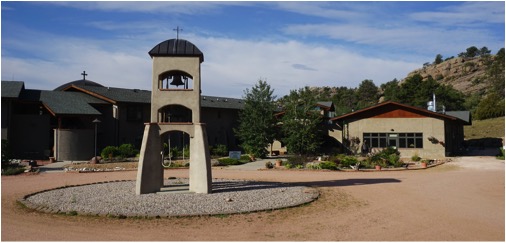
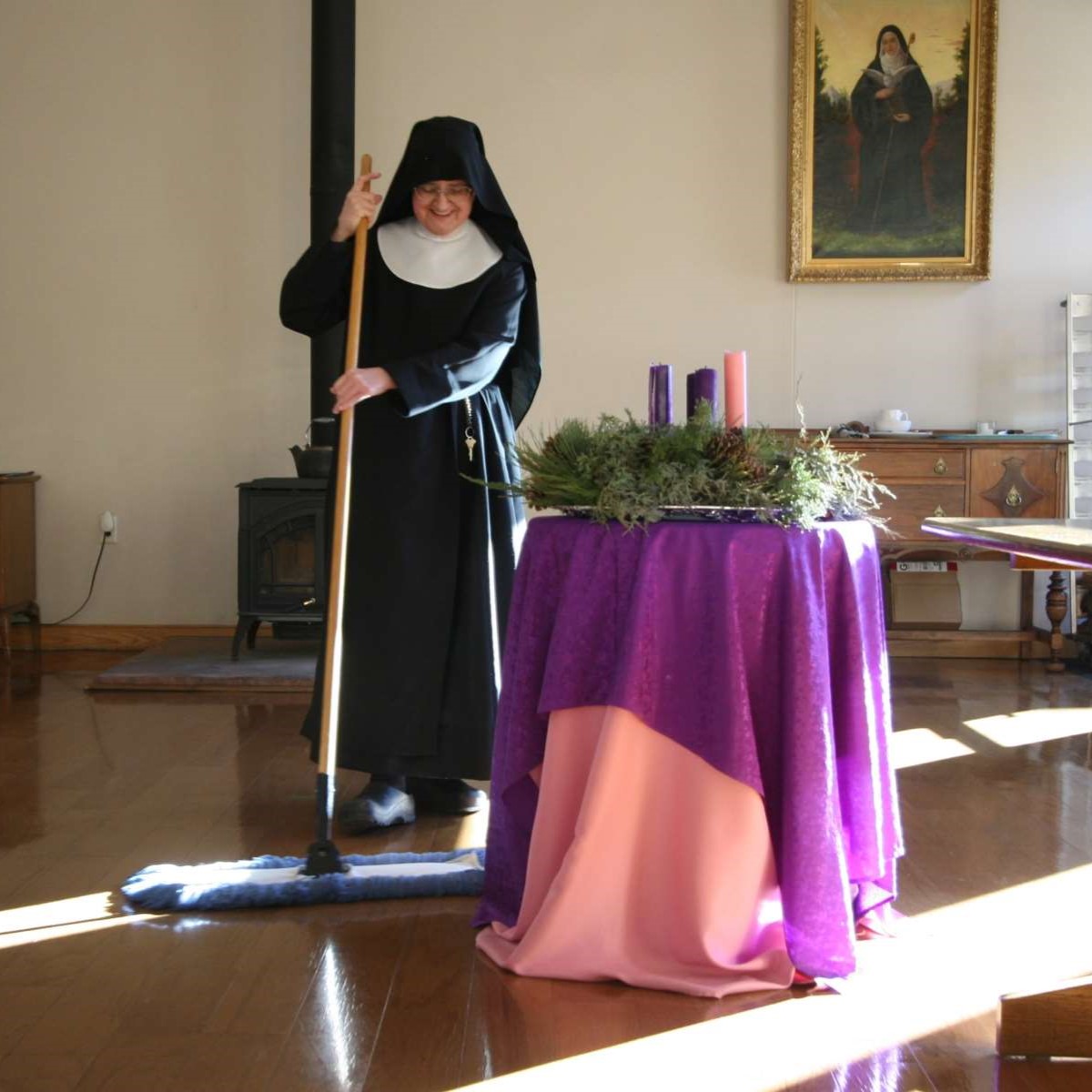
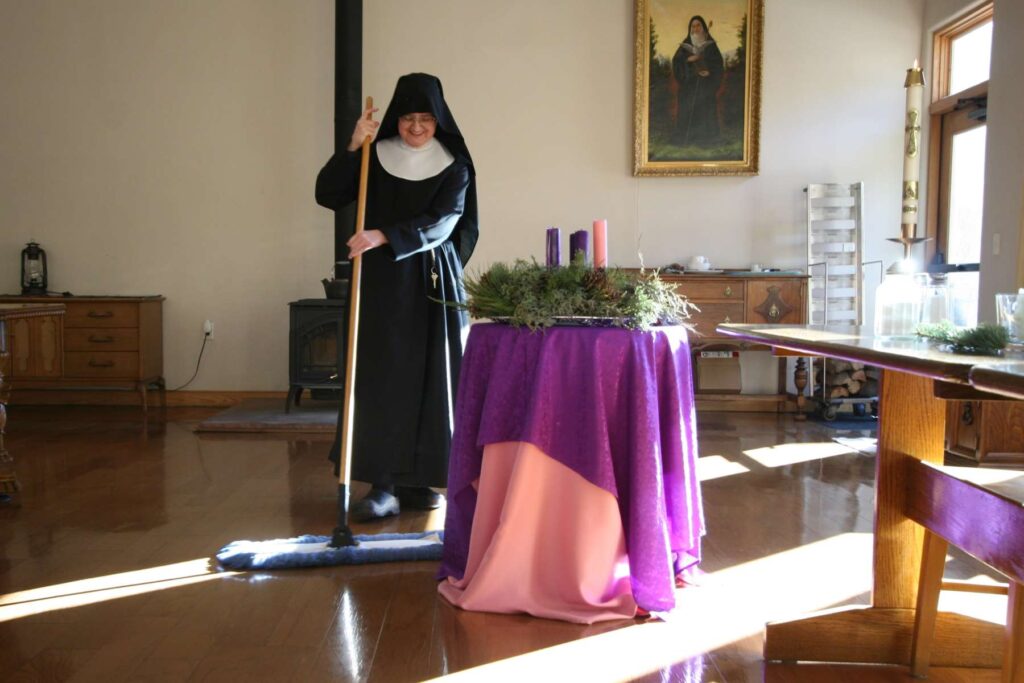
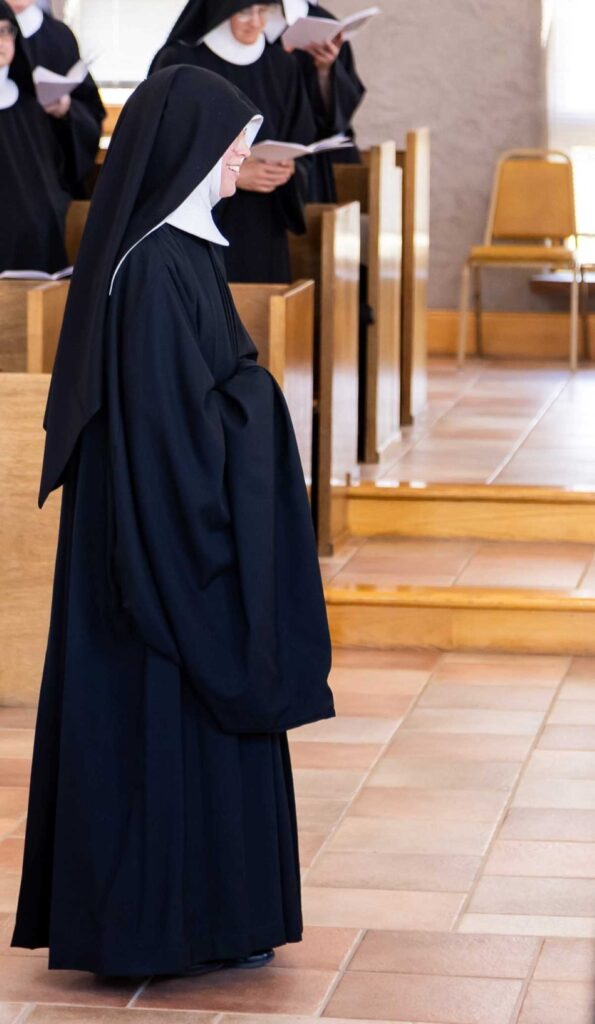
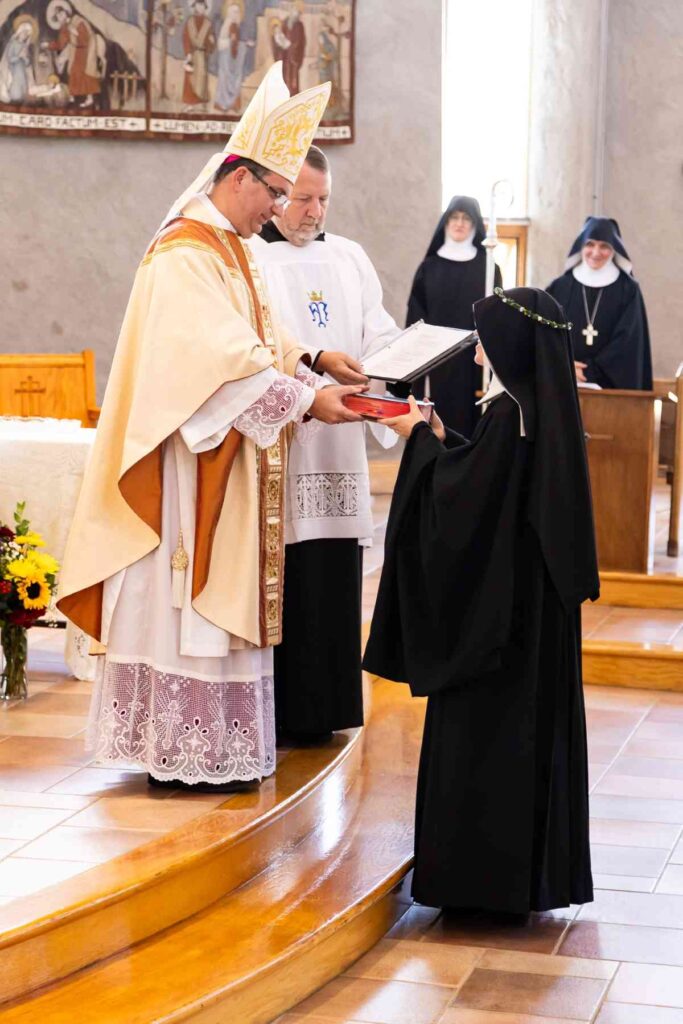
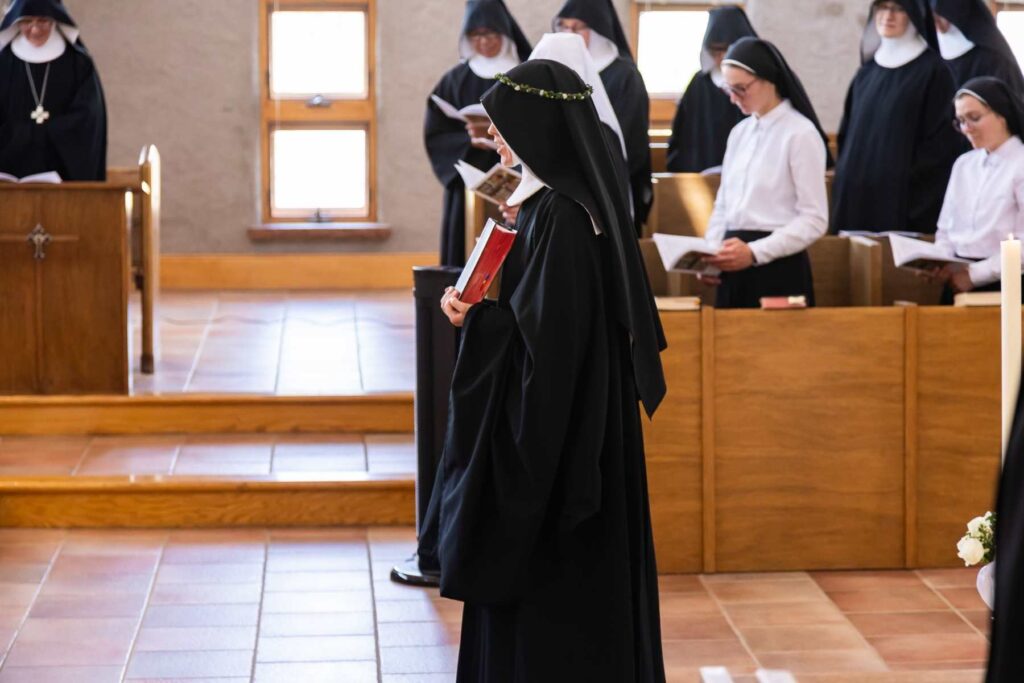
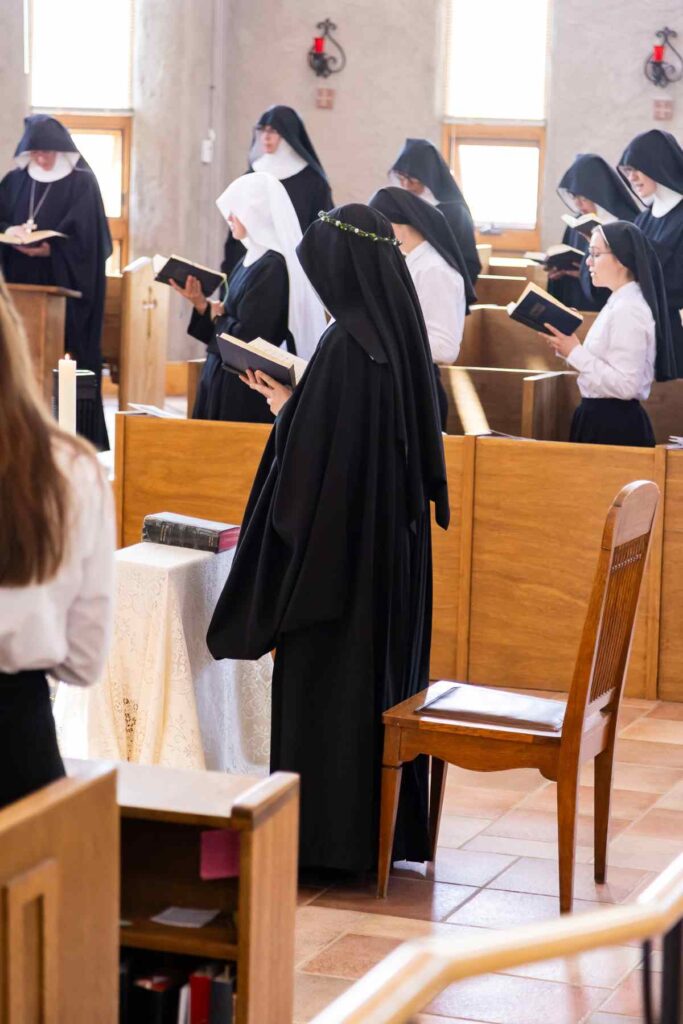
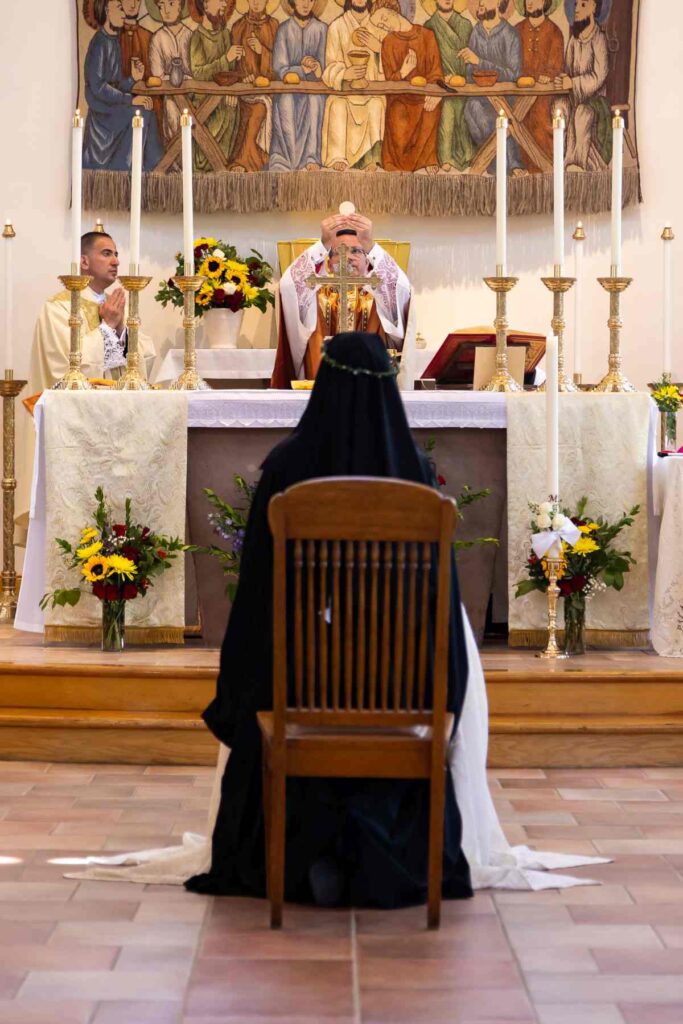
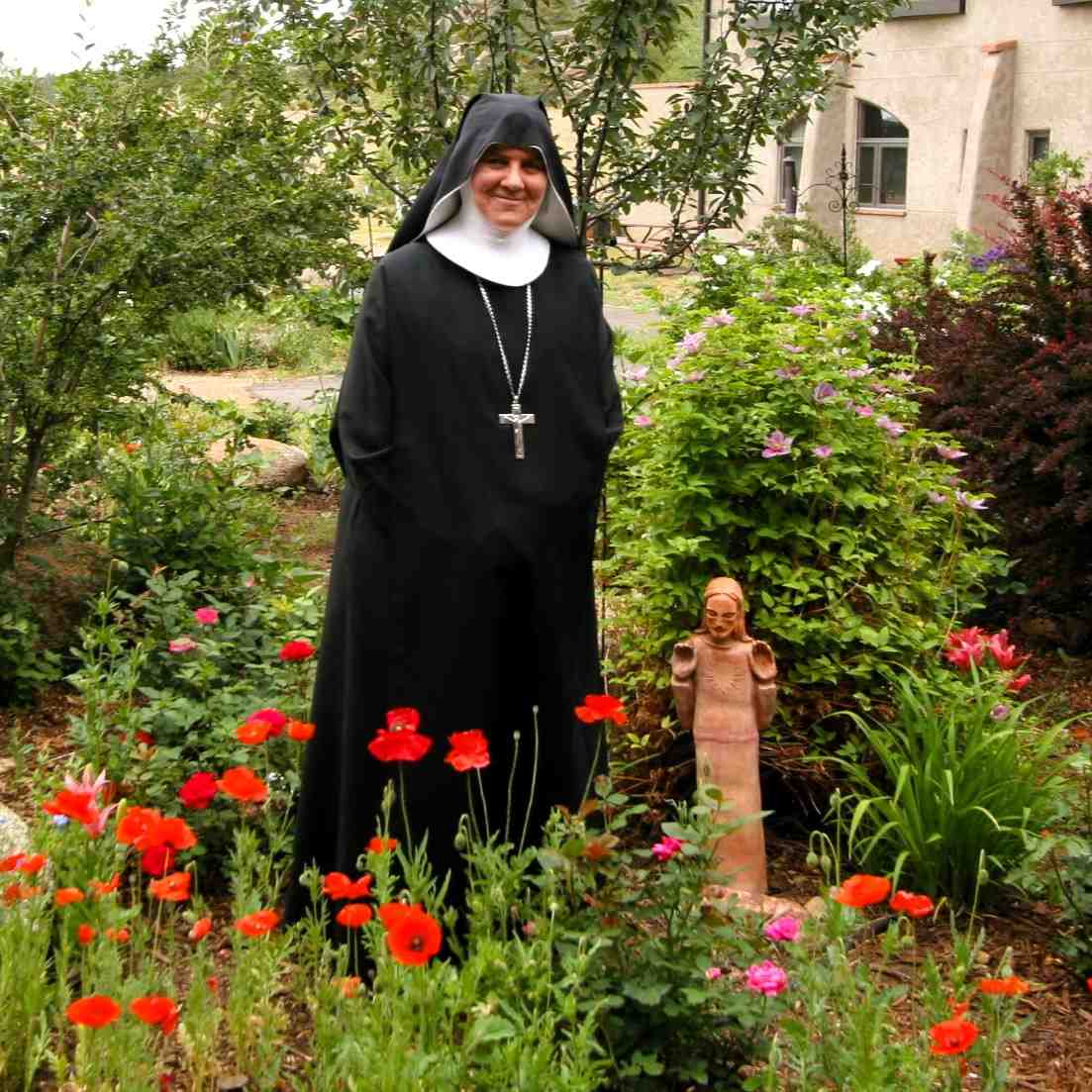
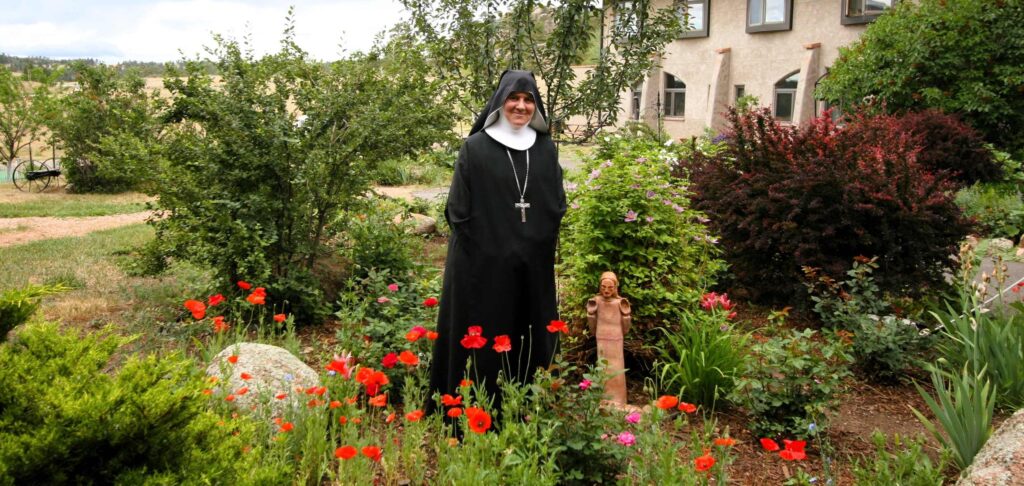
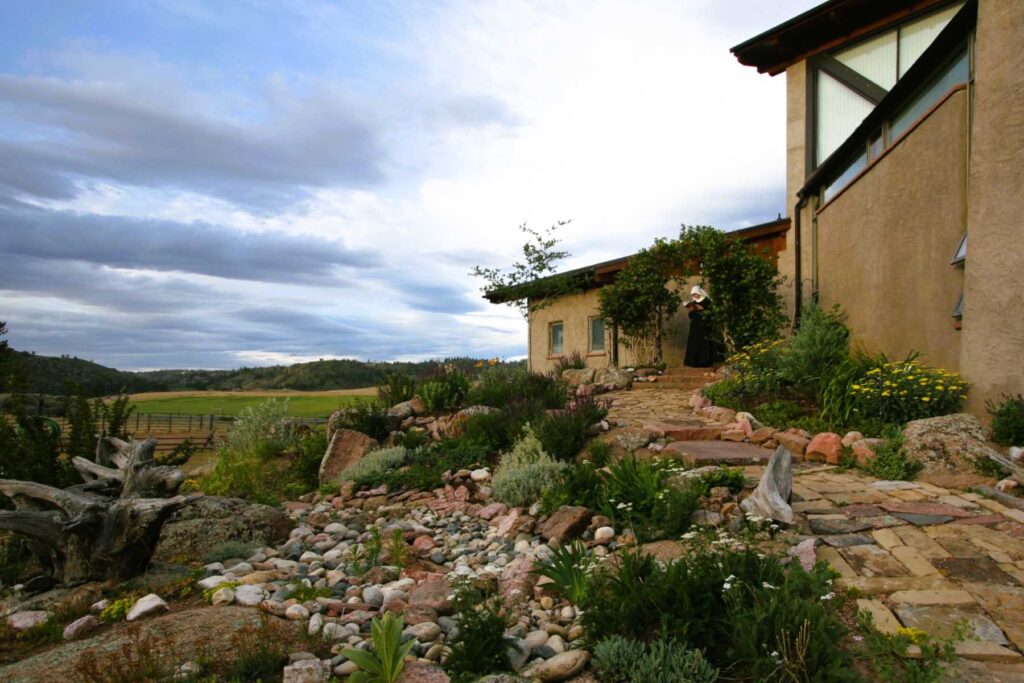
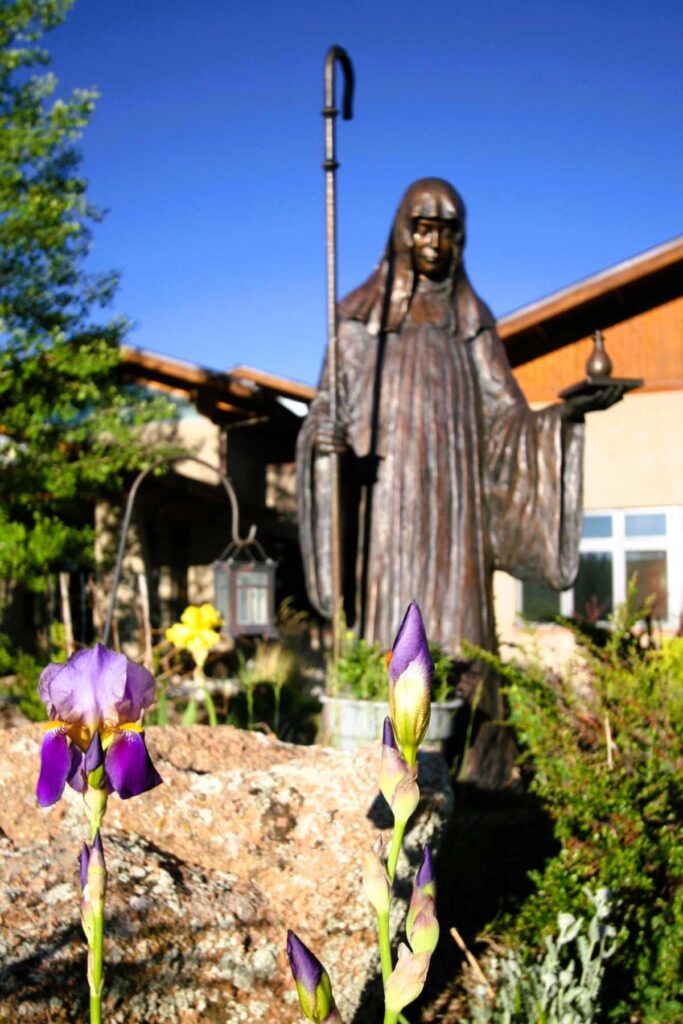
The 2027 Abbey of St. Walburga wall calendar features quotes from the Book of Psalms to accompany the photographs of life at our monastery.
As Benedictines, the Psalms comprise the majority of the content of our communal liturgical prayers, as designated by St. Benedict in his Holy Rule for praying the “Opus Dei,” (“Work of God”), also known as the “Divine Office,” or “Liturgy of the Hours.” Although our particular version of the Divine Office is unique to our community, there are standard editions of it available to everyone.
The cost is $16 per calendar, not including shipping and handling.
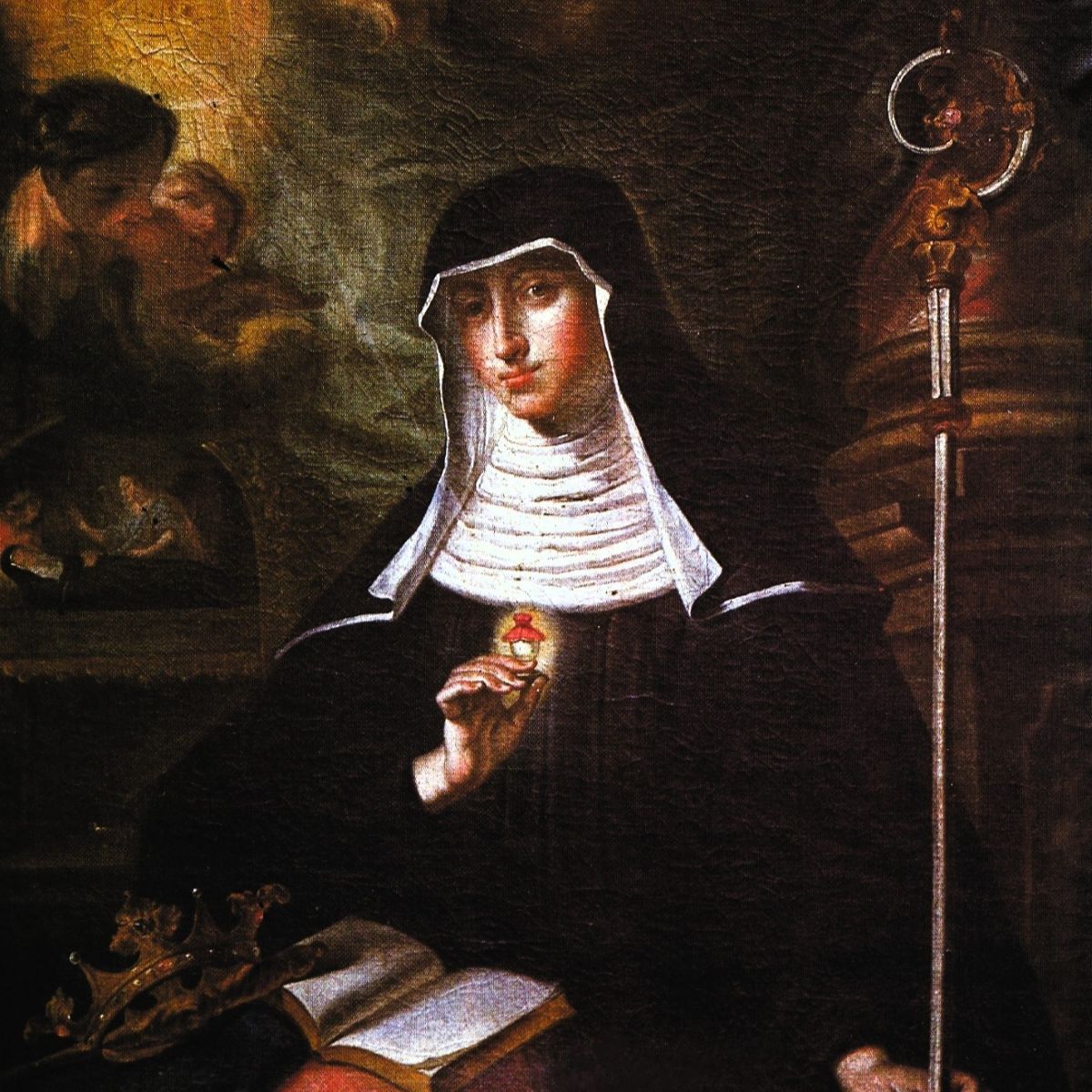
18th century painting of St. Walburga by an unknown artist, currently found at the Abtei of St. Walburg in Eichstätt
St. Walburga was born in what is today known as the county of Wessex in southern England in 710, into a noble family of saints. Her father was St. Richard, and her mother was Wuna, the sister or cousin of St. Boniface. Her two brothers, St. Willibald and St. Wunibald, also became saints.
As a child around the age of 10, St. Walburga was entrusted to the care of the Benedictine nuns of Wimbourne Abbey in present-day Dorset, England. For about 28 years, St. Walburga lived the typical monastic life of singing the praises of God in the Divine Office and presumably performing ordinary tasks around her monastery. Between 740 and 750, when St. Boniface asked the superior of Wimbourne to send nuns to help him in his missionary efforts in Germany, St. Walburga and around thirty other nuns were appointed to make the journey across the English Channel.
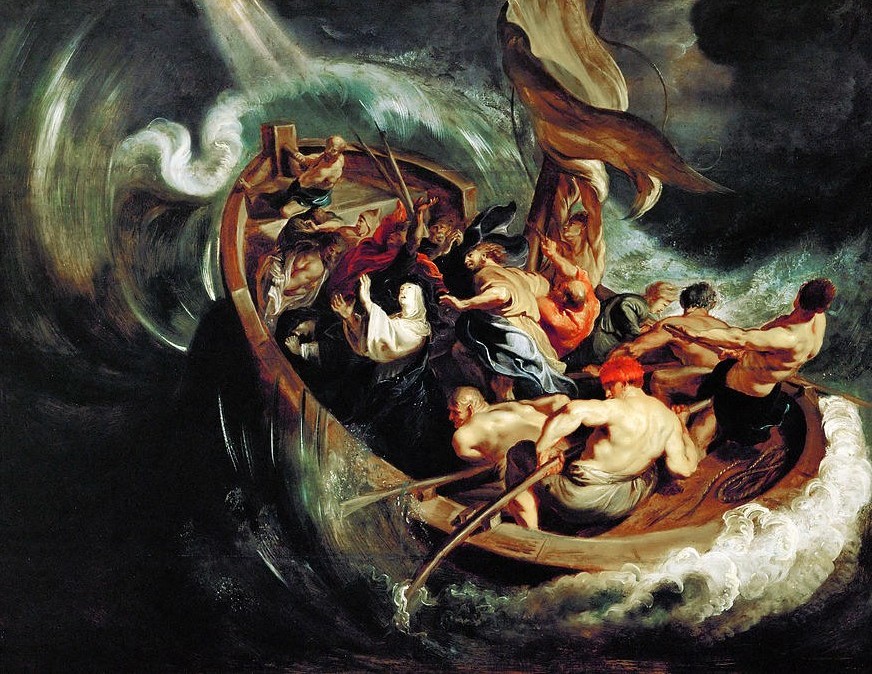
It was at this time that we hear of St. Walburga’s first recorded miracle. While they were on the boat that carried them across the Atlantic Ocean, a terrible storm came, but through her intercession the storm ceased, and they were able to safely continue their voyage. It is reminiscent of Jesus calming the storm at sea, whereupon His disciples were all amazed and said, “What sort of man is this, whom even the winds and the sea obey?” (cf. Matt. 8:24-27). Moses, too, wielded authority over the waters when God gave him the power to part the Red Sea for the Israelites to cross over to safety from their Egyptian pursuers. From her miracles, one gets the sense that St. Walburga stands among the great men and women of the Old Testament, the powerful prophets of God. But the person she followed the most, of course, was Christ. It was in following His example—and by His authority—That she was able to accomplish such great wonders.
The Miracle of St. Walburga by Peter Paul Rubens, c. 1610, currently housed in a private collection
Upon the nuns’ arrival in Germany, they taught the young, cared for the sick, and helped the poor with alms. After two or three years, once the monastery at Heidenheim had been built by Wunibald, she traveled to join him and set up a monastery for nuns nearby. They prayed the Divine Office together, but were otherwise separate from the monks, forming a double monastery. When Wunibald died, Willibald named Walburga his successor, and she became Abbess over both monks and nuns of Heidenheim.
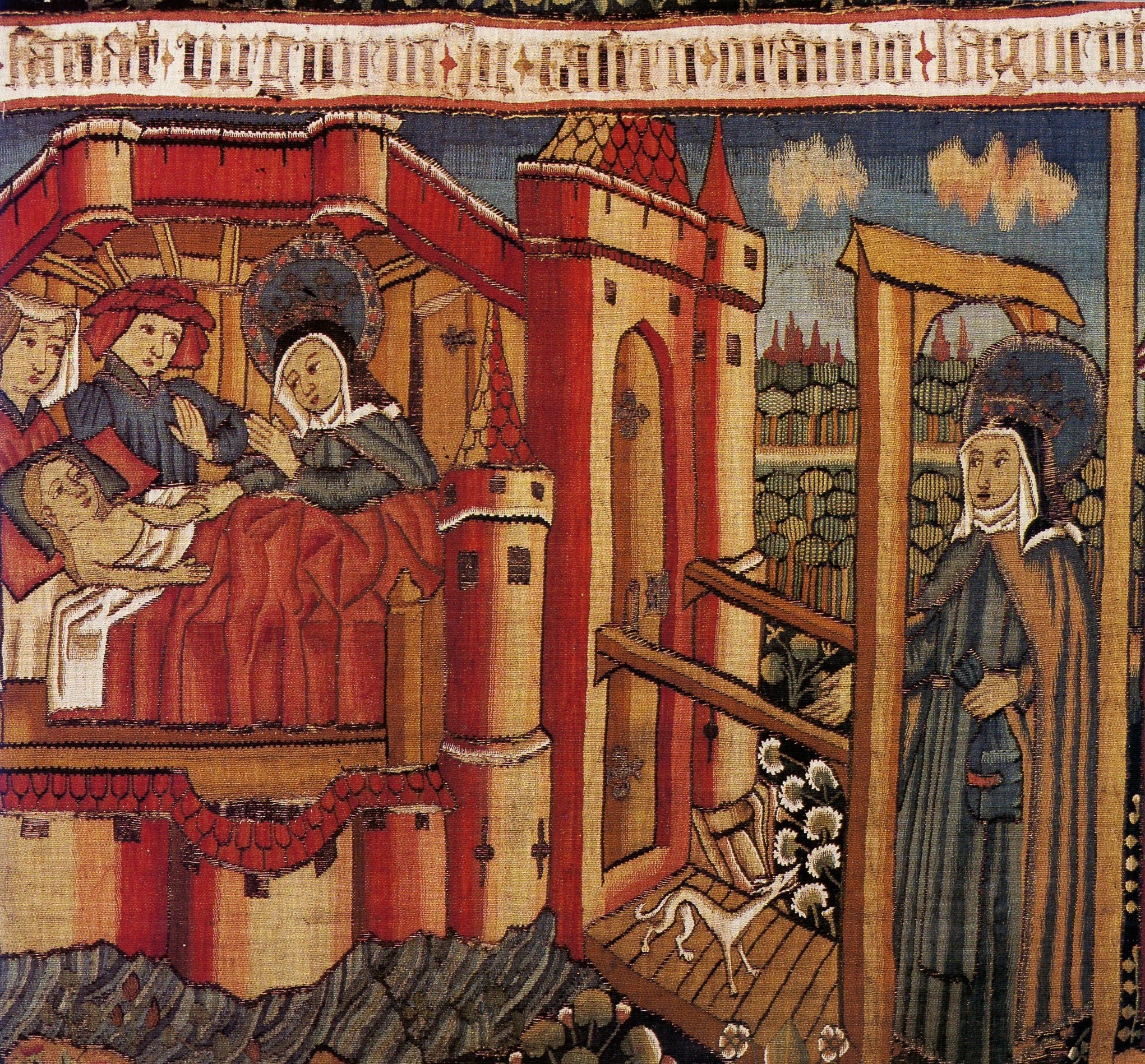
Another miracle of Christ that St. Walburga imaged was the healing of Jairus’ daughter. Jesus went to Jairus’ house and told the mourners that the girl was only sleeping, and brought her back to life by taking her hand, and saying, as one of the translations tells us, “Little Lamb, arise” (Talitha Koum). Then—and how Benedictine—He tells the onlookers to get her something to eat (cf. Mark 5:38-43). Similarly, it was recorded that St. Walburga went out at one night to the house of a nobleman, whose daughter was near death. The nobleman offered St. Walburga all the niceties, everything wonderful, as he bade her sit down with him, and by the time she was able to go upstairs to pray for the girl, the family had declared her dead. Regardless of this news, St. Walburga spent the night with the little girl in prayer, and when the sun arose, she presented a perfectly healthy girl to the noble parents, and then quickly returned to her monastery. The father tried to load her up with gifts to take back to her monastery, but she politely refused them and carried on without a fuss. There was no fanfare. She was simply a servant, a servant at work, who had completed her God-given task. That’s how you know the true humility of a saint: She’s not in it for the fanfare.
St. Walburga visits the sick girl / Tapestry artwork from the Abtei St. Walburg in Eichstätt, Germany
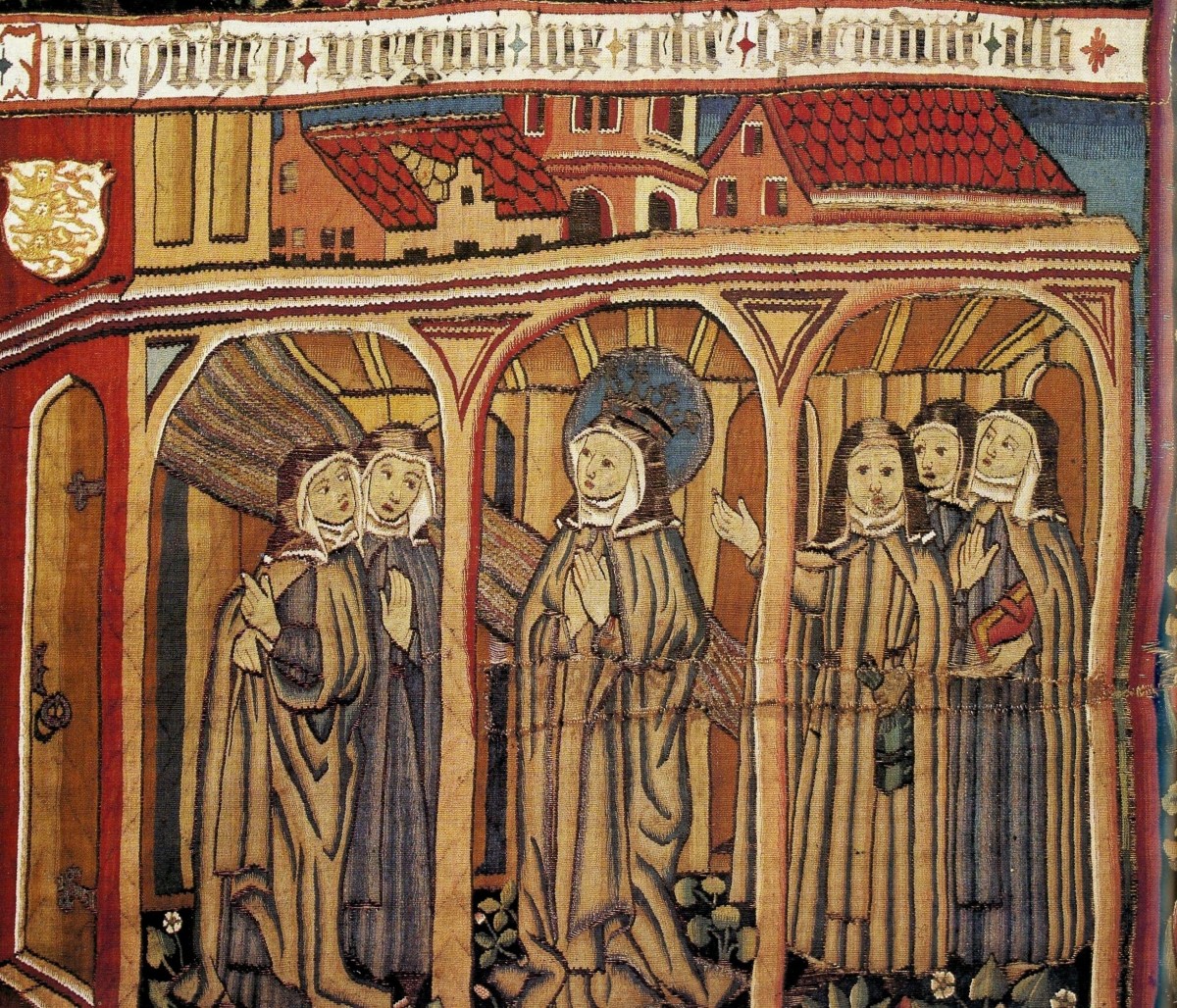
St. Walburga is known to be a saint of extraordinary light. On one occasion, she went into the monastery church at night, and she asked a monk (she was the Abbess of the double monastery of men and women at the time) for a torch to find her way, but the monk flatly refused. So instead, God lit the whole house up in abundance, in flowing light, which her nuns saw, and which seemed to “penetrate to the very heart of the earth.” St. Walburga, like another famous female Benedictine saint, St. Scholastica, asked a monk for a kindness, and was rejected — St. Scholastica had asked her brother, St. Benedict, to stay with her and pray shortly before she died, but he refused; then she turned to God and prayed, and a huge storm suddenly rolled in, which served to prevent St. Benedict from returning to his monastery, and he was forced to meet his sister’s request. When St. Walburga asked a monk for a light to see, and was refused, she too turned to God in prayer, and her request was answered with the miracle of light.
St. Walburga and the miracle of light / Tapestry artwork from the Abtei St. Walburg in Eichstätt, Germany
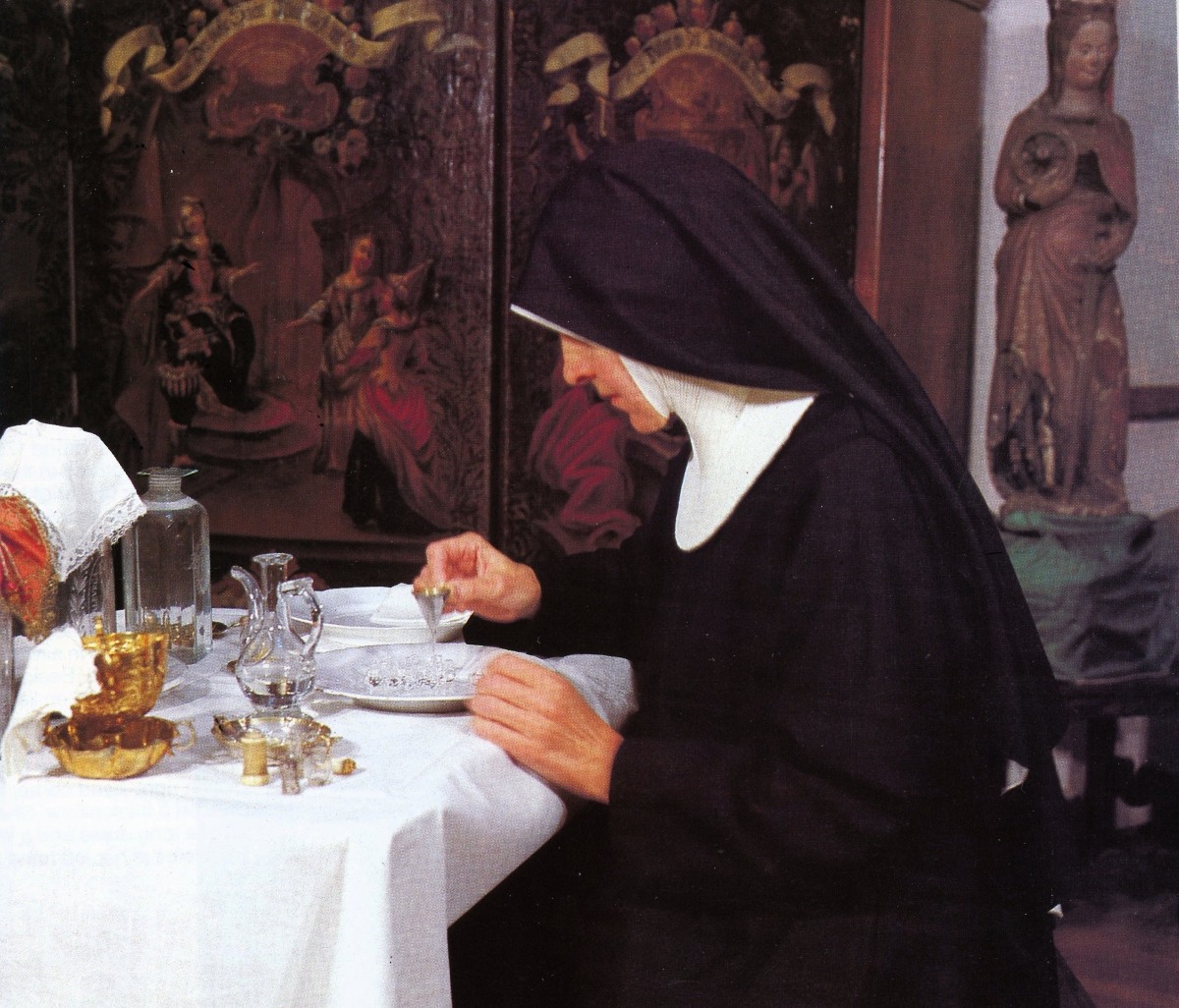
And then we also recognize the spirit of God acting freely and powerfully in St. Walburga through the miraculous holy oil that still flows from her bones. We hear in John 4:14, “Indeed the water I give them will become in them a spring of water welling up to eternal life,” and in Isaiah 8:11, “You shall be like a watered garden. Like a spring of water whose waters do not fade.” It seems that St. Walburga’s great compassion for others did not end at her death, but continues to be a pure gift of God which flows throughout the ages for the good of His Church. Many people write us asking for St. Walburga’s oil, and then take the time to share their stories of healing with us. One could say that this quote from St. Thérèse of Lisieux may also be applied to our patroness: “I wish to spend my heaven in doing good upon the earth.” St. Walburga certainly does.
The bottling of St. Walburga’s Holy Oil at the Abtei St. Walburg in Eichstätt, Germany
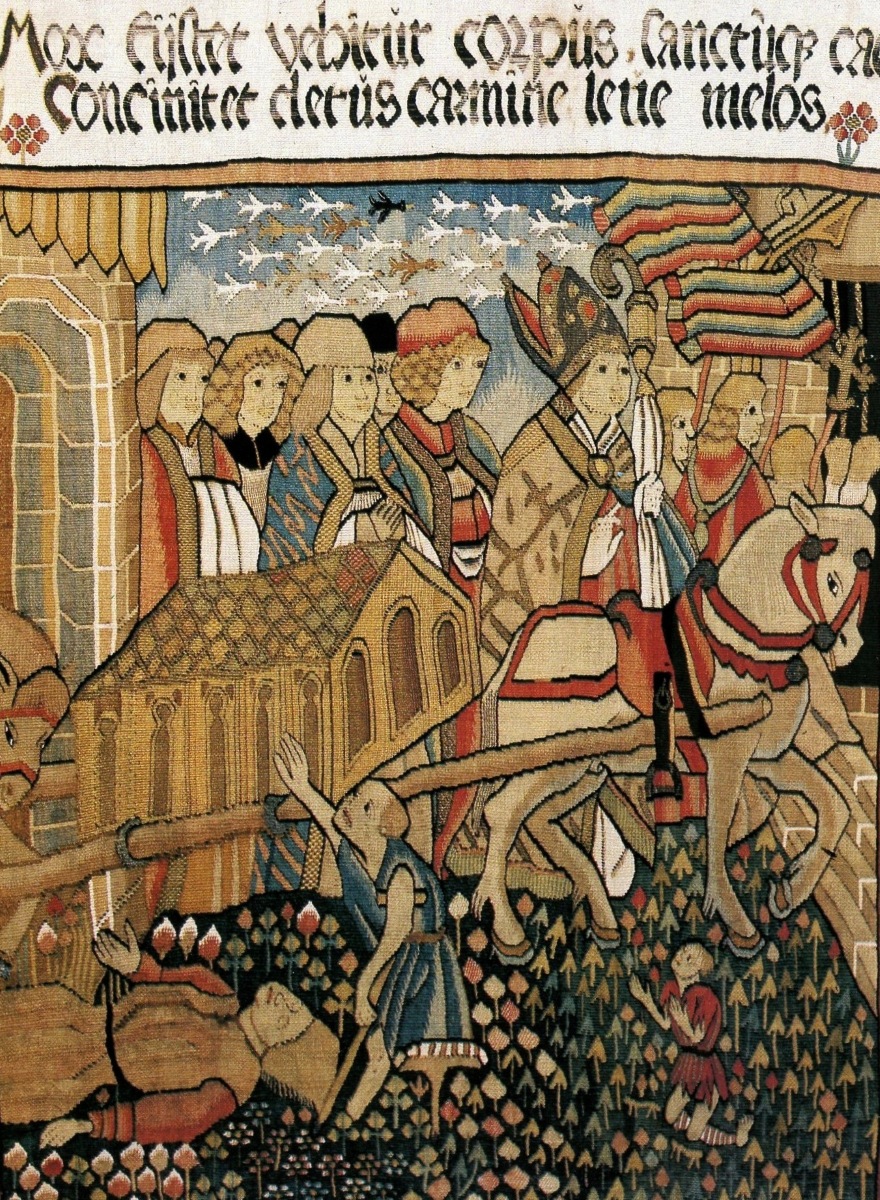
When St. Walburga died around the year 779, she was buried at the monastery at Heidenheim, but the years went on, her name appeared to be forgotten, and her grave was no longer held in honor. The story of the discovery of her relics is quite amusing: In 842, when Bishop Otkar was undertaking renovation of the church at Heidenheim, St. Walburga appeared to him in a dream and complained, “Every day I am stomped on by [the workmen’s] dirty shoes, and am maltreated by their rough footsteps. Therefore, you should know that I will give you a clear sign that you have not acted justly against me” (Wolfhard, The Book of Miracles: Walburga as Abbess). Soon after this dream, the newly constructed northern wall of the church collapsed. The bishop saw this as the sign St. Walburga had warned him about, and arranged for her remains to be moved to the Cathedral in Eichstätt, to give her a worthier resting place next to her brother Willibald. “The men who were digging according to the request of the bishop found the venerable bones of…Walburga covered with some drops of spring water… Although the soil was moist, no residue of dirt could be observed at the hands of those who touched it” (Wolfhard). When the horses pulling the carriage with her relics stopped at the western gate of the city and refused to go any further, this was taken to be a sign that she wished to be buried in the nearby chapel that would later be called St. Walburga’s Church. Her body was reinterred in the chapel there, an act which marked the beginning of her public veneration, since at that time the transfer of relics was equivalent to an official act of canonization. A small community of canonesses became custodians of her shrine until her relics were moved to the Abtei of St. Walburg after its founding in 1035.
In 893, an Abbess from a neighboring monastery in Monheim requested some of St. Walburga’s relics. While on the way to Monheim, “two very sick boys who had independently of each other requested to touch the small case with the saint’s relics, were instantly healed from their infirmities in a miraculous way…The news spread far and wide. Everyone in Monheim rejoiced that the saint has brought such blessings to their town, while the population of Eichstätt, worrying that the saint might have abandoned them, had to be assured by the bishop that only a small part of her relics had been given away” (Wolfhard).
Art caption: St. Walburga’s bones are brought to Monheim / Tapestry artwork from Abtei St. Walburg in Eichstätt, Germany
“Pilgrims flocked from near and far…to St. Walburga’s shrine in Monheim. It was above all people from the lowest ranks of society, especially the poor, who were at the mercy of pestilence, infections, famine, and acts of violence. The pilgrims undertook long journeys. On arrival they repeatedly visited the shrine containing the relics of St. Walburga, took part in the Liturgy and Divine Office of the nuns, brought gifts with them, told the nuns of their illnesses and distress, and not infrequently witnessed extraordinary healings. The nuns kept a written record of these healings. Furthermore, a great number of votive offerings, such as crutches, candles, swords, effigies of body parts that were healed, and pictures which display the distress and Walburga’s help, give evidence of these miraculous events” (Wolfhard).
The Abtei of St. Walburg in Eichstätt, where the majority of St. Walburga’s bones remain, continues to be a place of frequent pilgrimages for people seeking physical, spiritual, and psychological healing. Those who can’t embark on pilgrimage request her oil from the Abtei in Germany, and receive an abundance of healing and consolations.
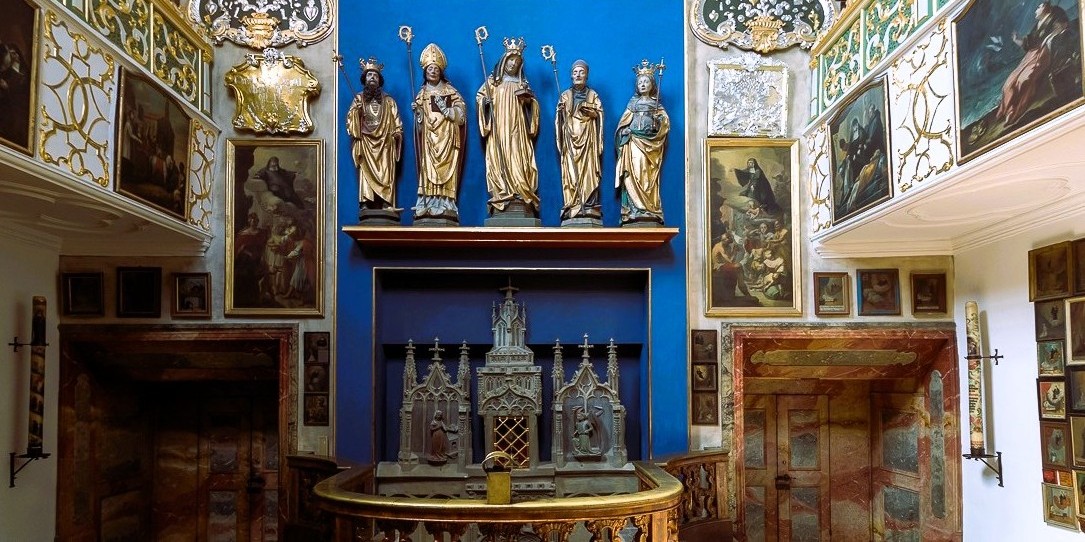
Statues of St. Walburga and her family, and surrounding artwork and mementoes depicting miracles attributed to her intercession / Beneath this is the crypt where St. Walburga’s relics are kept at the Abtei St. Walburg in Eichstätt, Germany
In the words of Mother Maria-Michael Newe, OSB: “What would St. Walburga say to us today? Listen, O daughter, forget your people and your father’s house, and follow the Lamb. Seek God in everything. Persevere with great love. Let God’s compassion flow through you, even to the marrow of your very bones. Let us truly celebrate St. Walburga, this great saint. She will lead us to holiness, if we let her. She knows what it means to leave home and country. She knows what it means to have her loved ones die. She knows what it means to let God’s will reign in her life. She knows what it means to love and live in community. She knows its cost. She knows how to fight evil by love and compassion, by simply doing God’s will. Let us pray for this. Let us pray for that humble love she carried with her. She was a humble woman, and one of great light. Our lives are called to be the same, in different ways — Fresh water that comes out, either through our smile, our kindness, our generosity, our prayers, our life hidden with Christ in God.”
Hymn “Ave flos Virginum” composed by Heribert, Bishop of Eichstatt, 1022-1042
Greetings to you, O Virgin of the Lord, St. Walburga, Renowned sister of Willibald and Wynnebald, You who consecrated yourself willingly to Christ.
Amidst the throng of holy people, England, your mother, lovingly nourished you And sent you to us, angel-like Virgin.
And the Mother of the Lord, Mother and Virgin, Ranks you among the choir of rejoicing virgins, Consecrates you as the blessed bride of her Son.
Behold, the choir of angels bids you welcome With the call of the Lord, ‘Beloved virgin, Come to Me into the kingdom of everlasting joy!’
To the Triune God creation pays homage; Virgins, prudent, and proved true, sing Him hymns. Intercede for us, O Virgin Walburga. Amen.
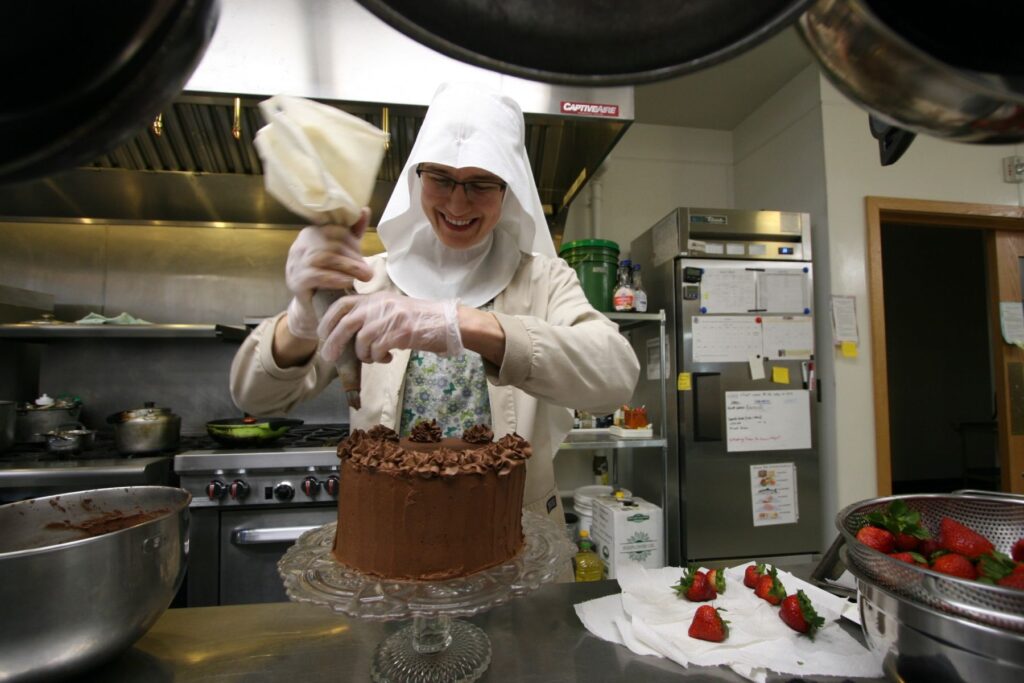
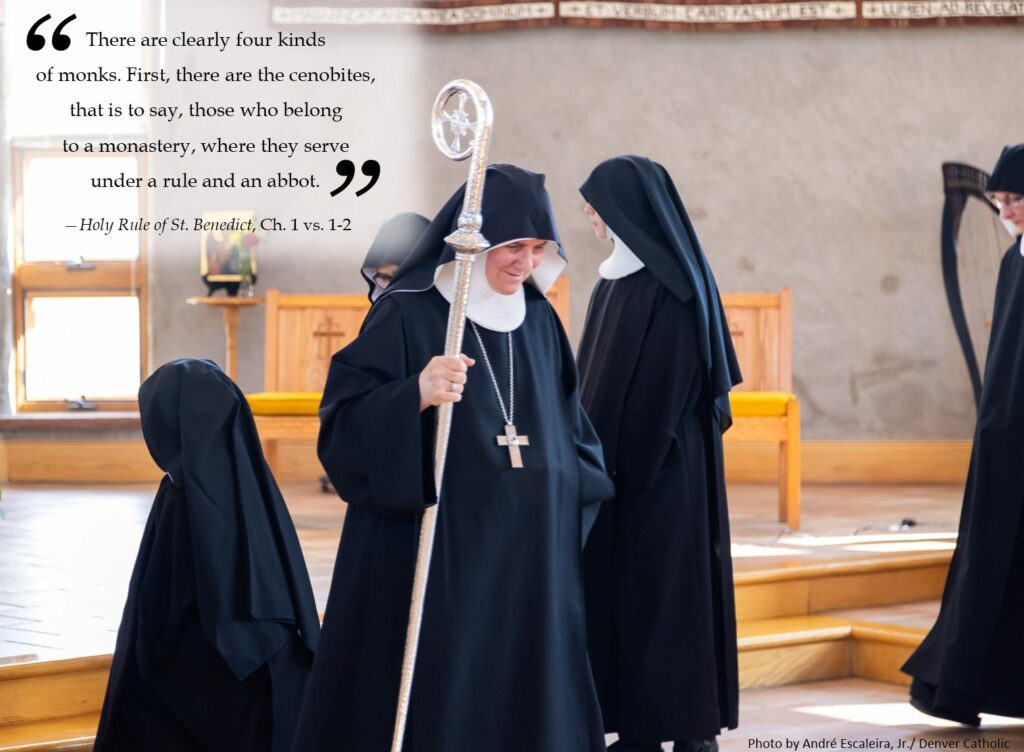
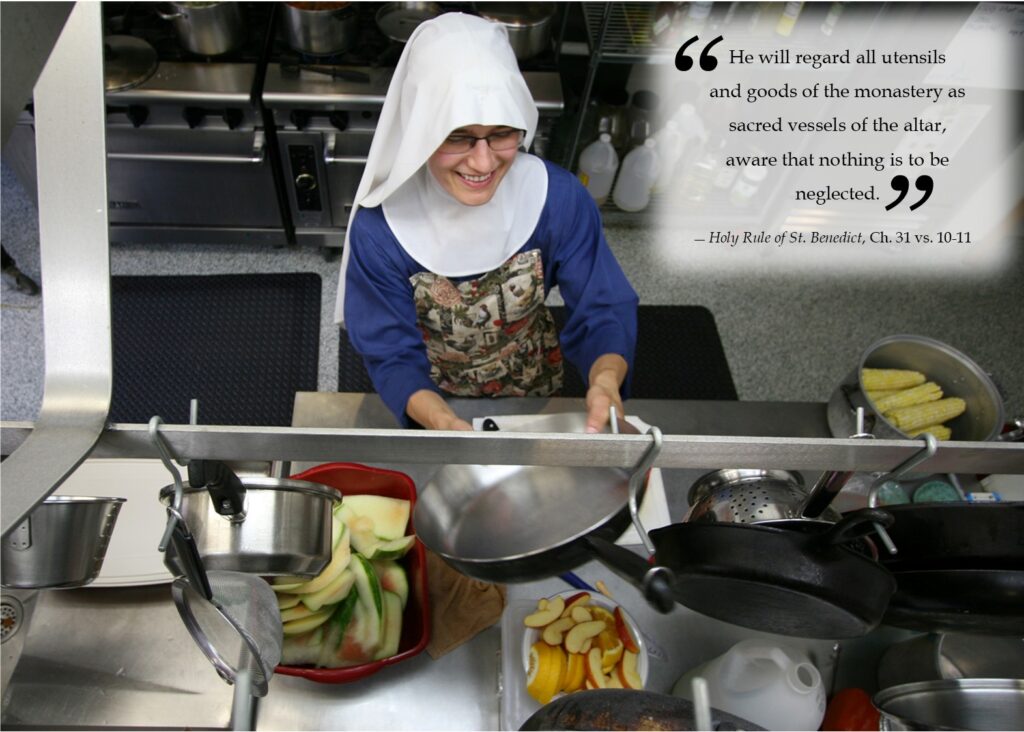
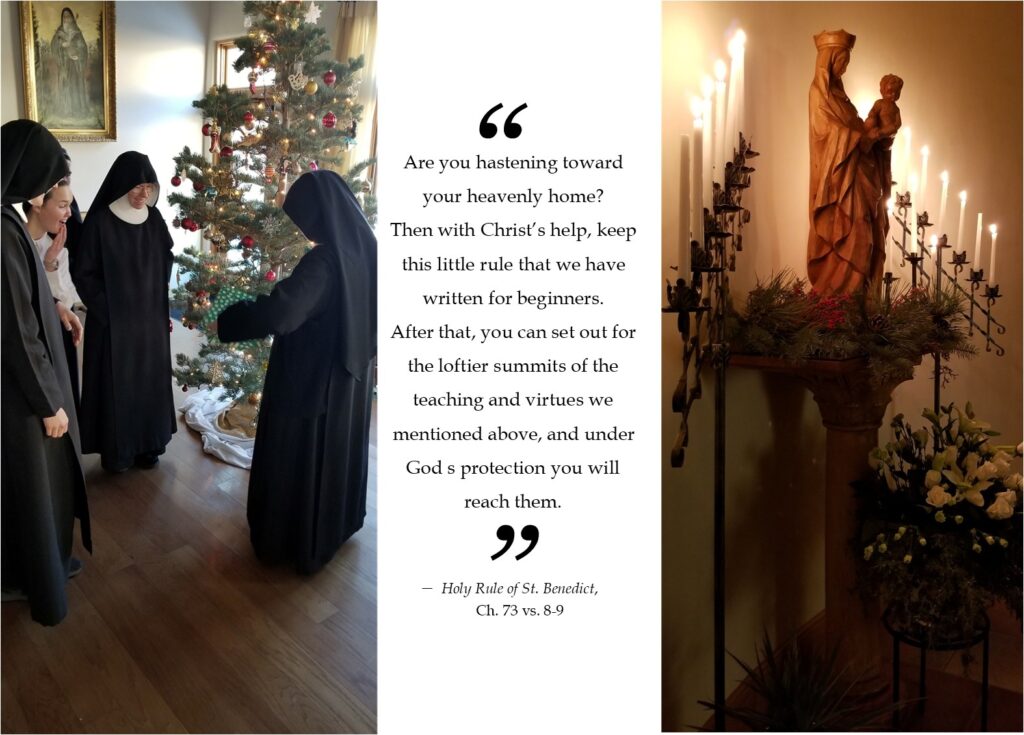
The 2026 Abbey of St. Walburga wall calendar features photos of our Sisters performing the ordinary, and not-so-ordinary, daily tasks of monastic life. The Benedictine motto, “Ora et Labora” (“Prayer and Work,” in Latin) is the featured theme for this year, and each of the photos highlights a quote from the Holy Rule of St. Benedict. It notes the days of the Church’s liturgical seasons, together with days commemorated by the Order of St. Benedict, as they are observed by our community.
The cost is $14.00 per calendar + shipping.
To place an order, please send an email to aswgiftshop@gmail.com or call (970) 472-0612.
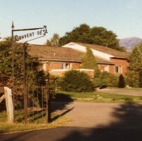
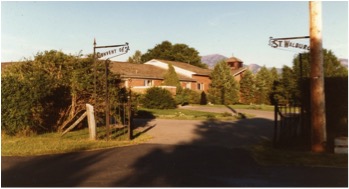
This year’s wall calendar features photos of our Abbey over the course of the past 90 years. It notes the days of the Church’s liturgical seasons, together with days commemorated by the Order of St. Benedict, as they are observed by our community. The cost is $13.00 (plus shipping) per calendar.
To place an order, please send an email to aswgiftshop@gmail.com or call (970) 472-0612.
A reflection by our Abbess, Mother Maria-Michael Newe, OSB
I love reading the great prophets during Advent. In Isaiah, we hear the story of Hezekiah and how his time to die has come, so he turns and faces the wall and prays. It reminds me of children when they are in trouble, how they go stand in the corner, and I’m sure in one way their hearts are praying, too, “Oh God let this be over!” But upon hearing Hezekiah’s prayer, God adds fifteen more years to his life. The part that stands out to me in this reading, though, is when God says to him, “Put your house in order, for you are about to die” (Isaiah 38:1).
Advent is about putting your house in order, which is why the monastic life is considered a perpetual Advent – we are continually preparing ourselves to see Christ, awaiting His coming with eager expectation. All the more so during this season of Advent. It’s about living a life that has everything directed toward heaven. Focus on the things which will last for all eternity. Don’t waste your time thinking about things that don’t really matter.
When preparing our hearts for Christmas this year, and pondering what gift we are to bring the Lord, let us remember that He says in scripture, “I desire mercy, not sacrifice” (Matt. 9:13). Mercy is to go beyond ourselves, to go beyond our judgments, to give room for what we don’t know. You may have heard the saying, “Chaste as angels, proud as devils.” Don’t justify yourself by saying that you fasted all day and so you’re fine, and then go and judge everyone all the way down the hall. Then what have you really done? Nothing, you’re just hungry and it hasn’t helped you a bit. No, we should stand humbly before God. We need to acknowledge our faults and sins. We can’t just point fingers and say to God, “Well look at them!”, because God does, and He is looking at you, too. If you choose to be merciful you will receive mercy (cf. Luke 6:37).
Remember the power of blessing as one of the greatest gifts. Sister Angelika, when she was working outside, would see a plane fly over and automatically pray for all the people in it, and ask for God to bless them. Now that’s a big heart. That’s how we should choose to live – thinking for the good of others. Pray for people. Do your part to change yourself. Others will follow suit, and you’ll notice it. It’s the nicest thing to have someone say, “Boy, you’re different” in a good way. In a house where we live so close in community, it’s far more powerful to live mercifully than to fast all day. If you can do both, well blessed are you. But mercy is more powerful.
Arise, all ye nobles and peasants; Mary invites all, rich and poor, just and sinners, to enter the cave of Bethlehem, to adore and to kiss the feet of her new-born Son. Go in, then, all ye devout souls; go and see the Creator of heaven and earth on a little hay, under the form of a little Infant; but so beautiful that he sheds all around rays of light. Now that he is born and is lying on the straw, the cave is no longer horrible, but is become a paradise. Let us enter; let us not be afraid.
From “The Discourse for Christmas Night,” by St. Alphonsus Liguori
A reflection by our Abbess, Mother Maria-Michael Newe, OSB
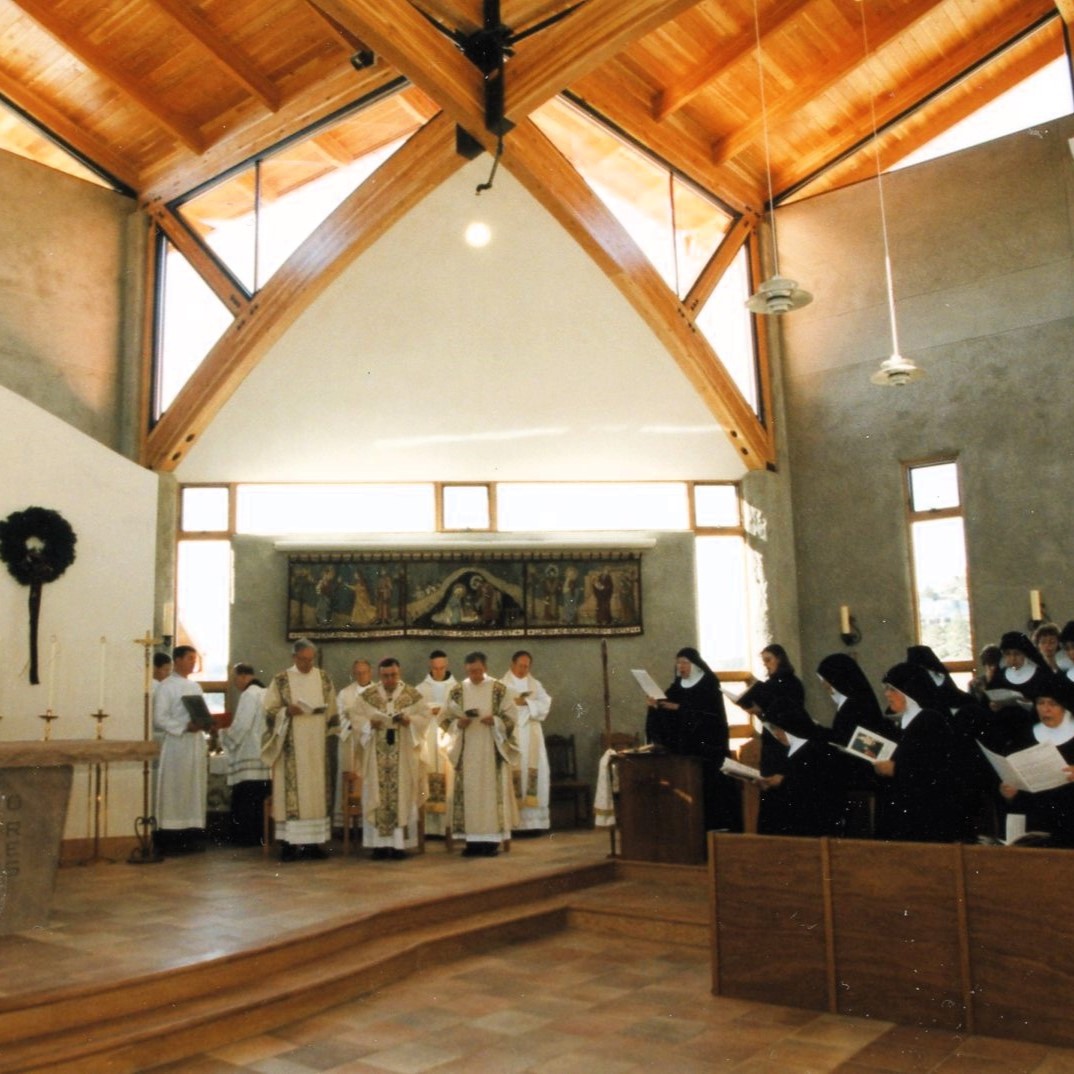
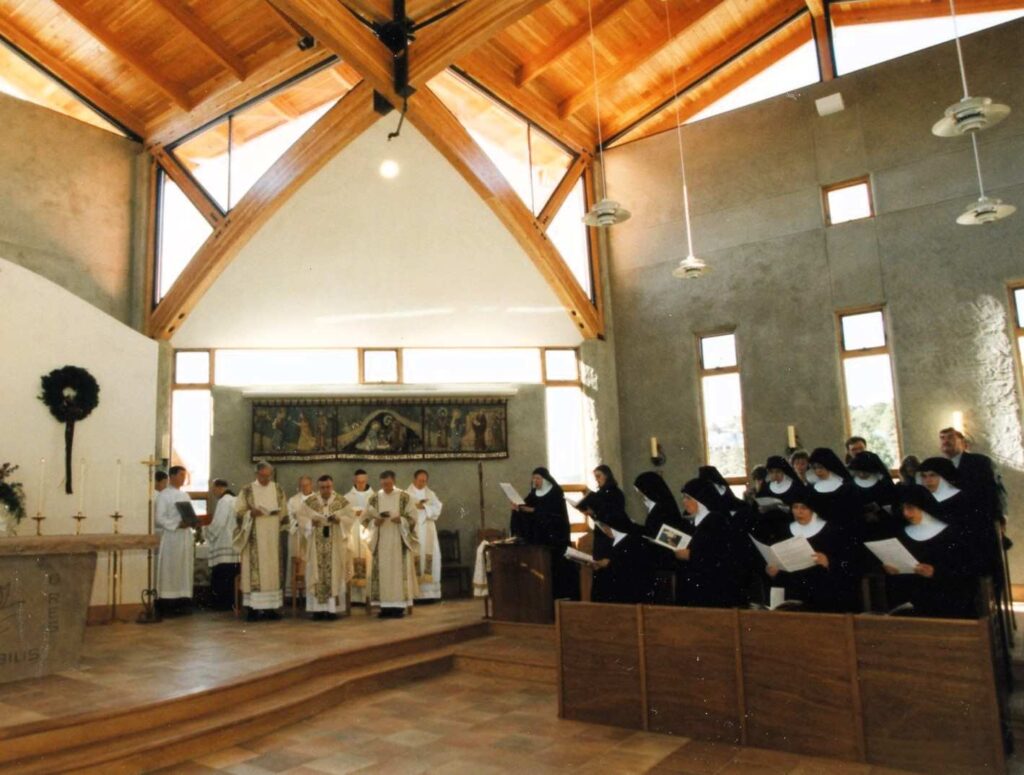
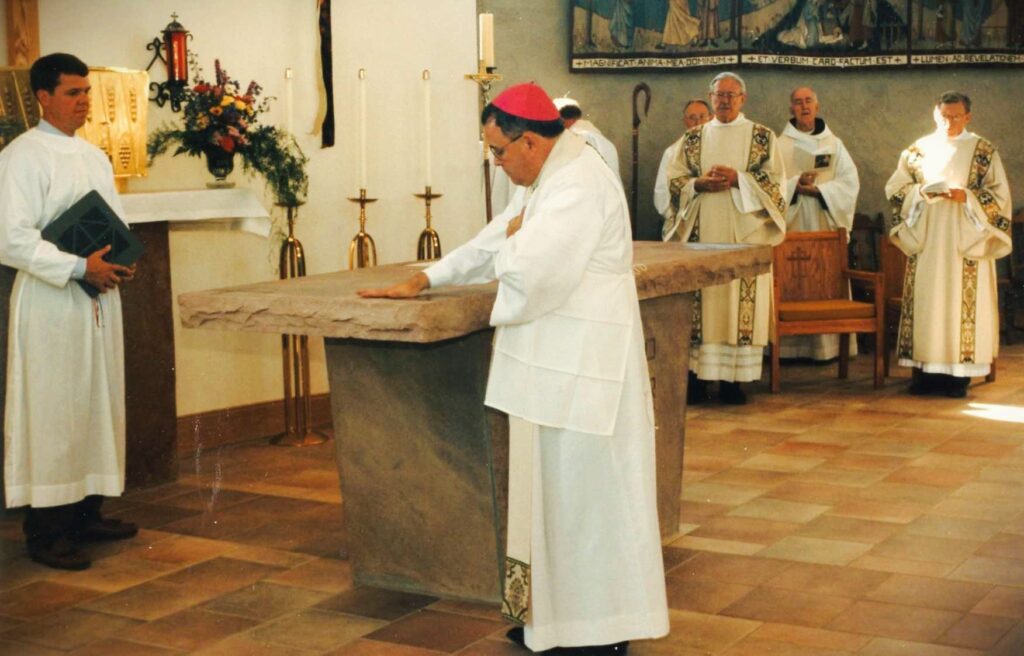
The Dedication of our Abbey Church, November 7, 1999
Twenty-five years have slipped by since our Chapel was completed. The most important parts of our lives take place in this sacred place. It is here we begin by knocking on the door at our entrance, and here we say our final “good-bye” to our beloved Sisters.
Chapter 19 of the Rule of St. Benedict talks about how we should say the Divine Office: “We must always remember, therefore, what the Prophet says: Serve the Lord with fear (Ps 2:11), and again, Sing praise wisely (Ps 46[47]:8); and, In the presence of the angels I will sing to you (Ps 137[138]:1). Let us consider, then, how we ought to behave in the presence of God and his angels, and let us stand to sing the psalms in such a way that our minds are in harmony with our voices” (RB 19:3-5). I love that. We are assisting the angels! And we have to work that our mind might be in harmony with our voices. We know what a work of love that is. There is no work to be preferred to this, and we should celebrate the Divine Office with joy and solemnity.
“I rejoiced when I heard them say, ‘let us go to the house of the Lord’” (Ps 122:1). We have access at all times to the Chapel. So we have a reason to rejoice! In this place, our souls come to rest in the very Presence of Jesus Christ Our Lord…And the Holy Spirit fills our hearts with the conversations…What a gift.
It is in this Chapel that we give the best of ourselves. In Psalm 37 we hear, “Once I was young, and now I am old…” (Ps 37:25). Our Chapel watches the passage of time. Our bodies age, but our souls only get richer. You can feel that. There is a certain dignity that starts growing in you. There is no fear in ageing, because there is something beautiful happening within us.
Our Chapel is dedicated to the Mother of God. The tapestries, which hang along the walls, tell the story of the Blessed Mother’s life. Her most important moments are in the Chapel as well, and are united with ours. We have her motherly intercession and her powerful intercession. Nothing goes unnoticed by her. And the wonderful thing is that she cares.
So let us celebrate with heartfelt gratitude and joy this day. Every day, we receive the Body and Blood of Our Lord Jesus Christ in this Chapel. Who could want more? Twenty-five years ago this Abbey Church was dedicated (and believe me, that altar received a ton of oil; I remember the Archbishop spreading the oil all over with great delight…all of the corners, Monsignor Newman and Deacon Bud, they went around to all of the crosses in the Church and put oil on them while we prayed). May it bear our hearts and souls to the heights of the heavens. Let us sing with our minds and hearts in harmony, that this day of great blessings will see a showering of graces that we pray shall never end. This is God’s dwelling place, and He has made it holy. We call on His name, for scripture says: There, you will find Him.
As you sing, sing very purposefully. The measure you put in to it is the measure you are going to get out. There is something special in the liturgy for each person, and it is a jewel ready to be found—Find it and take care of it, because it will be given to no one else but you. May this bring us all to holiness.
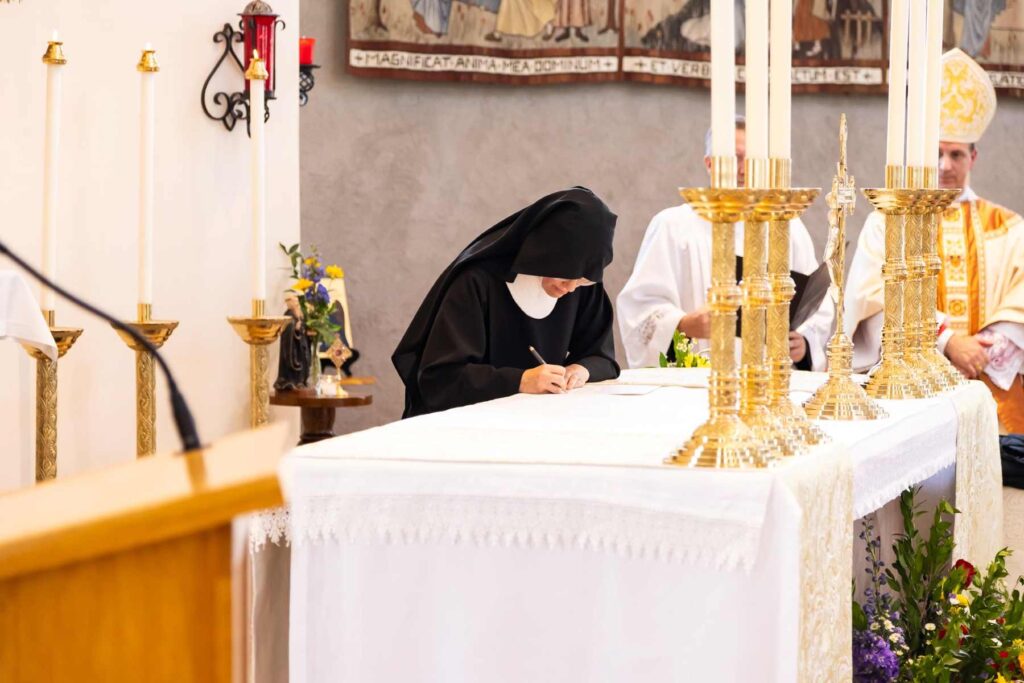
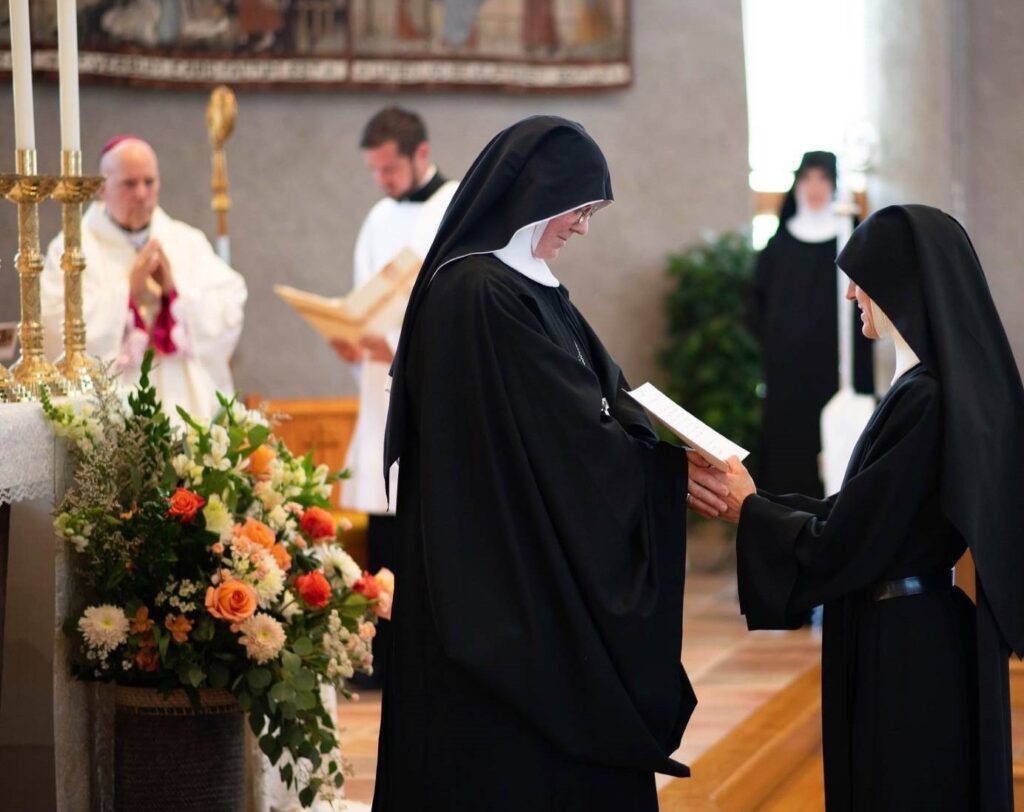
A reflection by Mother Maria-Michael Newe, OSB, during the week leading up to the Solemn Monastic Profession of Sister Maria-Placida, OSB on July 11, 2024, the Solemnity of St. Benedict
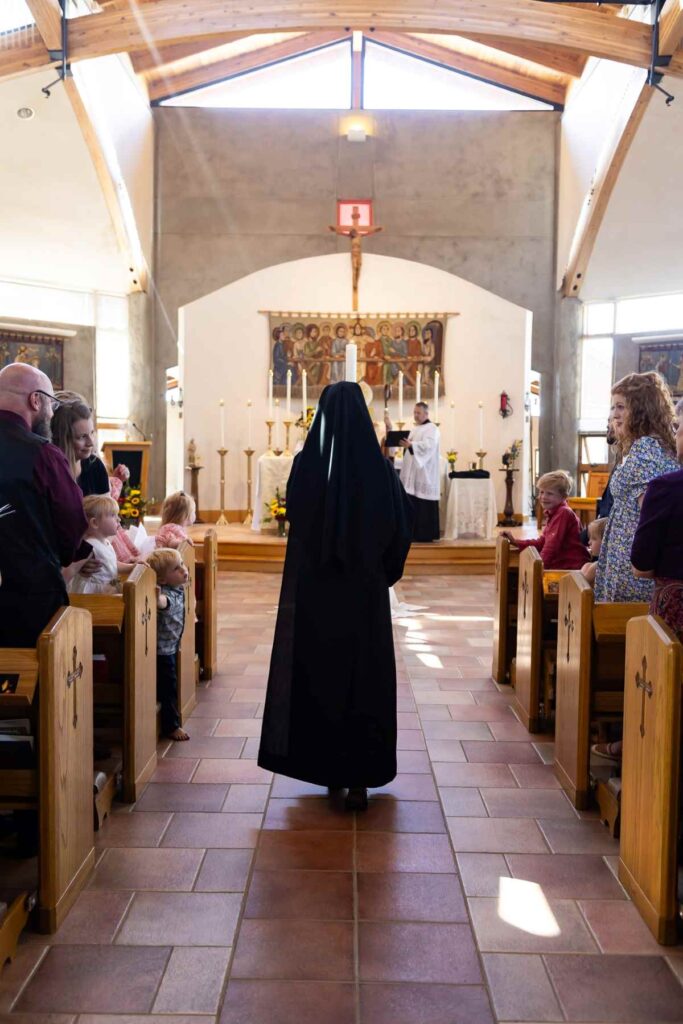
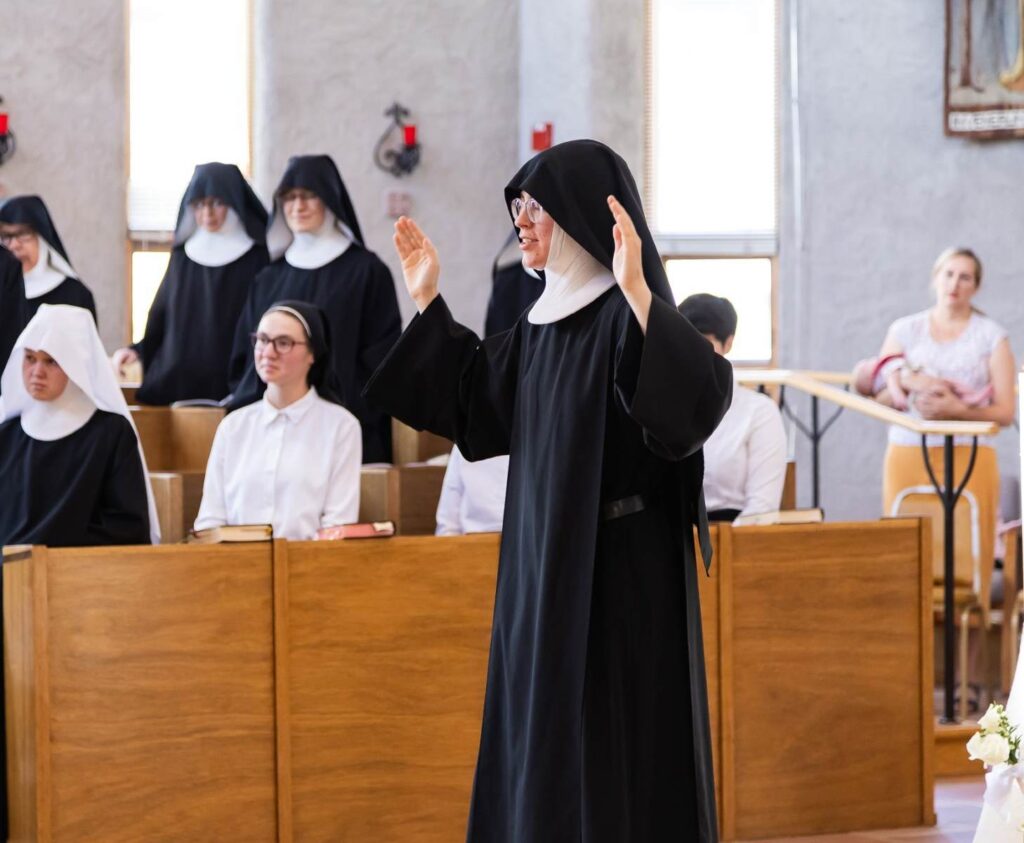
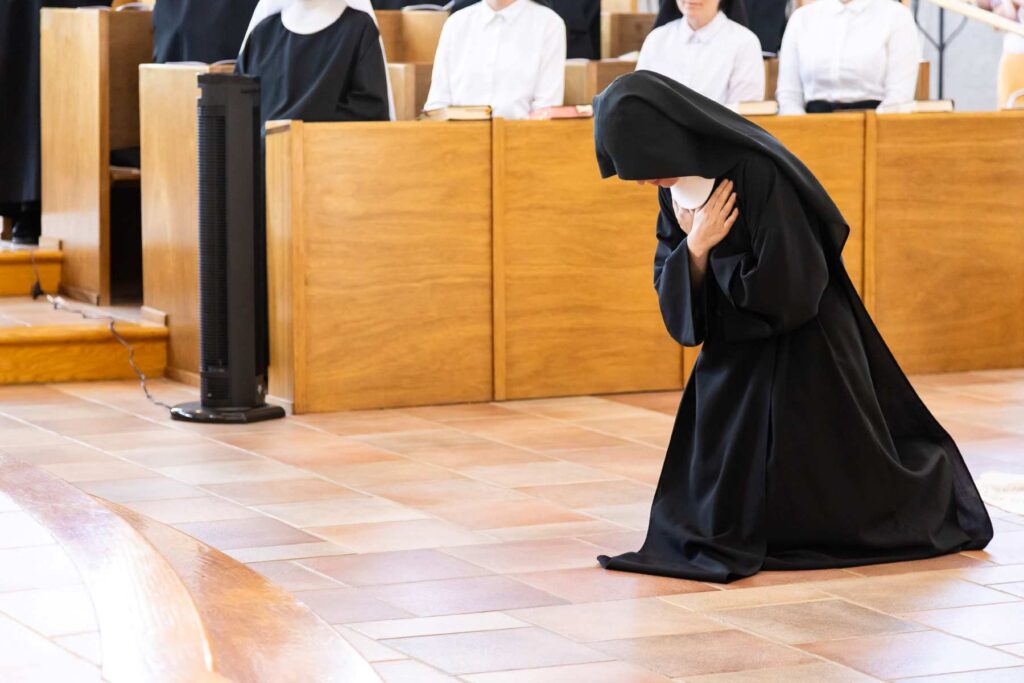
What a glory it is to be called forth by God, and not merely by man. Our vocations are God-given, truly given by God, and that’s what makes them so great. It’s not something we can do without His call. During Sister Maria-Placida’s Solemn Profession, she will be called forth (literally, from the back of the chapel to the front, carrying her lighted profession candle!) by the bishop—and how beautiful that she responds to this call with a song. She will come forth singing with joy for being called by God to this vocation. So we look forward to this moment with rejoicing in our hearts, because it is such a great glory to be called by God.
Jesus has waited from all eternity for his particular relationship with you, and that place cannot be filled by any other. No one else’s relationship with Christ is the same as yours. Sit with that. Nothing can give you joy like belonging to Jesus fully.
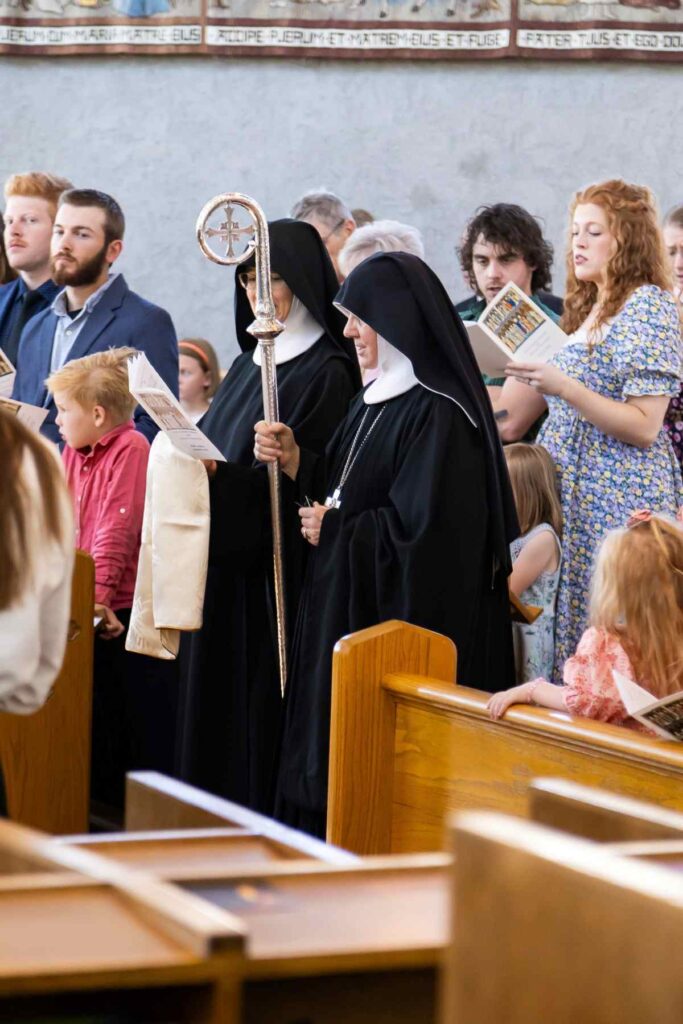
On July 17, we celebrate the 21st Anniversary of Mother Maria-Michael’s Abbatial Election. Below is a reflection she gave this year on the 35th anniversary of our community’s elevation to an Abbey, and it paints a perfect picture of our Abbess’ spirit: joyful, grateful, loving, wise. We are truly thankful that God has blessed us with such a wonderful shepherd.
Today we celebrate the “bar mitzvah” (in a sense!) of our Abbey—the day on which the Church elevated our monastery to an Abbey. With this gift, we are able to make foundations, we have an Abbess, and we have the responsibility to lead within the Church. We joyfully take on this responsibility to be faithful to the Church, to Christ.
I think of this place as a little Eden for God, and that we truly have an atmosphere of seeking God. In Eden, God came every day to Adam and Eve in the garden. Well He still comes every day to us in the Scriptures and in the Eucharist—You can’t get better.
We are surrounded by beauty, and the greatest beauty is what each of you brings into the community. That is the greatest beauty that God gives. We truly should be a portal of heaven. An Abbey should be a portal of heaven, a “thin place” where God pulls back the curtain between earth and heaven, so that people can come here and recognize that, and then take it home with them.
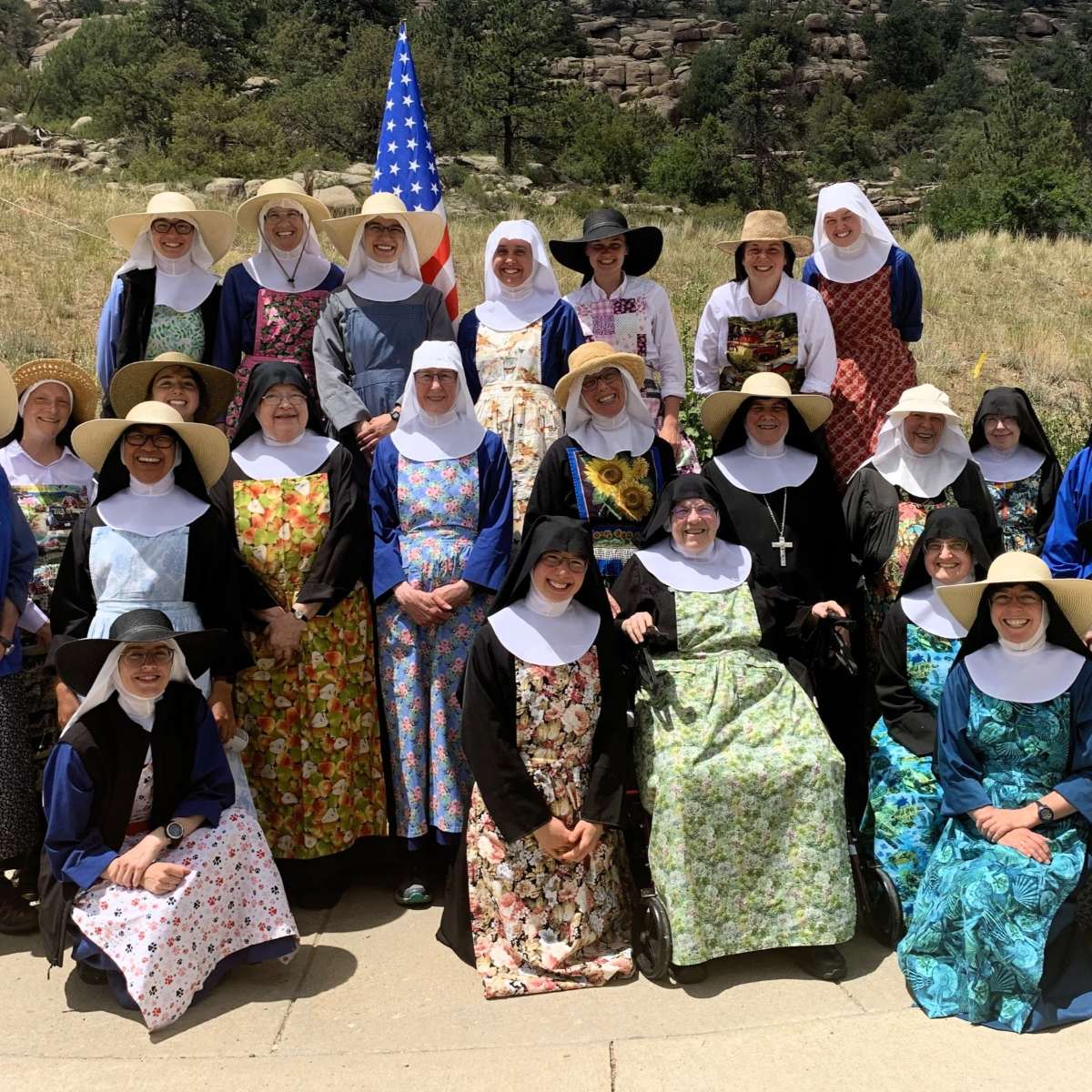
I rejoice in seeing how the Abbey has grown, and how God is so powerful in this place. It is not we, but He, who has done this; and what a glory that we get to be a part of it. He has called us to be a lantern, a lighthouse, which the world needs. We stand for Christ, and people know that when they come here. They see us in our habits and know what where’re about. Isn’t there a saying that the greatest sermons are not said, but walked? Our great witness is to simply live our monastic lives with rejoicing and gratitude. I can’t thank God enough for what He has done to make this house what it is, and for every Sister who has ever lived in it. In your prayers, remember to thank God. Above all, thank Him. That is the greatest gift we can give Him, when you pray, “I recognize, God, Your goodness, and I thank You.”
A reflection by our Abbess, Mother Maria-Michael Newe, OSB
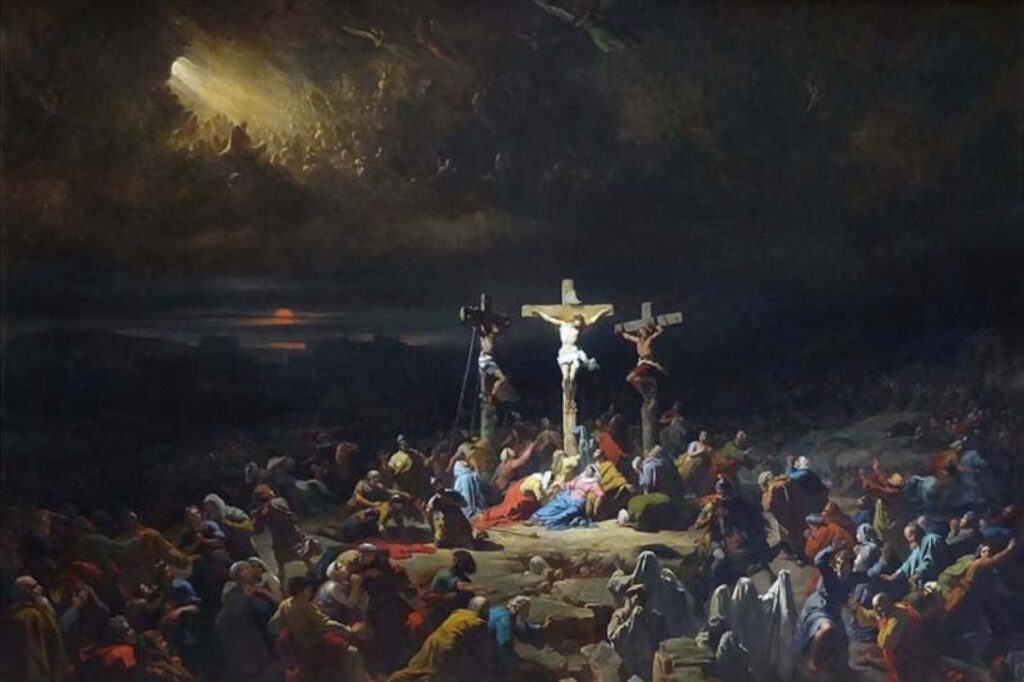
”The Last Sigh of Christ” by Julien-Michel Gue, 1840. Julien-Michel Gue, CC0, via Wikimedia Commons
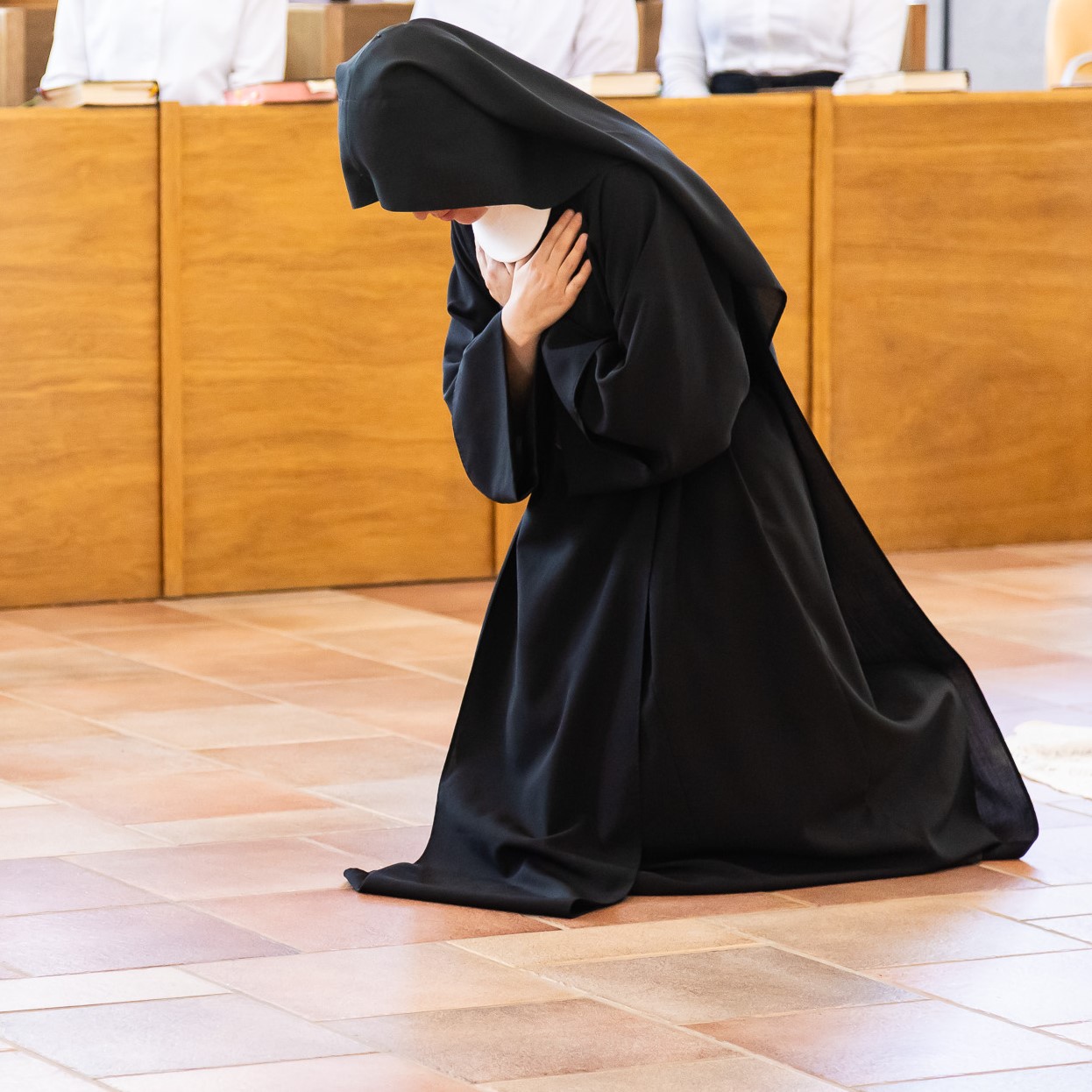
Prayer is about listening to God, and obedience is about acting on what we hear. Obedience requires that we be free enough in sprit to do what God asks of us. We need to be free to do the will of God. When there is right relationship, right order, in our lives, obedience is simple – If we just do what we’re told (unless it is a sin!), we will become holy. Why do we sometimes try to make holiness harder than it has to be, by avoiding doing what we’re asked because we think there’s a better/holier way? It’s only when our relationship with God is out of order that obedience becomes a problem for us – when our self-will becomes more important than serving God and our neighbor. When we allow our inclinations that are not quite in order with God to take the first place, it puts a weight on us that makes obedience too heavy and hard to bear. We get irritable. We are unhappy. It is painful. But when our lives are brought back into proper relationship with God, and He can ask anything of us through obedience, then our peace is restored.
So the monastic vow of obedience is not a chain – it’s a ray of light. It shows us the way to God. It shows us the true path. It gives us the way through the eye of a needle. It allows us to practice every day what Christ did during His life on earth. He who said, “I came down from heaven not to do my own will but the will of the one who sent me” (John 6:38), and prayed before His death, “Father, if you are willing, take this cup away from me; still, not my will but yours be done” (Luke 22:42), and then finally became “obedient to death, even death on a cross” (Philippians 2:8), has gone before us to show us the way. You can give up all your possessions, your time, your talent…But if you do not give up your will, you have not yet completely surrendered your all to God. Try offering Him your will, and your will experience the fruit of His promise: “whoever loses his life for my sake will find it” (Matthew 10:39).
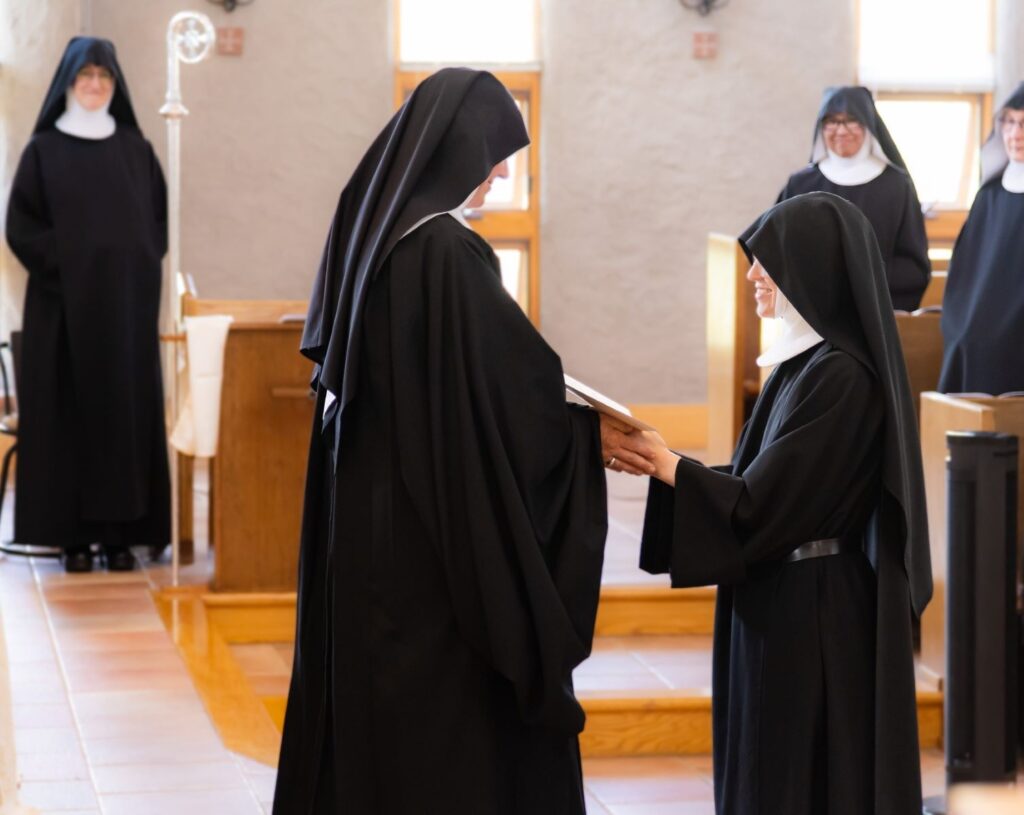
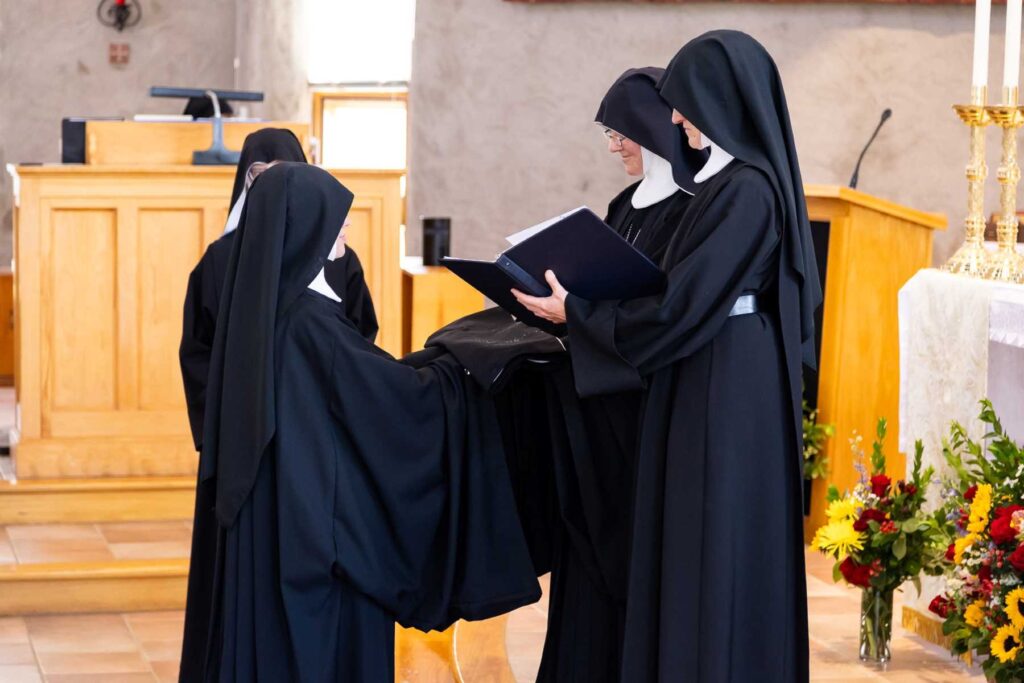
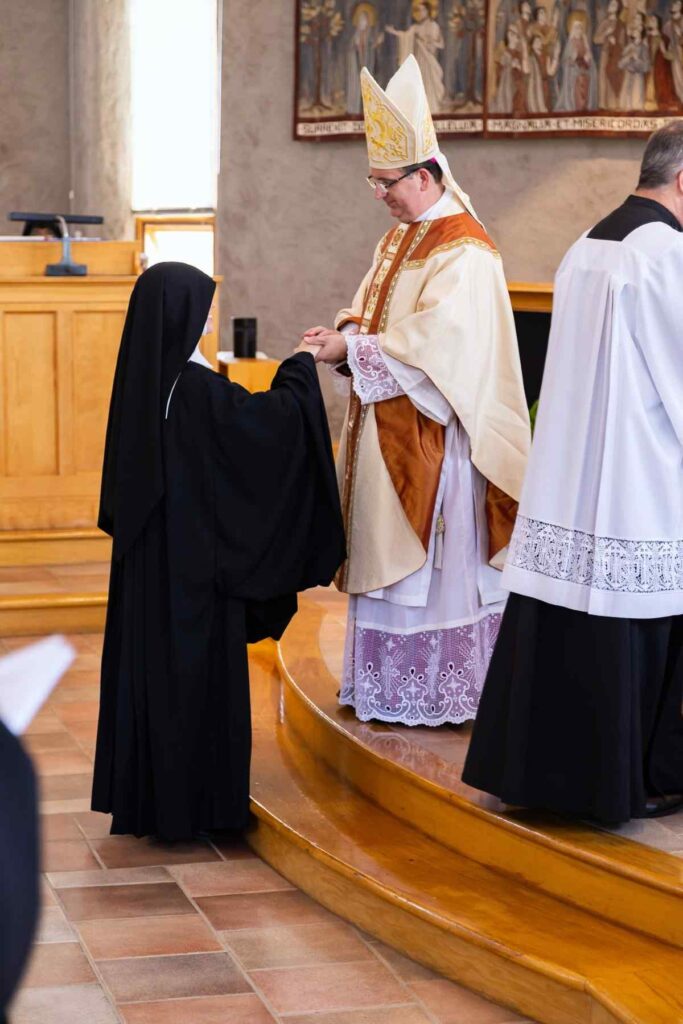
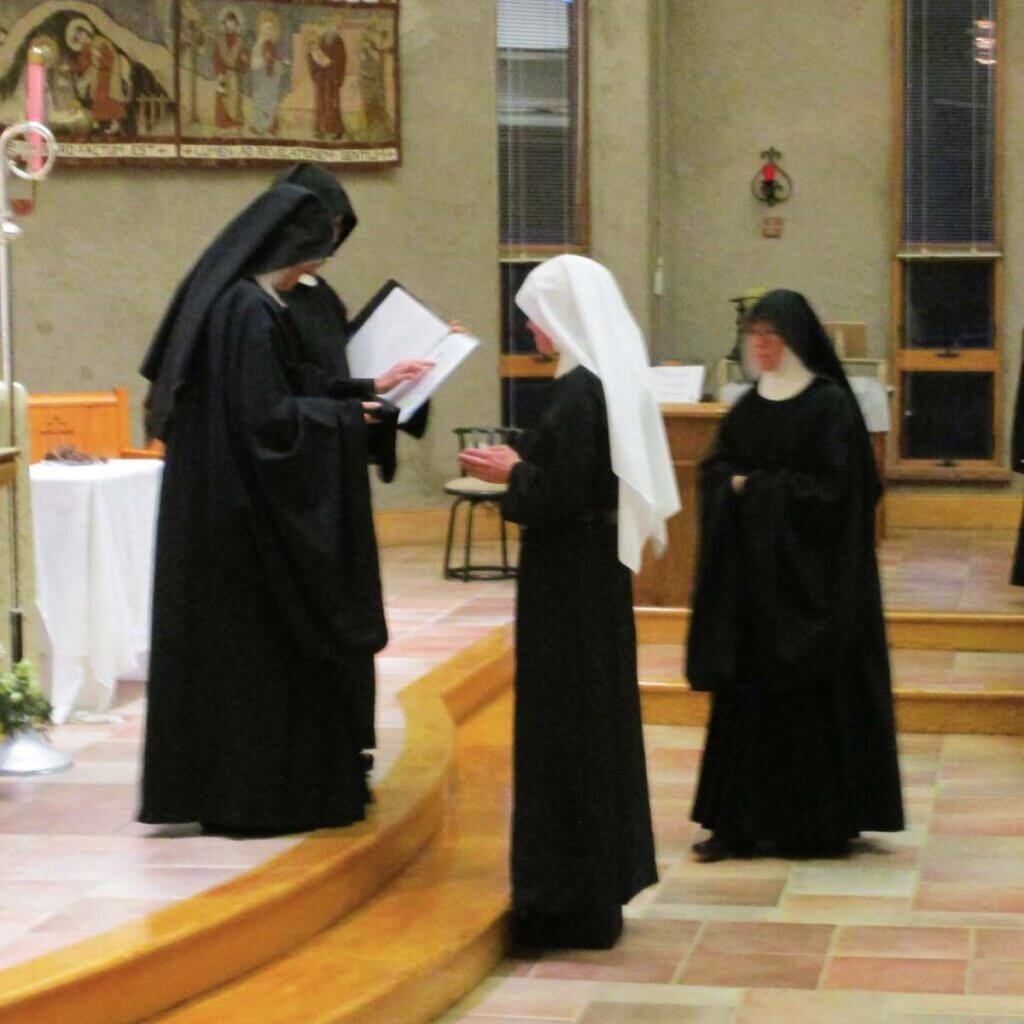
When we profess our vow of obedience, we place our hands between those of our Abbess
A reflection by our Abbess, Mother Maria-Michael Newe, OSB, on the morning of Sister Clare’s clothing day, the Solemnity of the Immaculate Conception (December 8, 2023)
The Immaculate Conception has a lot to do with hope. Hope, biblically, is a confident expectation and trust in God and His promises. You will find the word “hope” everywhere in the scriptures. For God has boundless hope in His creation. After the fall of man in the garden of Eden, God immediately began the process of restoring man to an even greater glory. And it was in the immaculate conception of Mary that man began to shine once again with its original beauty, with the perfection that God intended from the beginning. In Mary, God burst forth with His hope for mankind. You and I are also part of His hope. Do you know how much hope He has in you? As nuns, we sing the “Suscipe” chant when we make vows: “Uphold me, O Lord, and I shall live. Do not disappoint me in my hope.” Well, think of turning the “Suscipe” around, and God singing it to you! “Uphold Me, and I will live in you. Do not disappoint Me in My hope.” Can you imagine that? Can you imagine God saying that to us?
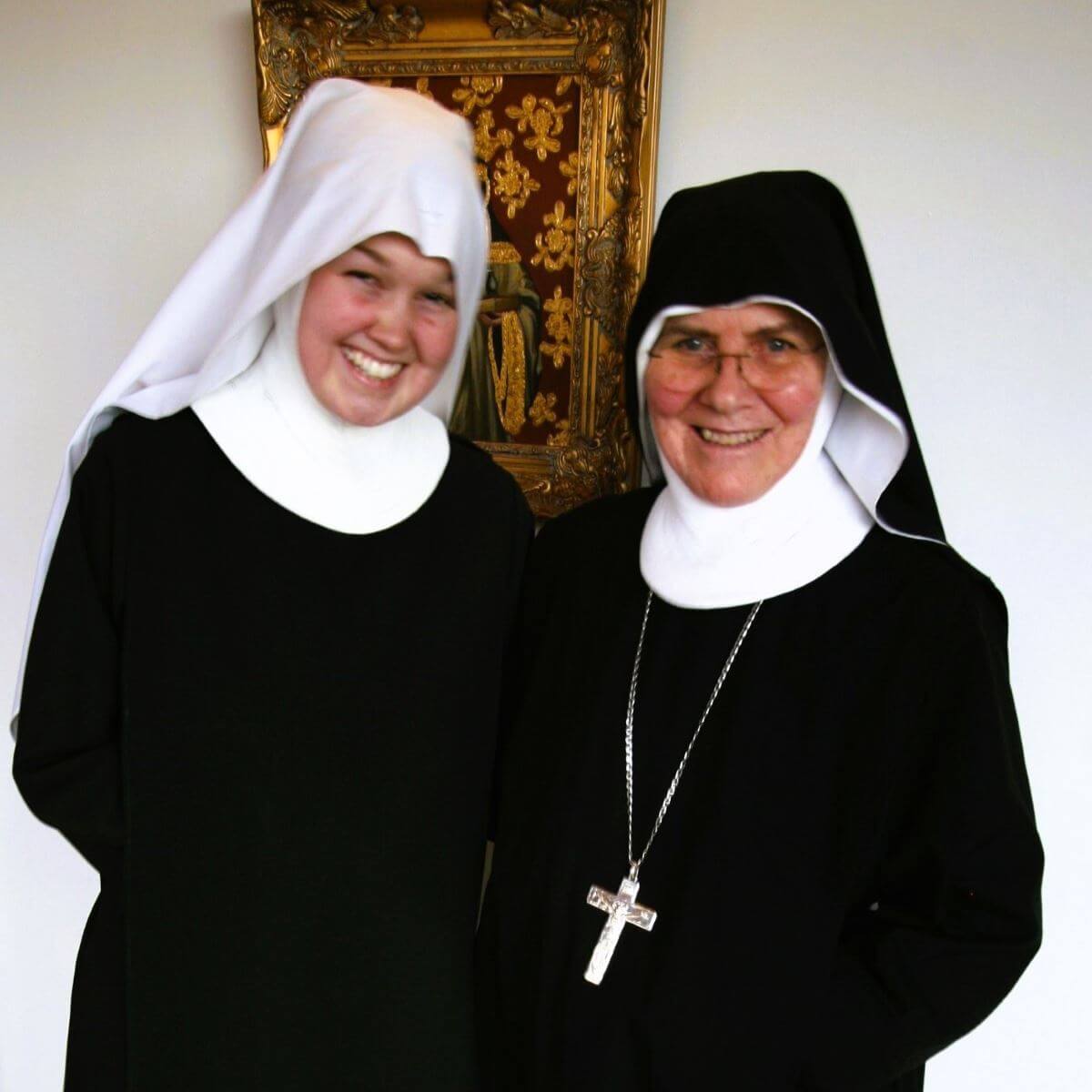
Mother Maria-Michael and Sister Clare
Mary did not say, “Be it done to me according to Your word” only once, but throughout her whole life. It should be the same with us. Even when things are difficult, we have to be able to say with confidence, “Be it done unto me according to Your word.” Because by our response is how we are transformed into that perfection; and God is staring at us full of hope, saying, “Come on!” He wants that for us. He wants that purity. He wants that love that He intended for man.
So Clare, today you will be clothed in the garments of one who lives for God, under the guidance of our Holy Father Saint Benedict. You are putting on what you are hoping for. Your hope is not alone – we join you in that hope; and heaven, too, is full of hope. May the habit you will wear remind you of the words of our Blessed Mother, “Be it done unto me according to Your word.” Your novitiate has a beginning in time, as the immaculate conception of Mary did. May she guide you through the novitiate, and may God’s hope for your life color every day, and be filled with the breeze of Eden that says, “He is coming.” And I hope that we all experience this breeze, as when the Holy Spirit comes powerfully into our lives. Remember that it was a relationship that was lost in Eden; it was a love that was lost. God expects a different response from us, so that we might reverse the effects of the fall by turning to Him, and continually pursuing that loving relationship. The next time you feel a soft breeze on your face, think of God coming quickly to see you. And be ready to respond with love.
Every year on December 20, the Church gives us this beautiful reflection by St. Bernard on Mary’s fiat in the Office of Readings:
You have heard, O Virgin, that you will conceive and bear a son; you have heard that it will not be by man but by the Holy Spirit. The angel awaits an answer; it is time for him to return to God who sent him. We too are waiting, O Lady, for your word of compassion; the sentence of condemnation weighs heavily upon us.
The price of our salvation is offered to you. We shall be set free at once if you consent. In the eternal Word of God we all came to be, and behold, we die. In your brief response we are to be remade in order to be recalled to life.
Tearful Adam with his sorrowing family begs this of you, O loving Virgin, in their exile from Paradise. Abraham begs it, David begs it. All the other holy patriarchs, your ancestors, ask it of you, as they dwell in the country of the shadow of death. This is what the whole earth waits for, prostrate at your feet. It is right in doing so, for on your word depends comfort for the wretched, ransom for the captive, freedom for the condemned, indeed, salvation for all the sons of Adam, the whole of your race.
Answer quickly, O Virgin. Reply in haste to the angel, or rather through the angel to the Lord. Answer with a word, receive the Word of God. Speak your own word, conceive the divine Word. Breathe a passing word, embrace the eternal Word.
Why do you delay, why are you afraid? Believe, give praise, and receive. Let humility be bold, let modesty be confident. This is no time for virginal simplicity to forget prudence. In this matter alone, O prudent Virgin, do not fear to be presumptuous. Though modest silence is pleasing, dutiful speech is now more necessary. Open your heart to faith, O blessed Virgin, your lips to praise, your womb to the Creator. See, the desired of all nations is at your door, knocking to enter. If he should pass by because of your delay, in sorrow you would begin to seek him afresh, the One whom your soul loves. Arise, hasten, open. Arise in faith, hasten in devotion, open in praise and thanksgiving. Behold the handmaid of the Lord, she says, be it done to me according to your word.
In Praise of the Virgin Mother by St. Bernard (Hom. 4, 8-9: Opera omnia, Edit. Cisterc. 4 [1966], 53-54)