Easter 2026

A reflection by our Abbess, Mother Maria-Michael Newe, OSB, on the first Tuesday of the Easter Season

Mary Magdalene stayed outside the tomb weeping.
And as she wept, she bent over into the tomb
and saw two angels in white sitting there,
one at the head and one at the feet
where the Body of Jesus had been.
And they said to her, “Woman, why are you weeping?”
She said to them, “They have taken my Lord,
and I don’t know where they laid him.”
When she had said this, she turned around and saw Jesus there,
but did not know it was Jesus.
Jesus said to her, “Woman, why are you weeping?
Whom are you looking for?”
She thought it was the gardener and said to him,
“Sir, if you carried him away,
tell me where you laid him,
and I will take him.”
Jesus said to her, “Mary!”
She turned and said to him in Hebrew, “Rabbouni,”
which means Teacher.
Jesus said to her, “Stop holding on to me,
for I have not yet ascended to the Father.
But go to my brothers and tell them,
‘I am going to my Father and your Father,
to my God and your God.’”
Mary went and announced to the disciples,
“I have seen the Lord,”
and then reported what he had told her.

—John 20:11-18

In the Gospel reading at Mass today, Jesus asks Mary Magdalene, “Why are you weeping?” I think Jesus very sweetly sometimes asks us the same thing to make us think: Ok, why are you really crying? Then of course, she hears His voice, and that’s enough, and she starts grasping to hang on to Him.

And He tells her, “Stop holding on to me.” But I don’t think it’s a, “STOP HOLDING ON TO ME.” I think it’s a really gentle, “Stop, you are not going to lose me.” And then, “Go tell my brothers, tell them, I am going to my Father and your Father. To my God and your God.”

What an incredible message. He reaffirms the “Our Father.” It’s Our Father. What a lovely thing, Mary doesn’t question Him, she just takes off. She’s gone. “And Mary went and announced to the disciples, ‘I have seen the Lord.’” She’s the apostle to the Apostles.

I think of the sweetness of doing His will. Mary wanted to hang on to Him, but He helped her to see His will instead of her own. It’s as if He said to her, “We need to do this now. You will never lose me.” What a wonderful way to live. That’s living in the New Testament. That’s truly living with that love that says to Christ, “I trust You. I will never lose You. Teach me to do Your will.”

I hope we all love that much that we want to obey Him rather than our own desires. What will we do for Him? Will we strive for an obedience that isn’t looking at ourselves, that says, “I want to join You in pleasing the Father”? What a precious gift to God this is. What a difference to look at obedience in Easter. It’s a triumphant obedience. One that says, “I live.” I wish that for each one of you — that triumphant obedience. 

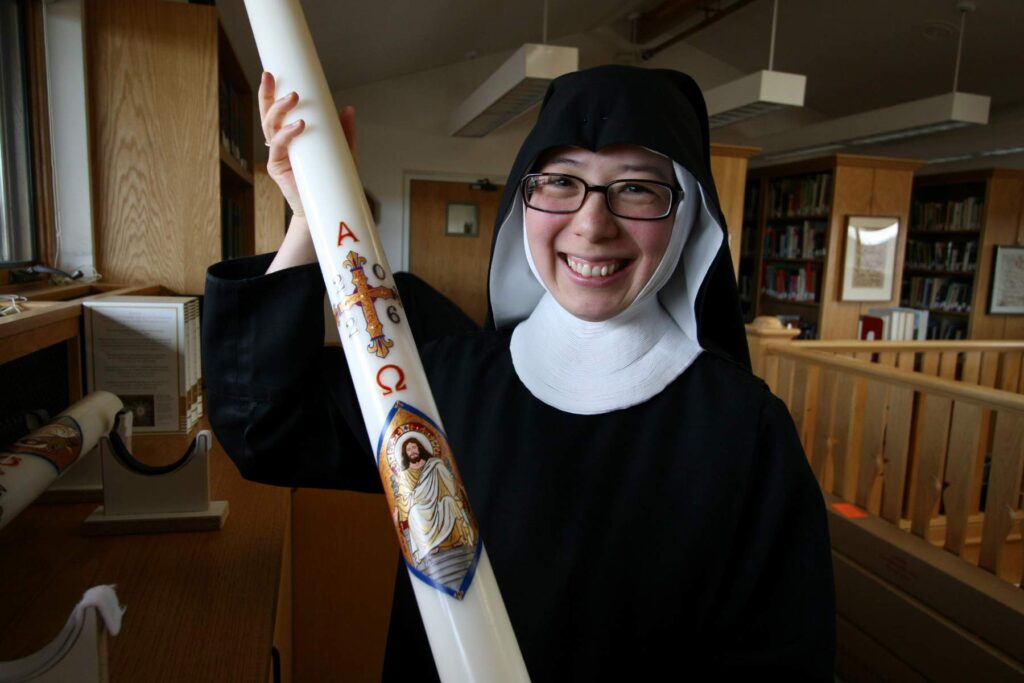
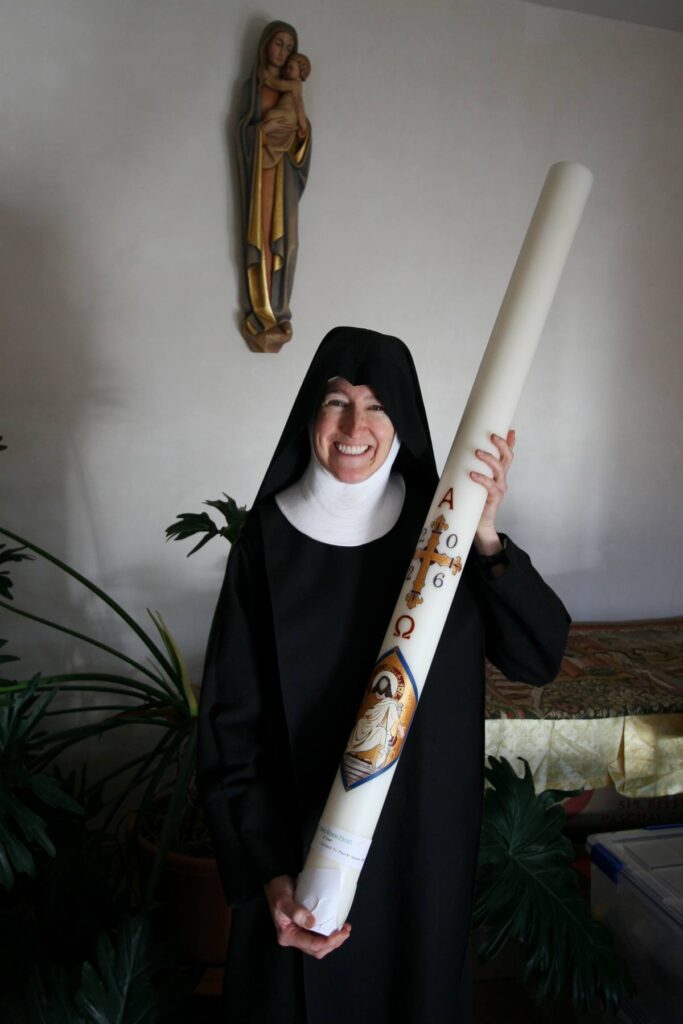
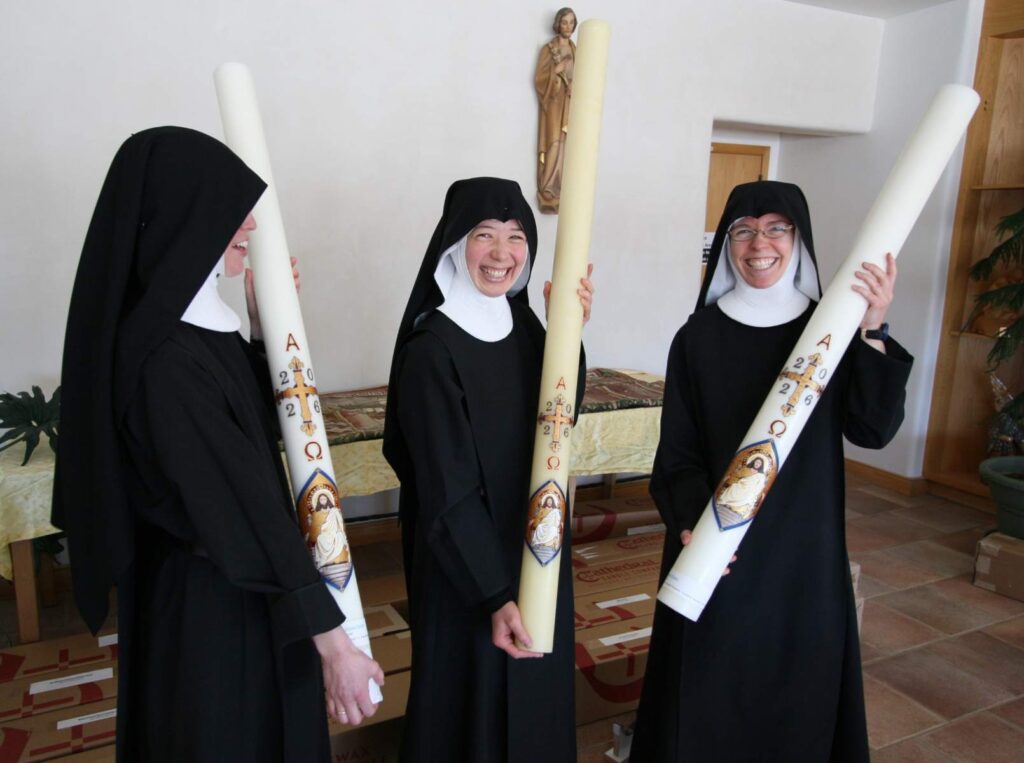
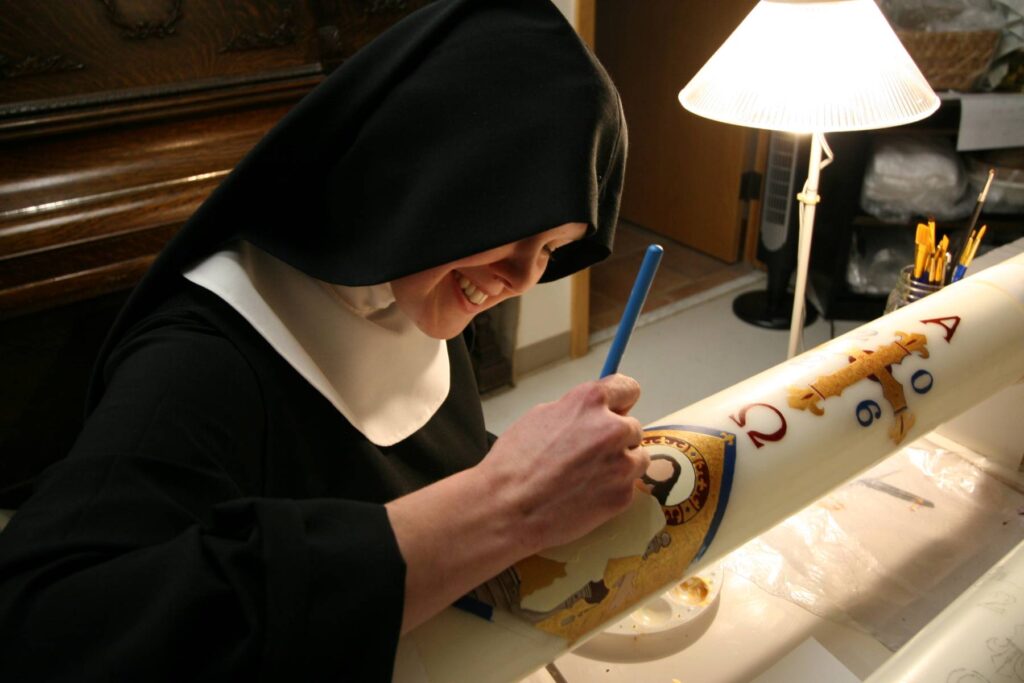
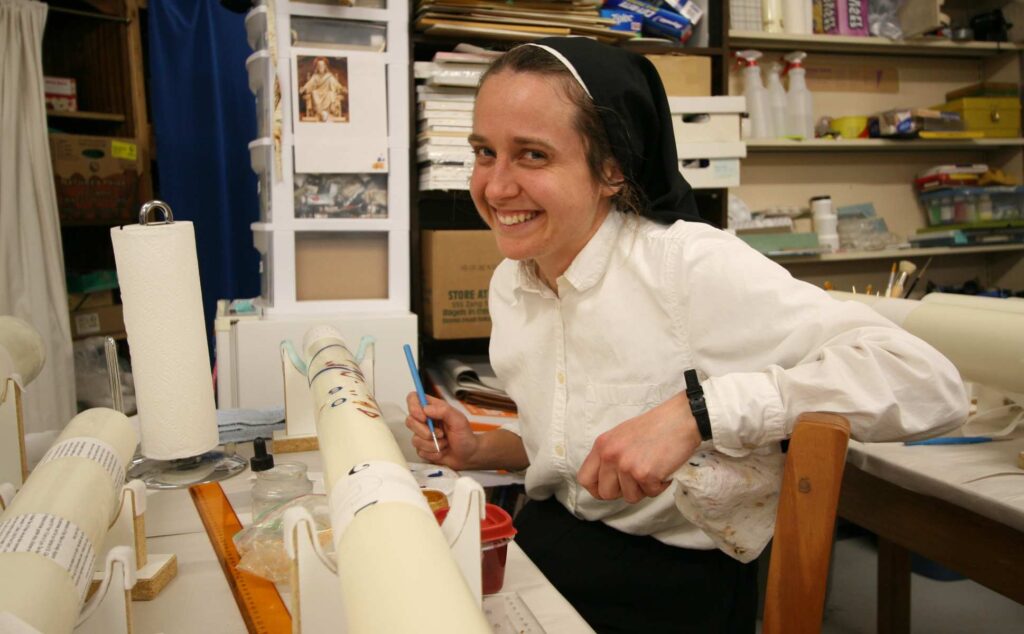
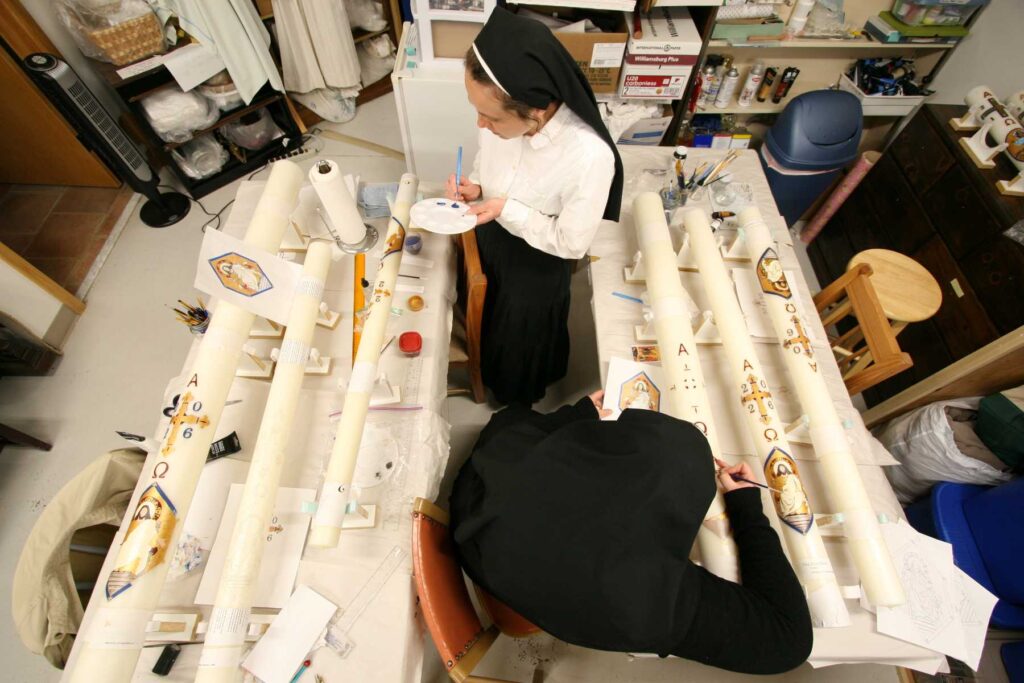
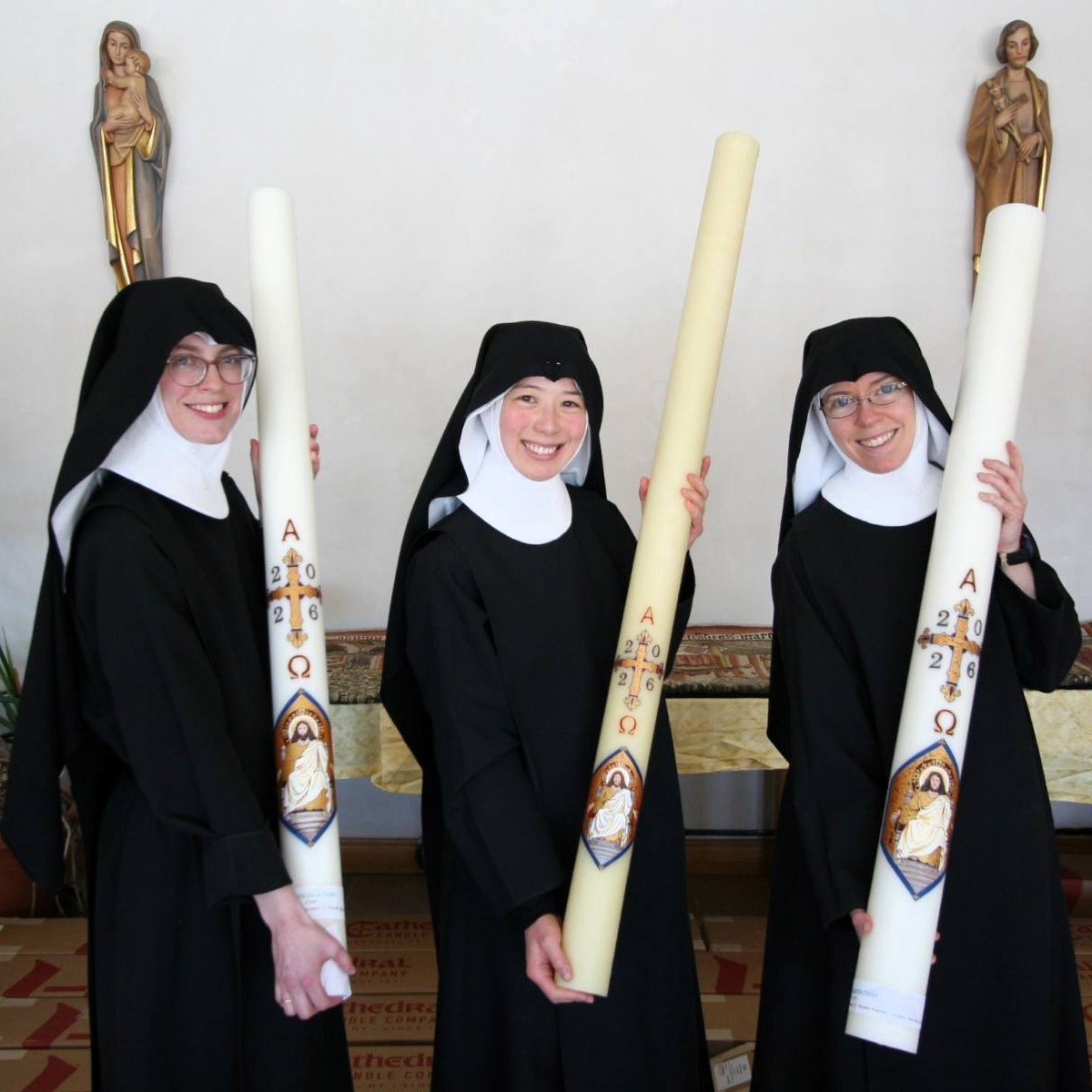
Starting in the fall of last year, the Abbey’s paschal candle department focused on painting over twenty candles of various sizes. The 2026 candle’s design was inspired by the figure of Christ in Pietro Teneranis monument to Pope Pius VIII in St. Peter’s Basilica, Rome. Christ, seated on His throne, is shown with a peaceful countenance and outspread arms, welcoming all who approach Him. We hope this speaks to those who have entered the Church this Easter, and to all the faithful as they encounter Christ in His Church.

Paschal candles are used during the Easter Vigil Mass to carry the flame from the Easter fire into the church, and from which every other candle in the church is lit, as a symbol of Christ the true Light enlightening the world and dispelling the darkness of evil.  

He is Risen! Alleluia!

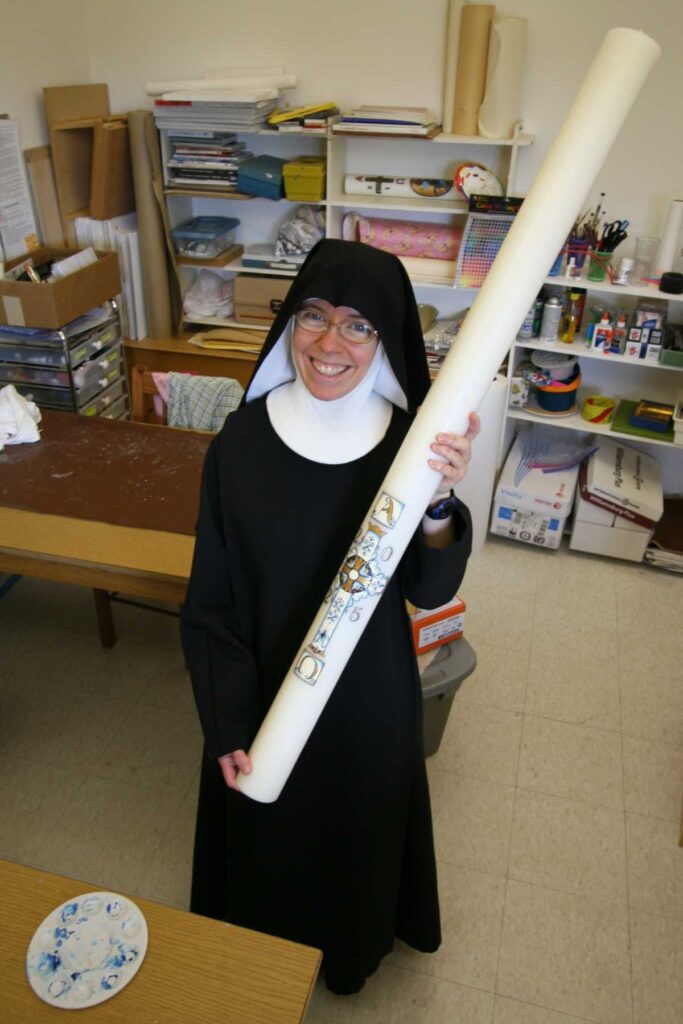
This year our paschal candle department, consisting of six sisters, offered various parishes and monasteries two design options, both centered on Eucharistic symbolism. Created by two of our solemnly professed Sisters, one design was centered on the theme of Christ the Vine (cf. John 15), and the other, inspired by the Azulejos tiles of Portugal, included symbols for Christ, Mary, and the Jubilee Year of Hope. These designs were painted on candles large and small by the artists in our community.

Paschal candles are used during the Easter Vigil Mass to carry the flame from the Easter fire into the church, and from which every other candle in the church is lit, as a symbol of Christ the true Light enlightening the world and dispelling the darkness of evil.  
 I am the true vine, and my Father is the vine grower.

By this is my Father glorified, that you bear much fruit and become my disciples.
As the Father loves me, so I also love you. Remain in my love.
If you keep my commandments, you will remain in my love, just as I have kept my Father’s commandments and remain in his love.
I have told you this so that my joy may be in you and your joy may be complete.
This is my commandment: love one another as I love you.

John 15: 1, 8-12

On Red/White Martyrdom

A reflection by Mother Maria-Michael Newe, OSB

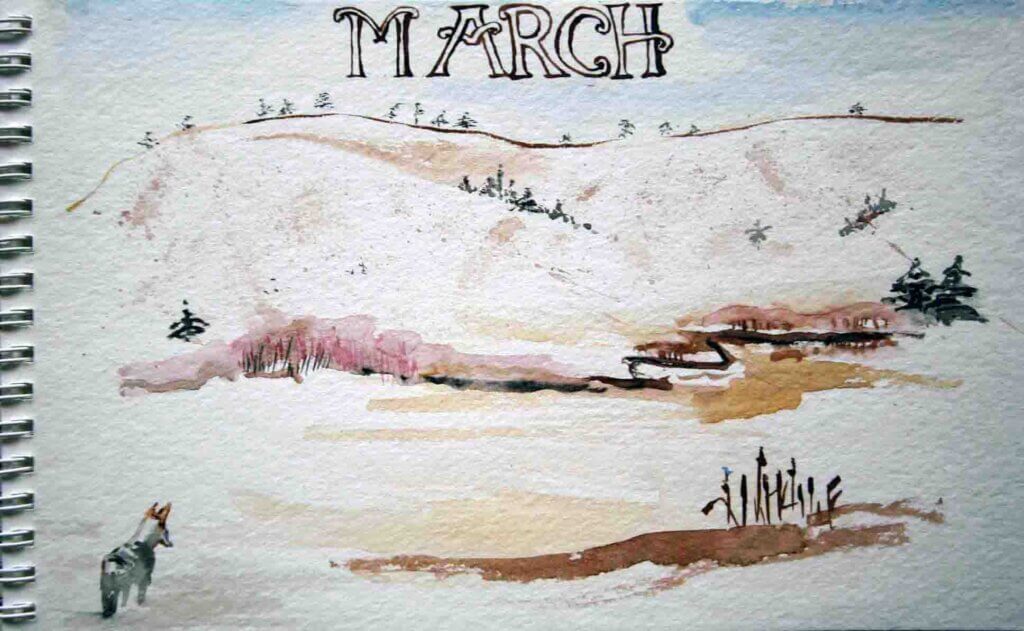
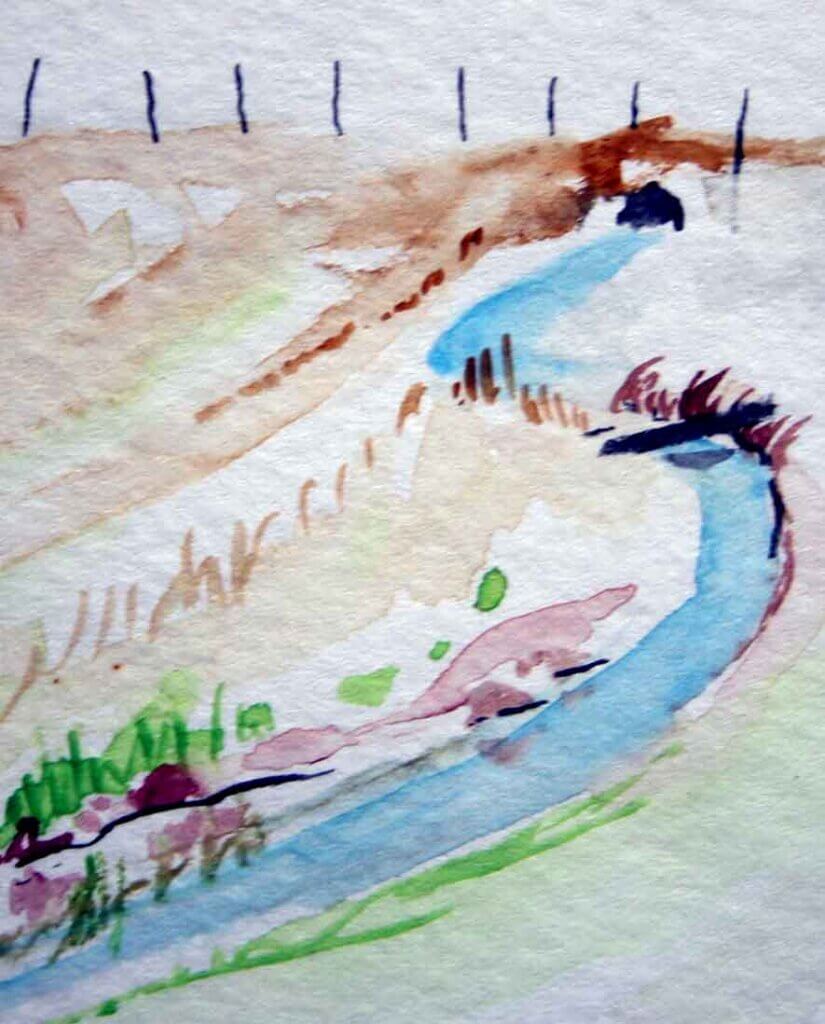
Watercolor of the stream running through the Abbey property

I was reading a little bit about the history of relics, and discovered that in the first centuries after Christ’s life, they would build altars over the places where martyrs were killed for the Christian faith.  It is from that practice that we get the tradition of placing relics in the altars of Catholic churches when they are being constructed.  It is good to remember those who have gone before us and laid down their lives for Christ; those martyrdoms are what our Church is built on.  And it is good to remember that there are many unknown martyrs, who Christ knows so well.

I think especially of the white martyrs – the monastics.  We are called to be martyrs, and give ourselves up for the love of Christ.  We embody in a particular way the Gospel passage where Jesus’ relatives think He is “out of his mind” (cf. Mark 3:21).  Isn’t that what some people think about martyrs?  “Why are you dying for that?!”  Similarly, many people wonder about people who choose to live the monastic life: “Why are you doing that?!”  There is the red martyrdom, where blood is shed, and only God can give the grace for someone to have the courage for that.  Only God can give the grace for someone to embrace white martyrdom, too.  To live so closely to each other in community, serving each other even when there are difficulties and personality clashes, denying our self-will, following a schedule every day – these are all little martyrdoms that our world does not understand.  The world may think we are a little crazy, but thank the Lord!  Our ways are meant to be different than the world’s.

Really, every person is called to a type of martyrdom.  Marriage is a type of martyrdom.  Any vocation can be a martyrdom if lived well, because every vocation is meant to bring us to holiness, to bring us closer to Christ, to bring us to imitate Him Who gave up His life for the love of others.  Being faithful to whatever God calls us to is the important thing, and that is one thing that is very mysterious to our culture: fidelity.  Thank the Lord if people call you a little crazy, because they called Jesus a little crazy, too.  

Their action resembles the snow which, covering the heights, is melted by the warm rays of the sun, and descends in life-giving streams to fertilise the valleys and plains.

Dom Columba Marmion, OSB, Sponsa Verbi