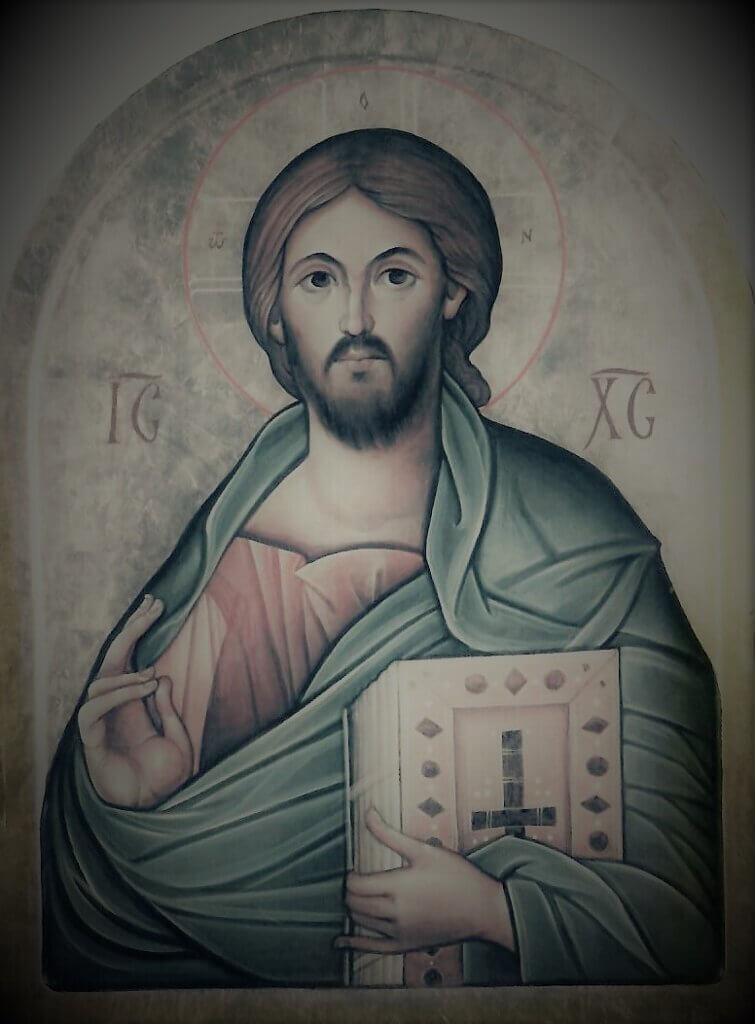
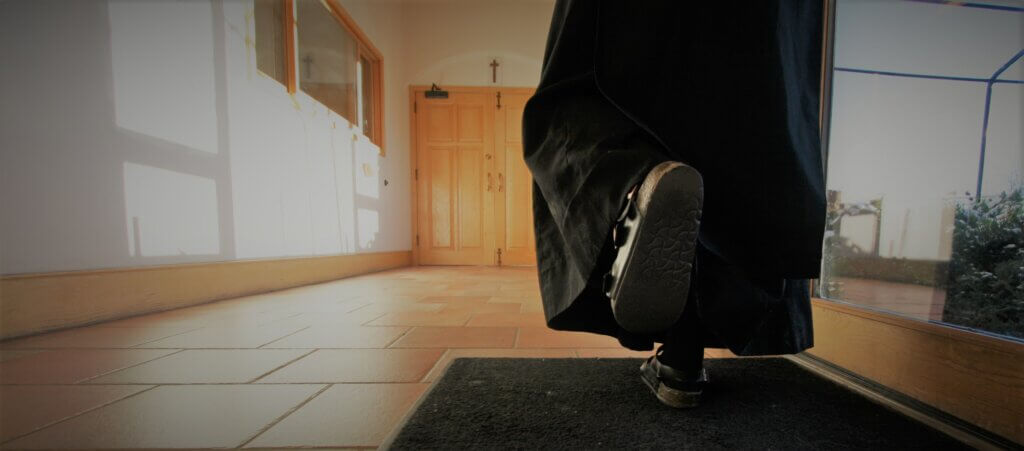
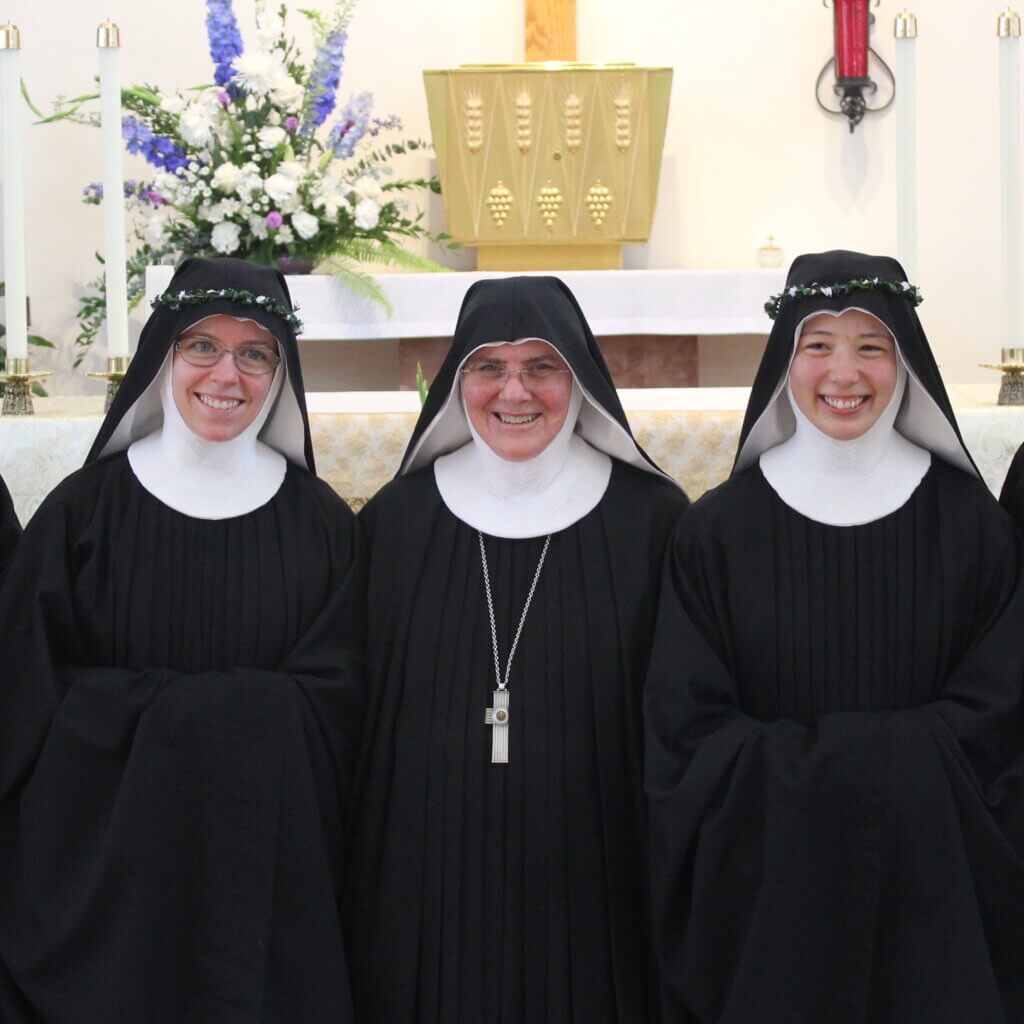
Life’s journey can be full of distractions and diversions. Come to a day of recollection to find the meaning of Lenten observance and restore your vision of Christ for Easter.
Sister Maria Josepha, OSB
The Abbey of St. Walburga will be hosting two Lenten retreat days: March 10 and March 29 from 9:30 a.m. – 3:00 p.m.
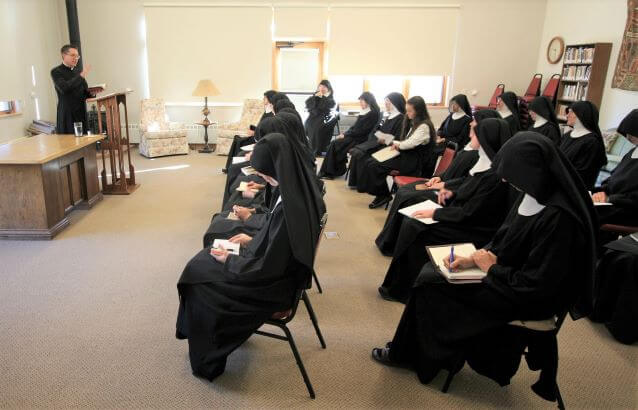
Two conferences will be given by one of the nuns on the topic of “Returning to Christ”.
Participants are welcome to join the nuns for midday prayers (the Divine Office).
A light lunch will be provided, or you are welcome to bring your own food (refrigerators and microwaves will be available).
The cost is $35 per person.
Registration is required. Please email our Guest Mistress at aswretreats@gmail.com or call (970) 472-0612 to make a reservation.
A reflection for the New Year by Mother Maria-Michael Newe, OSB
In 1 Corinthians 2:10, St. Paul says, “Brothers and sisters: The Spirit scrutinizes everything, even the depths of God.” You know what he doesn’t say? He doesn’t say that the Spirit criticizes; he doesn’t say that the Spirit murmurs. He just says that the Spirit scrutinizes.
What’s the difference? To scrutinize means to examine or inspect closely. You really, really look hard at it. To criticize actually means to indicate the faults of someone or something in a disapproving way. That’s criticizing, and a murmur is a soft, indistinct sound by a person or a group speaking quietly at a distance.
When there’s something in you that starts criticizing everything about yourself, I think you need to turn it off and not listen to it. There’s a time when we can critique ourselves, which means to look and be able to see a balance of good and bad. But criticizing yourself – to speak so negatively – I don’t think that’s what God wants for us.
We need to pay attention to these things because usually what you do to yourself, you will do to others. When you’re really hard on yourself, guess what? You won’t notice when you’re hard on someone else. And you don’t even mean it, but it’s just your way of thinking that’s come out.
Then, in 1 Corinthians 4:5 St. Paul says, “He will bring to light what is hidden in darkness, and will manifest the motives of our hearts.” But the more wonderful thing is that he goes on to add, “And then everyone will receive praise from God.” He’s actually anticipating praise! What a way to live! Do you live like that? When we have that way of living, anticipating good, it changes how we hear and see things. Instead of seeing black, we see that the dawn is coming; instead of seeing just the negative, we give the positive the first place.
In your desire to achieve great holiness, it’s in making those little changes. It’s the little things that make a lifetime. Think of that today: the little voice with which you speak to yourself. How is it? Know, however you’re speaking to yourself, everyone else will become aware of it. So don’t judge yourself or others too harshly. You too must know that you have a good intent. You too must know that, deep within you, you really mean well, and so does your neighbor.
Be kind to yourself, and you’ll be kind to others.
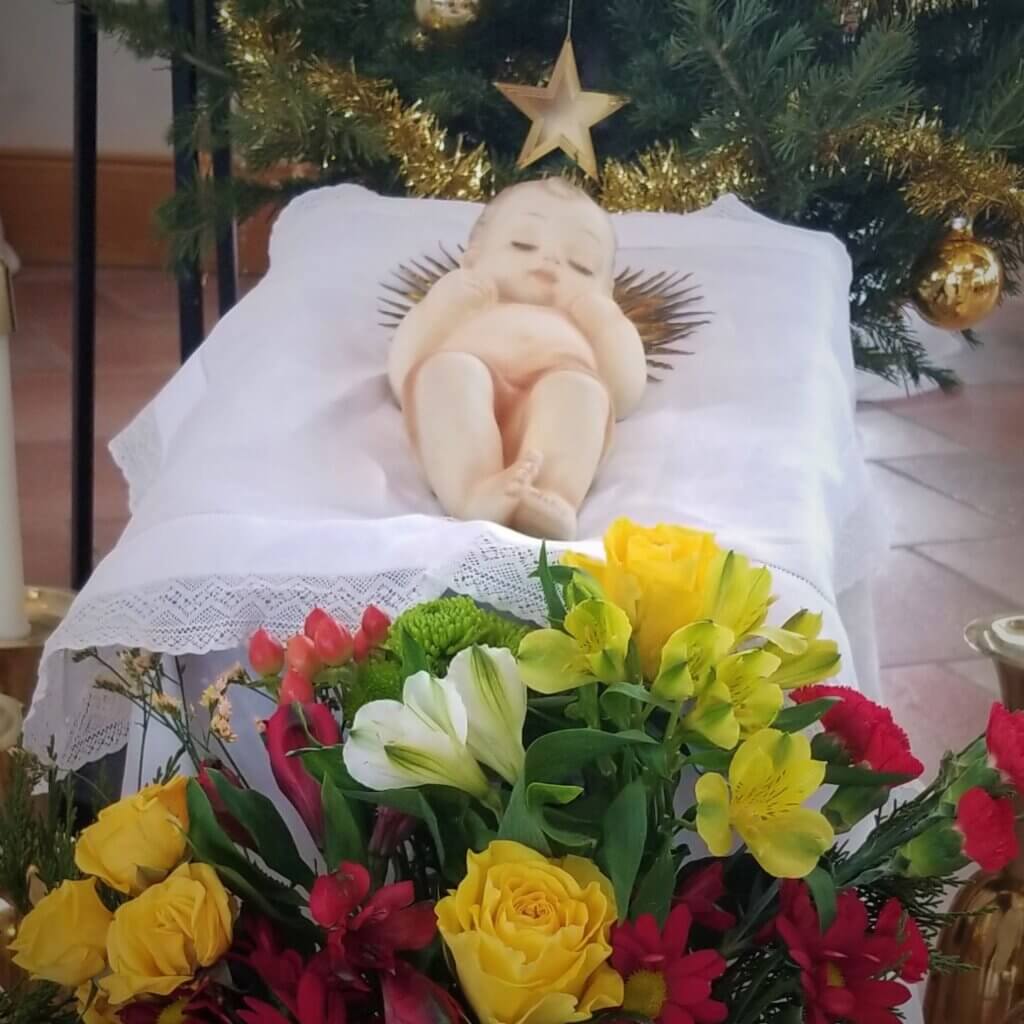
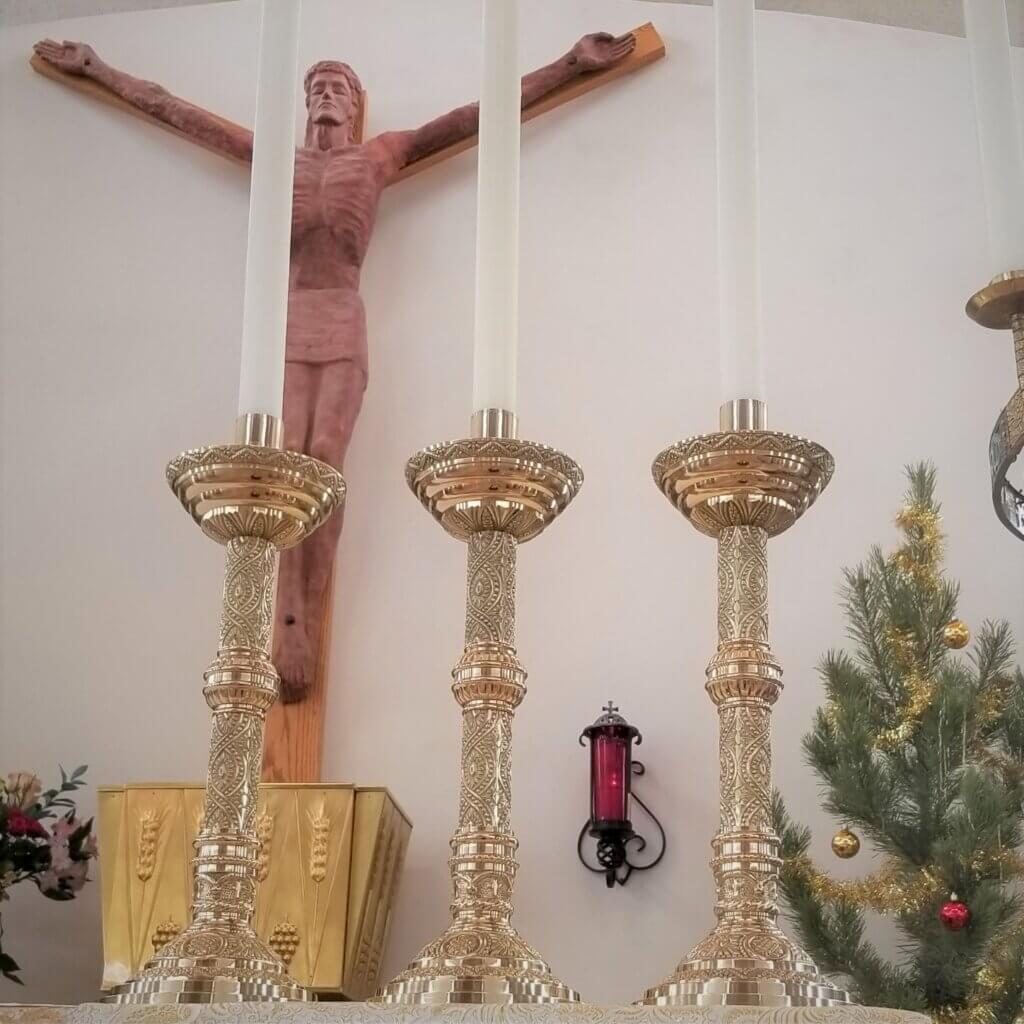
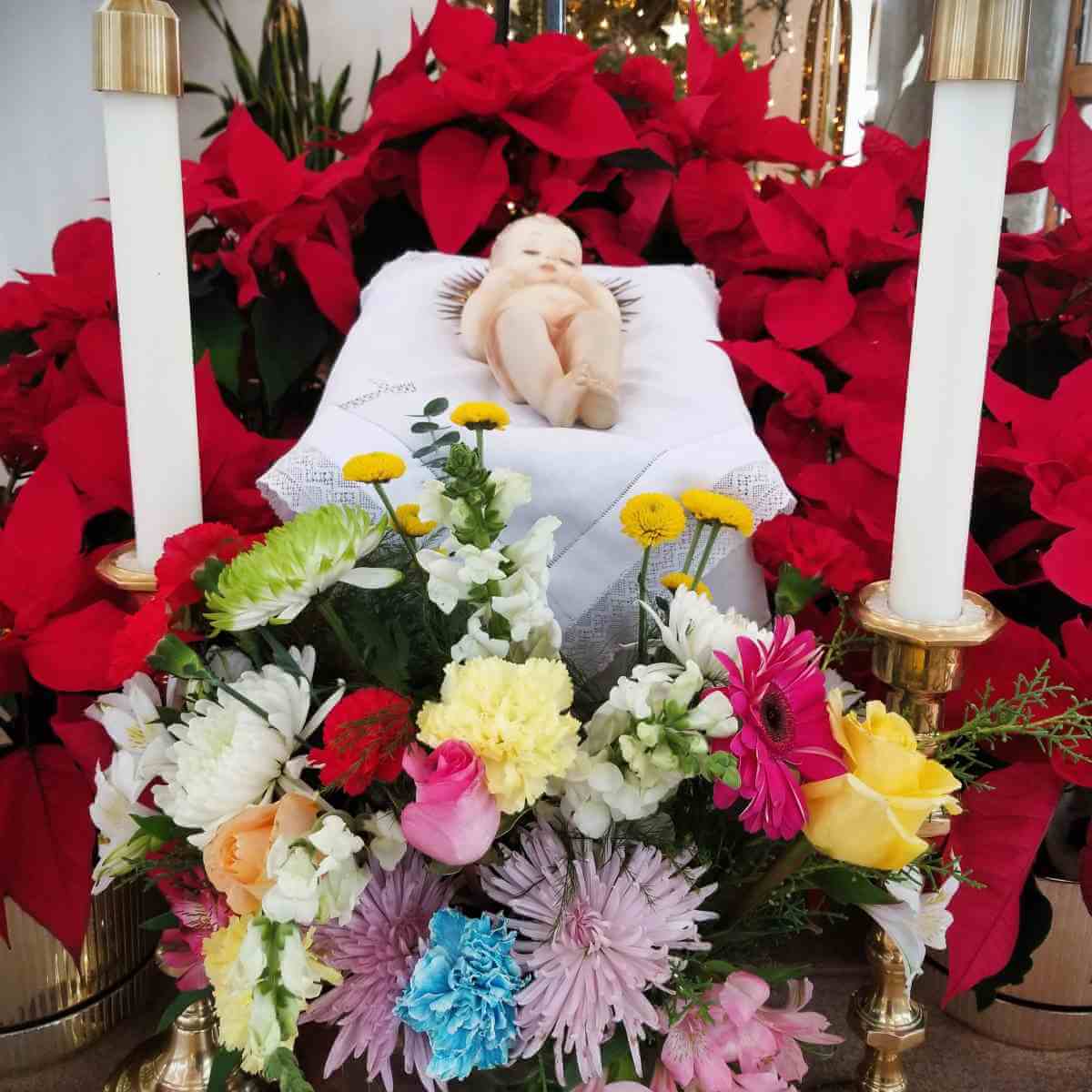
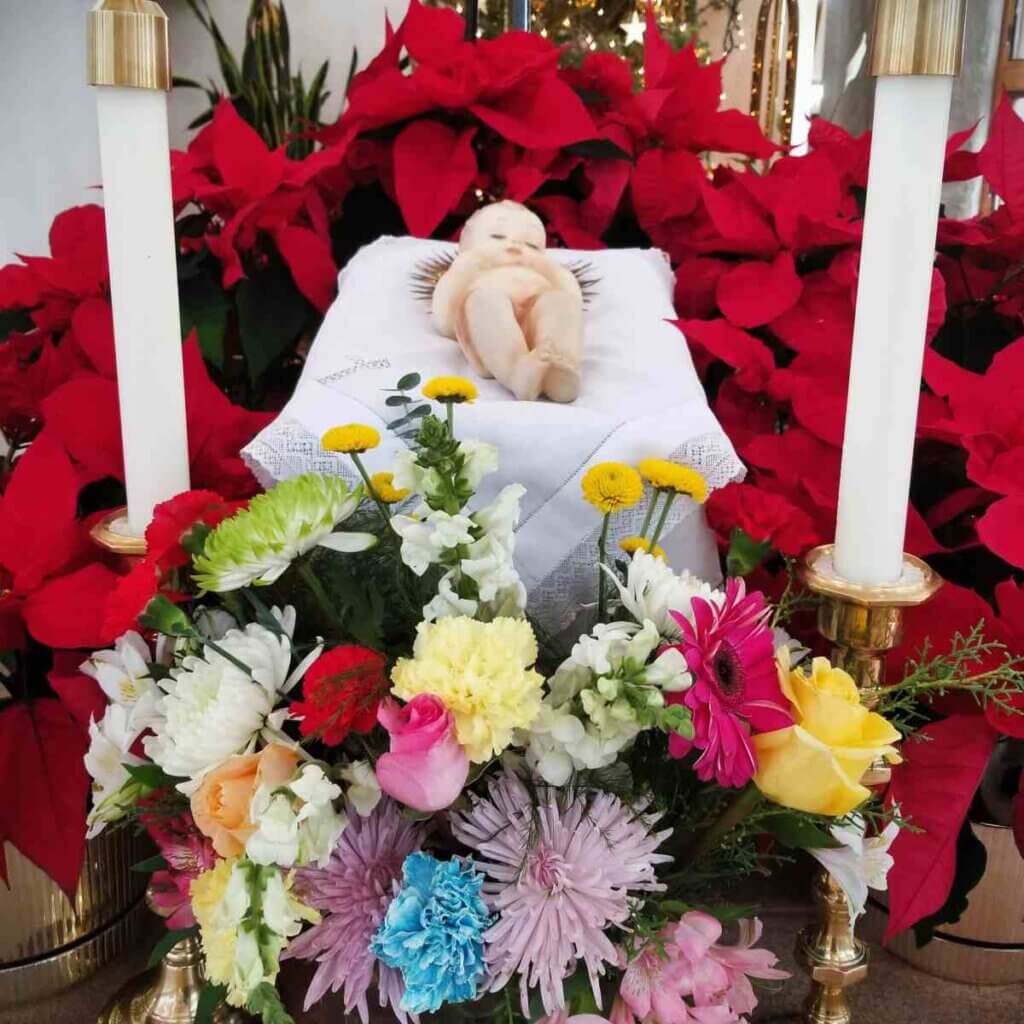
Photos from our chapel this Christmas season
…Give his people knowledge of salvation
through the forgiveness of their sins,
because of the loving kindness of our God
by which the daybreak from on high will visit us
to shine on those who sit in darkness and death’s shadow,
One of the first readings the Church gives us during Advent is from the book of Revelation: “‘These words are trustworthy and true, and the Lord, the God of prophetic spirits, sent his angel to show his servants what must happen soon.’ ‘Behold, I am coming soon.’” (Rev. 22:6-7). And that’s Advent. He is coming soon. Either we will see Him when He comes in the clouds, or we will see Him when we die and He comes to us, but one way or another we will see Him! Am I ready? Am I ready to see Him? I think that we should have great joy when we think about this, not because we are confident in ourselves, but because we are confident in Him. We should put great confidence in Him alone.
Then we will have a great sense of joy about His coming, and we will strive to live for Christ purposefully at every moment, so that when He comes we are ready. Part of that means being present to our prayer very purposefully, being present to each other very purposefully, giving a good example very purposefully. Take the time to notice one another. Don’t be too busy to notice those who are closest to you – those you whom you may take for granted. Take the time to encourage one another. Now is the time. Now is the real time of joyful conversion. Don’t wait, even an hour. Begin. Let each moment be a new beginning. And then how bright would this world be – how bright!
Christmas Day in the Abbey of St. Walburga Chapel
I also want to point out that in one of the special collects (prayers) that the Church has during Advent, we implore the Lord that “when He comes and knocks, He may find us watchful in prayer and exultant in His praise.” He comes and knocks in a special way during this season, and it is for us to ask ourselves, “How does God knock on my soul? Is my soul attentive? What are the deepest desires of my soul?” The season of Advent is the season of silence, so that you can be aware of what is going on in your soul, not only the negative things, but also the joyful things. What do you do throughout the day that makes Christ say, “I’m so happy I knocked on your door!”? The silence of Advent is a joyful silence, kept so that we can hear His footsteps when He comes, so that we can hear His voice. It’s a happy waiting, like a child at Christmas waiting for Santa Claus to make noise on the roof. It’s that sense of waiting in expectation, of asking: “When is it going to happen?” You don’t want to miss it. That’s the joyful silence of this season.
And if anyone feels like a lost sheep this Advent, just remember the importance of crying out to the Good Shepherd to be found. Why would someone not cry out? Shame? Pride? Self-reliance? But the Lord hears the cry of the poor, and He wants to find you and be found by you this Advent. So remember to cry out to Him, and let yourself be found.
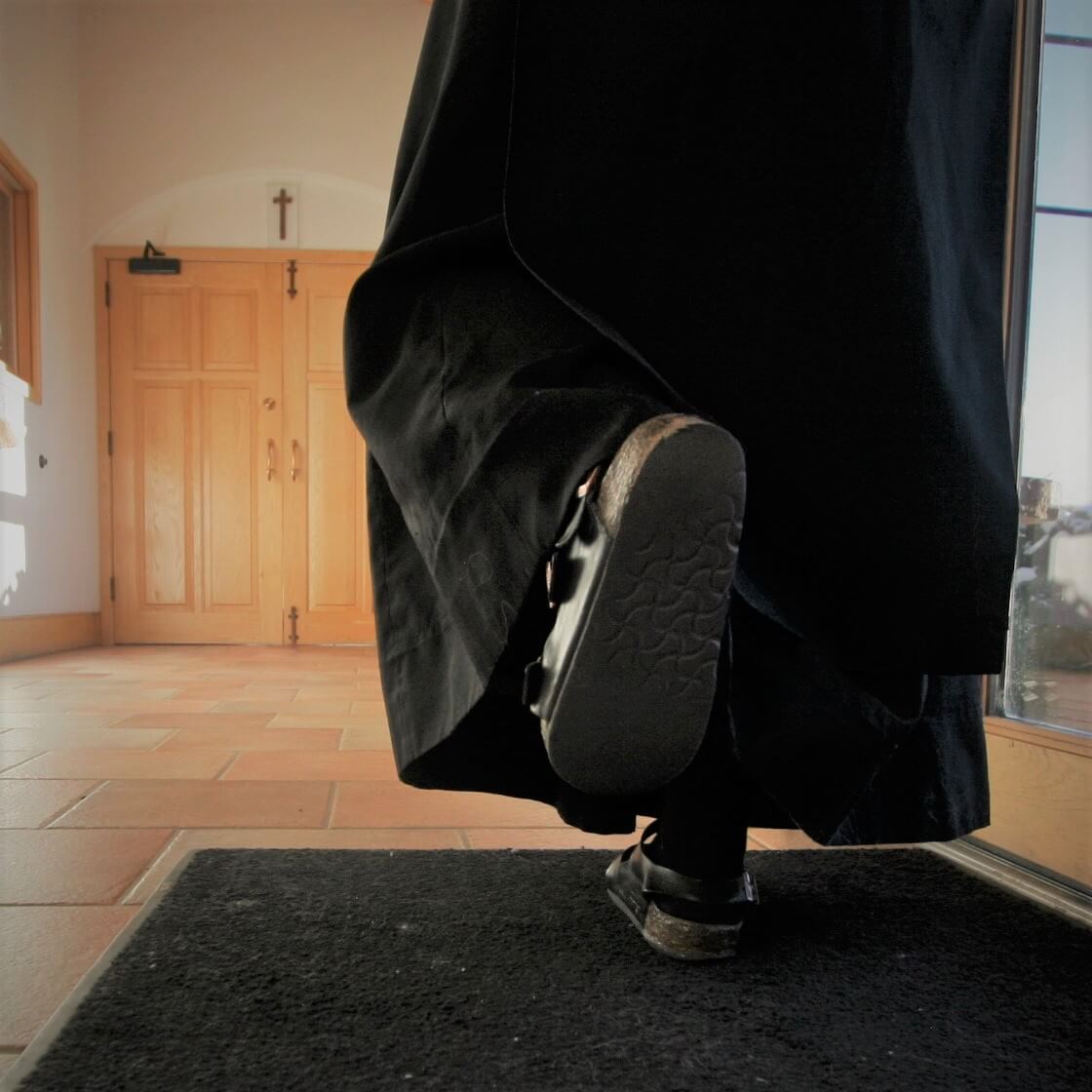
“Whatever place does not welcome you or listen to you, leave there and shake the dust off your feet in testimony against them.”
Mark 6:11
I have to laugh when I imagine Jesus teaching His followers that they don’t have to fight people who don’t agree with them – they can just shake the dust from themselves (c.f. Mark 6:11). Not everything that sticks to you is mud. Most of the time it’s just dust. And you have to know how to discern that. Don’t see everything as big heavy weights. It’s as if Jesus asks us, “They’ve been mean to you? Shake the dust off! Why worry about it?” What a nice way to handle it. Sometimes we have to physically do something to shake off the dust; when something is really painful or hurtful, if we don’t physically do something it can run around in our heads. But a way to stop it is to physically do something.
I think hearing and understanding Jesus’ words tells us a little bit about how Jesus Himself had to handle things. How He took things, so that it wasn’t so heavy for Him. He didn’t let it become heavy. It was a choice: He could be upset, mad, and let it run around; or He could just shake off the dust, turn around and go to the Father. You don’t have to do it noticeably all the time; you can go into the inner corner of your heart and shake off the dust. But I would suggest that you find something to do so that you don’t carry around the dust of the world on your shoulders. Otherwise it just all collects.
One of the most helpful ways to shake the dust off is to turn to the Scriptures. Through the Scriptures the Holy Spirit speaks loudly. That’s so often how things are answered.
Cherish the Scriptures. Put love into reading them. Pray them. This should cause our hearts to love more. It should cause us to want to do more. It should teach us how to love more. True prayer will make us love others more. It won’t make us separate. Although as nuns we may appear separated because we’re cloistered, for us, praying with the Scriptures makes us love more in a different way, in the sense of bringing people before the Lord in prayer, caring about their cares. True prayer should bring us even more together. It is a happiness, a joy, to be united to all those you love in the Spirit. Let your prayer bring you to that place. It should really root us together in that way, and then it won’t be a surprise in Heaven when we’re together, too.
This fall, we tinted the upper windows of our chapel to solve the dilemma of having very direct sunlight hit our faces when we are trying to pray the Divine Office. It was a three-day ordeal, involving moving our liturgies to the conference room, fitting a JLG lift through doorways it almost couldn’t, and a constant process of building and re-building scaffolding, but it was all worth it, because at last, “By day the sun shall not smite you, nor the moon in the night” (Psalm 121:6).
Annual Community Retreat
On October 9-15, we had Father Jeff Loseke, Ed.D., S.T.L. (currently serving as Pastor of St. Charles Borromeo Parish in the Diocese of Omaha, Nebraska) direct our annual community retreat. His daily conferences were on the topic of healing, and were a great blessing to us.
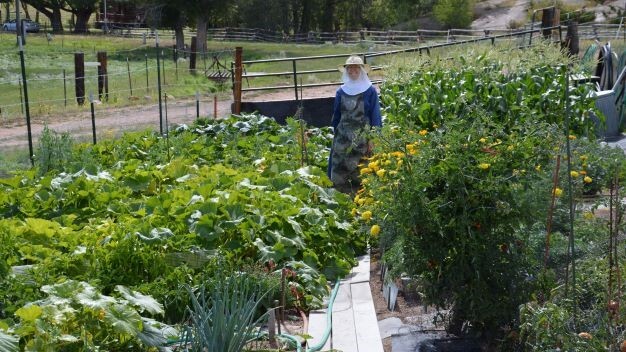
How wonderful to compare the before and after pictures of our garden this season!
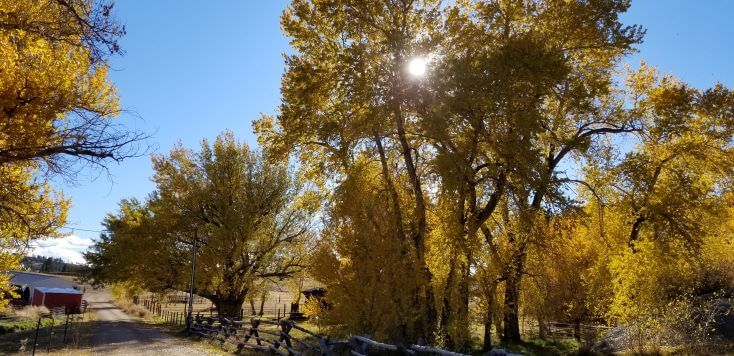
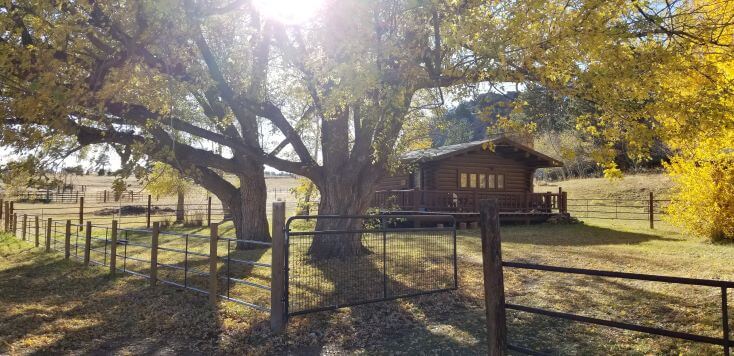
The Changing of the Leaves
Let the heavens be glad and the earth rejoice; let the sea and what fills it resound; let the plains be joyful and all that is in them. Then let all the trees of the forest rejoice before the LORD who comes, who comes to govern the earth, To govern the world with justice and the peoples with faithfulness.
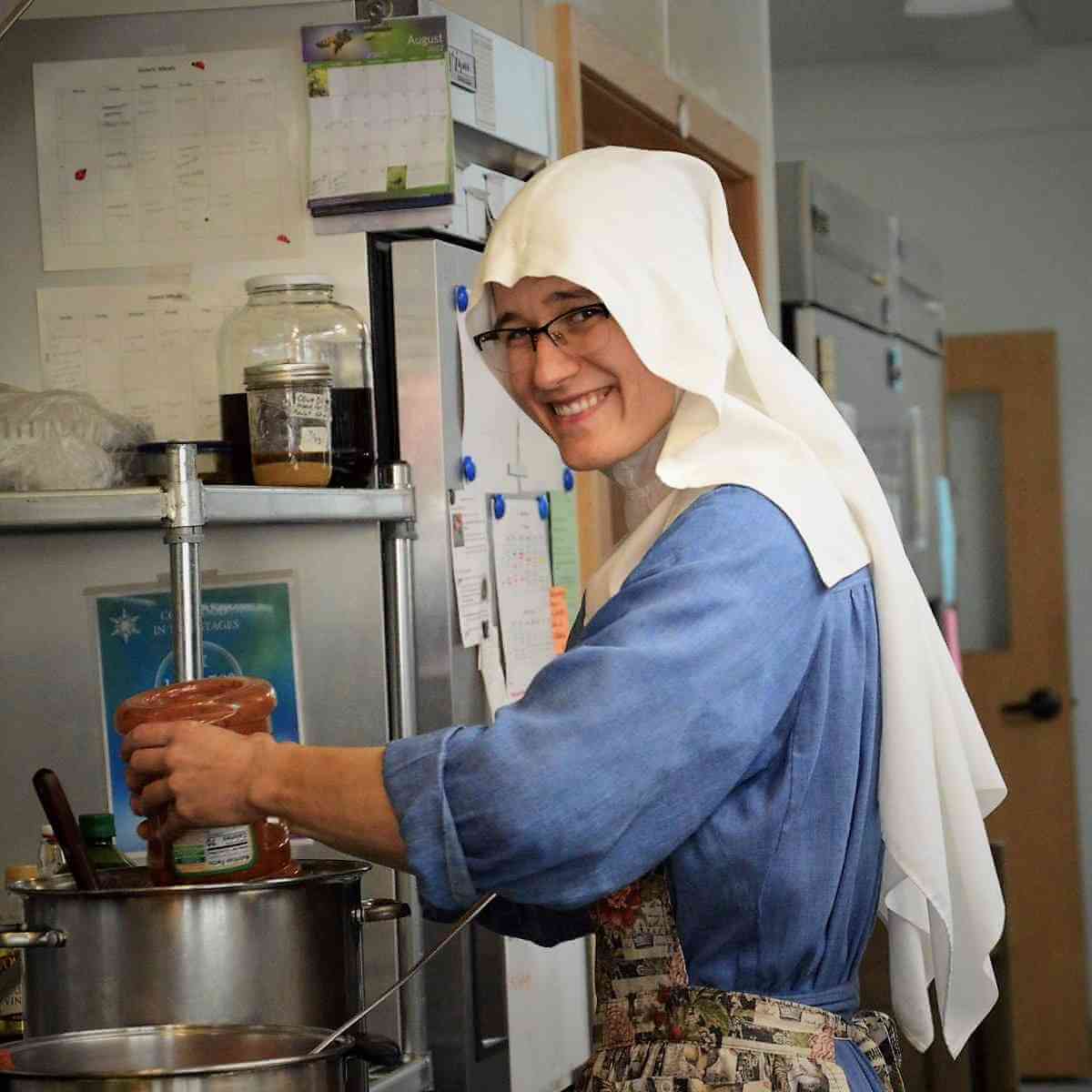
This year’s calendar features photos of our Sisters performing daily monastic duties. The calendar also gives the days of the Church’s liturgical days and seasons, together with days commemorated by the Order of St. Benedict, as they are observed at our Abbey.
***We are now sold out of 2023 Calendars; thank you to everyone who purchased one!
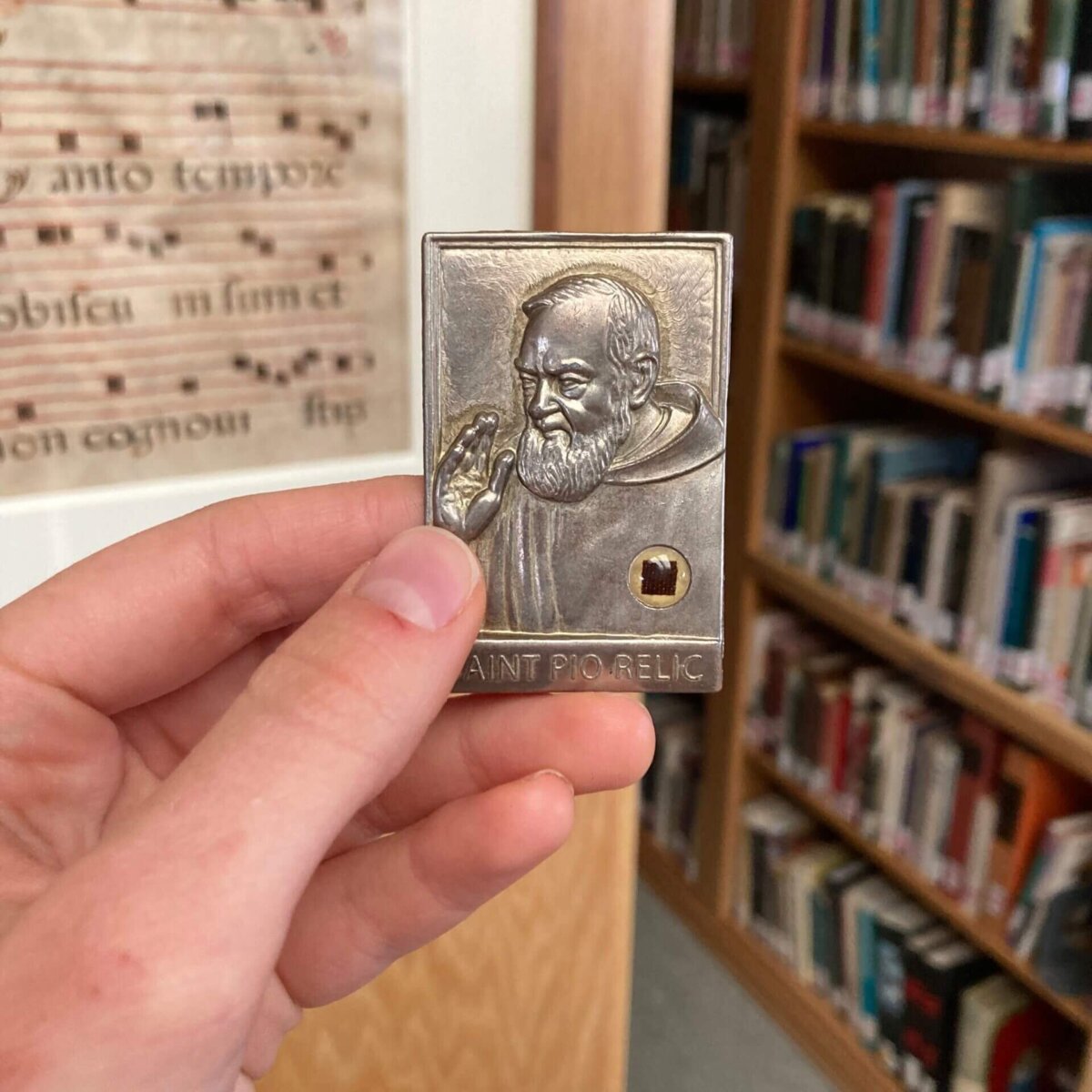
“You ought to ask the Lord for just one thing: to love Him.”
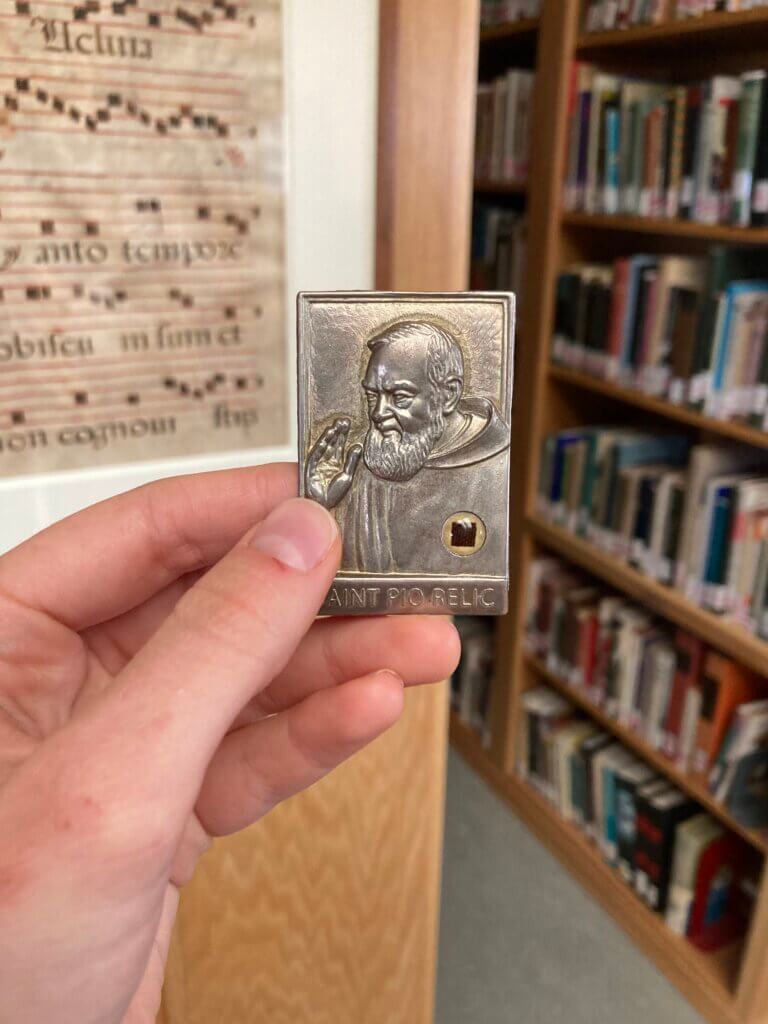
PADRE PIO
“Joy, with peace, is the sister of charity. Serve the Lord with laughter.”
A reflection by Mother Maria-Michael Newe, OSB
St. Padre Pio is a favorite of many; you cannot but love him. His whole life was one of suffering, yet he was known to have a great sense of humor. He also had a righteous temper! Padre Pio knew what sin was, he knew exactly how it separated people from God, and he took offense at it.
The example of Padre Pio reminds me of what we read in the book of Haggai. Haggai 1:7 says: “Consider your ways/Reflect on your experience.” If we are serious about our lives, we will do just that. Monastic tradition dictates that we reflect on our lives particularly twice a day: at noon and in the evening at Compline.
“God’s spirit is a spirit of peace, and even when we have serious faults, he grants us a tranquil, humbled, confident pain which depends entirely on his mercy.”
PADRE PIO
We reflect on our day for the purpose of conversion. It’s not to take into account everybody else’s faults; it’s to account for our own reactions. I’m responsible for my reactions. Yes, people can push my buttons: they can be nasty, they can do all kinds of things, but that doesn’t mean that I have to react badly. The reason we are to consider our ways is so that we can change them. Beware of going through life saying “it’s everybody else’s fault.”
We also play a part in how we are to our [brothers and] sisters. Don’t push people’s buttons. If you know something hurts them, be aware of it. Go the extra mile to be kind in that area. Be aware of the weaknesses of one another. What we can do to help one another, we’re responsible for doing.
“Consider your ways” (Haggai 1:7). People are saying “Oh no… no-no… it’s not the time for that. It’s not the time to build the house within” (cf. Haggai 1:2). That’s what the world says, but God says it is the time. How are we supposed to do it? Read again in Haggai, “Go up into the hill country; bring timber, that I may be pleased with it, and that I may be glorified, says the Lord” (Haggai 1:8). Bring the Cross. Carry It. Follow Him.
Remember Who Christ is in your life. Keep Him before you daily. Every moment. Seek His Face every single moment.
The Cross of Believing I will give up my idols of silver and gold So that my hands may be free to embrace the bronze Serpent, mounted on the pole, That is Christ the Lord, Crucified for the unworthy. And I will carry this cross wherever I go — This burden, both sweet and light, Of believing that this God-man has loved And given himself up for me, Satisfying the Divine Justice with his boundless Mercy. Life can never be the same.
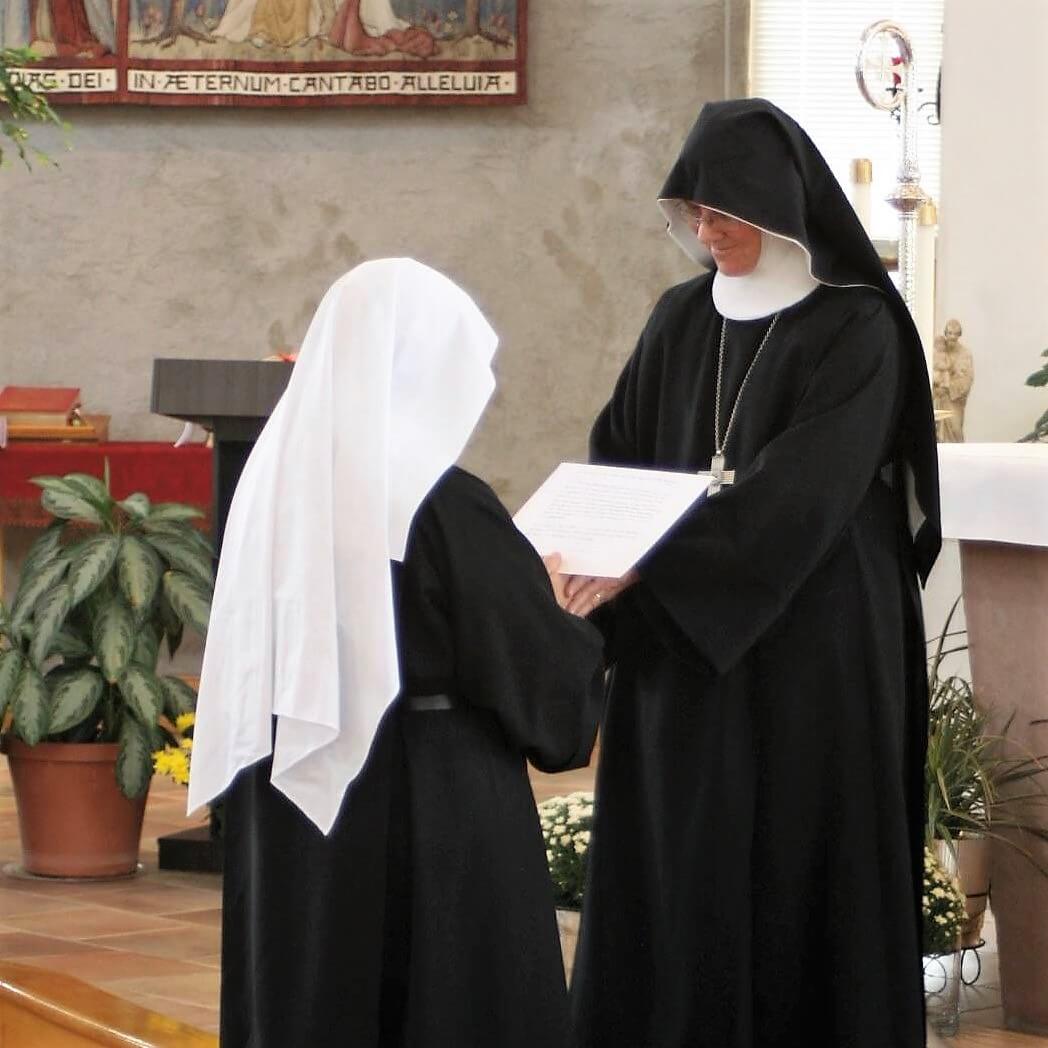
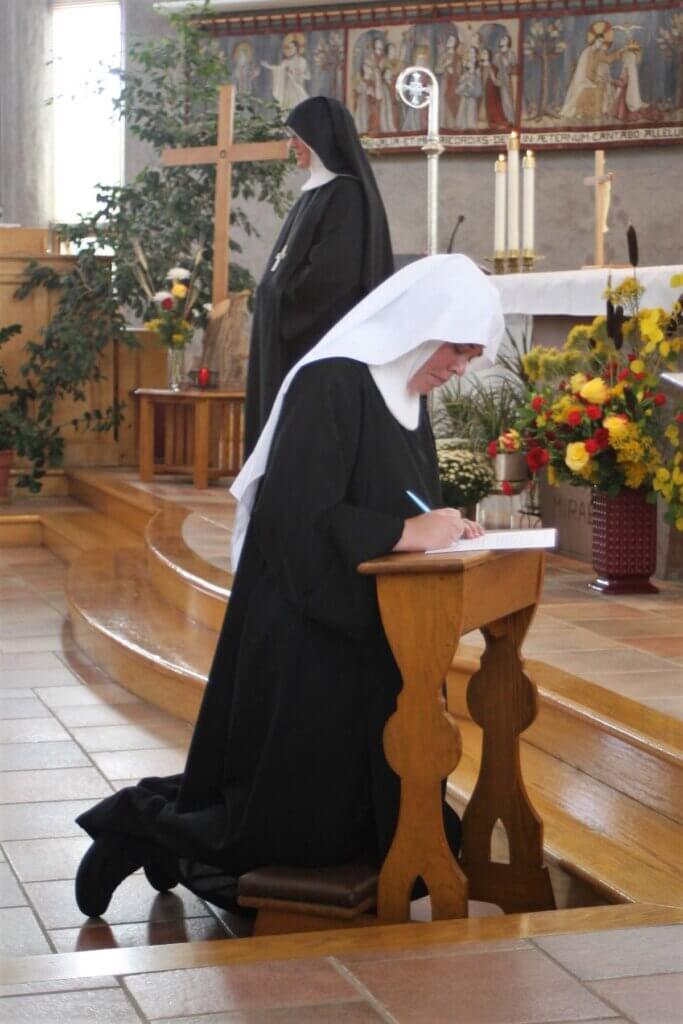
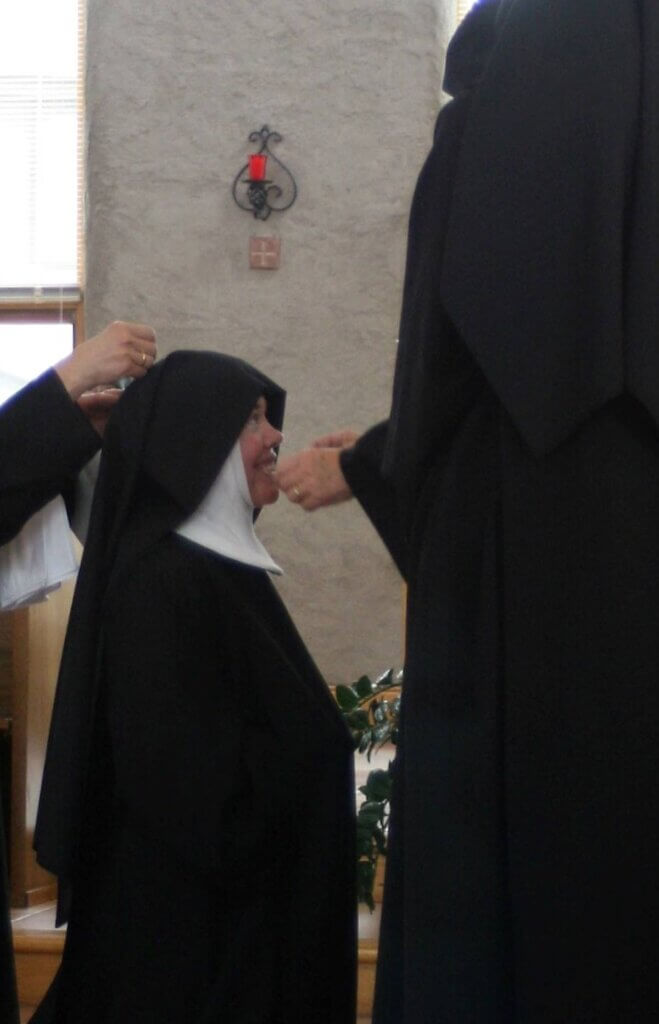
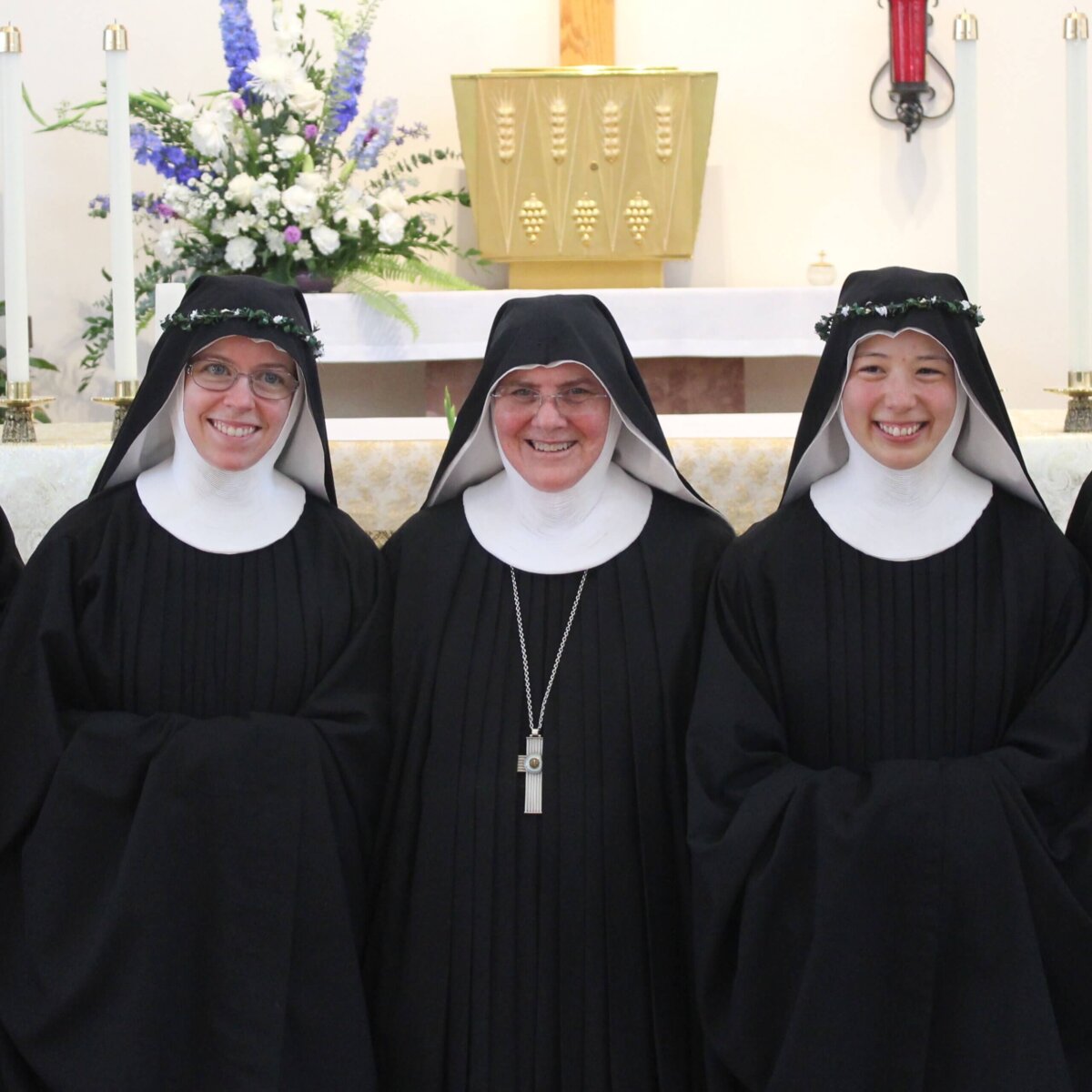
On September 14, 2022, the Feast of the Exaltation of the Holy Cross, our Sister Mary made her First Profession of Monastic Vows during the Eucharistic Celebration, receiving the name Sister Maria-Rose, and taking Our Lady of Guadalupe as her Patroness. It was a beautiful ceremony, and unique because our Sister Assunta also renewed her simple vows for the final time before making her Solemn Profession next year.
We adore you, Lord Jesus Christ, here, and in all your churches throughout the whole world, and we bless you, for by your holy cross you have redeemed the world.
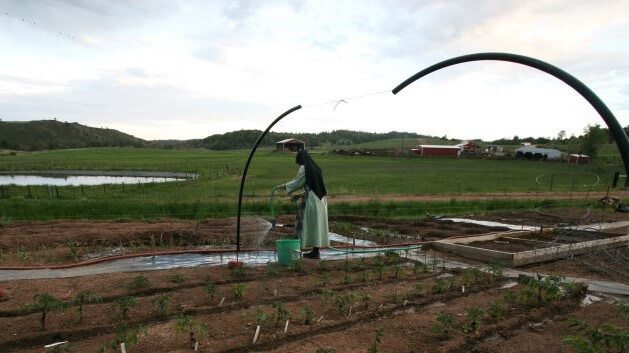
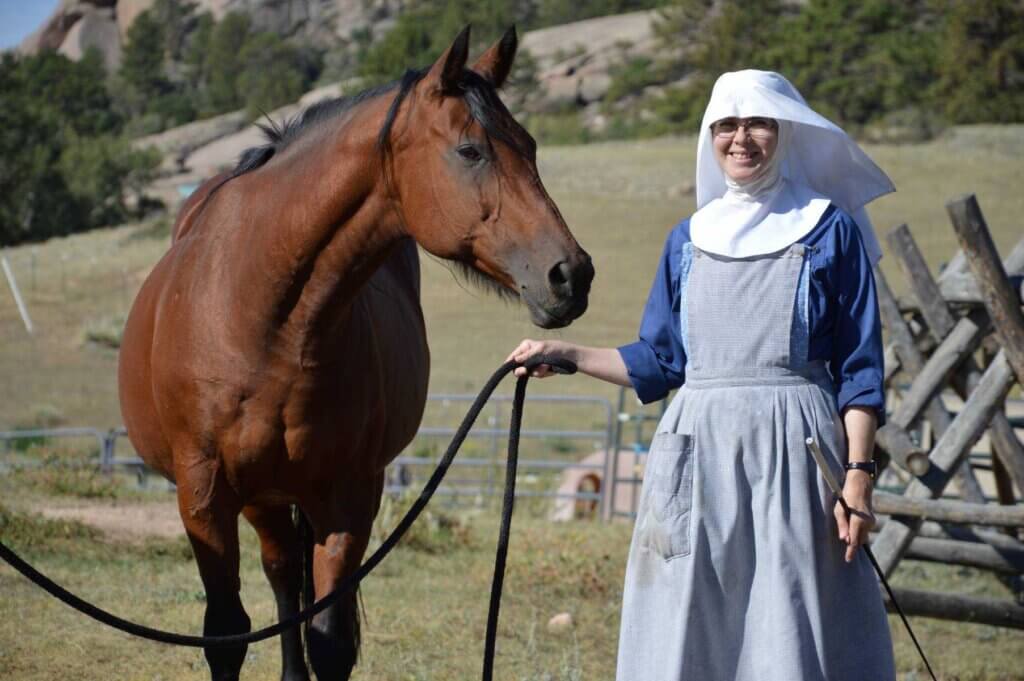
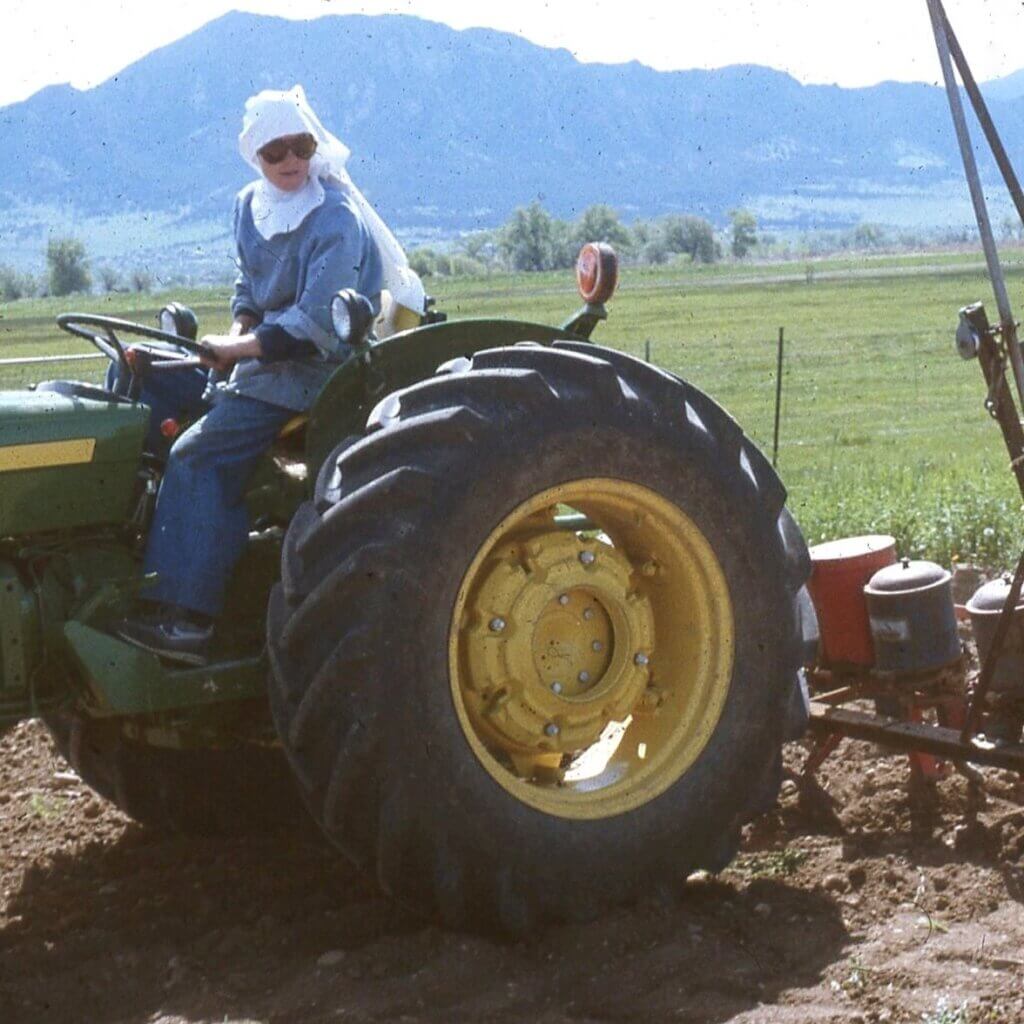
Mother Maria-Michael (then Sister Maria-Michael) may have been an unlikely candidate for managing our farm in Boulder since she was one of the smallest Sisters. But the Lord worked mighty deeds, and she was able to do everything she needed to do through His strength working in her.
We know the famous story about God telling Moses to go tell Pharaoh to let His people go. He says, “Now, go! I am sending you to Pharaoh to bring my people, the Israelites, out of Egypt” (Exodus 3:10). Don’t you think Moses choked at this command: “Pharaoh? I took off from there a few years ago… This isn’t what I had in mind!” And isn’t it true that in our own lives, God also sends us to those places we don’t really want to go? The things we’ve run from are the very things we slam into. We think we’ve left them far behind when we’re in a new place…But there it all is again! And you sit there saying, “Why?”
Moses says to God, “Who am I that I should go to Pharaoh and bring the Israelites out of Egypt?” (Ex 3:11), as in, “Can we talk about somebody else going?” But God answered, “I will be with you” (Ex 3:12). There’s the difference. It’s that now you’re being sent. You’re being commissioned and now, personally, I will be with you. There is no fear when God is with us. I think that’s one of the most important things to remember: don’t be afraid of what God has ordained. Don’t fear the things of God… even when you have to run right back into the things you were fleeing from, or not really wanting to be around. Those are the places where He says, “Oh! Come right in! I’m here waiting for you.” It’s something to think about. God doesn’t want us to fear. He wants to show His power in weakness because then we’re sure it’s Him.
It’s nothing for a muscle-man to pick up a car. But if somebody who weighs 60 pounds and doesn’t look too well, walks over and picks up a car, you would say, “It can’t be him – it must be the Lord!” So He makes it evident, very often, that it’s His work and not our own. So never be surprised when you’re asked things beyond what you think you can do. God says, “This will be great. Even you will know it is I who am doing it.”
…but he said to me, “My grace is sufficient for you, for my power is made perfect in weakness.” I will rather boast most gladly of my weaknesses, in order that the power of Christ may dwell with me.