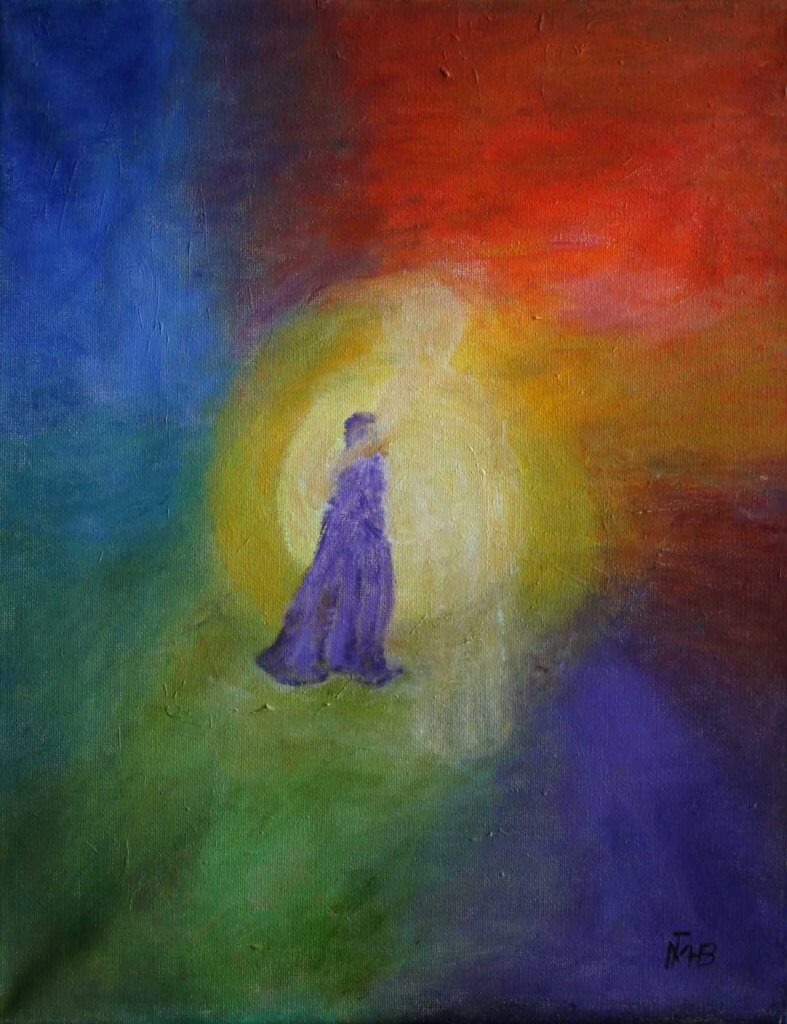
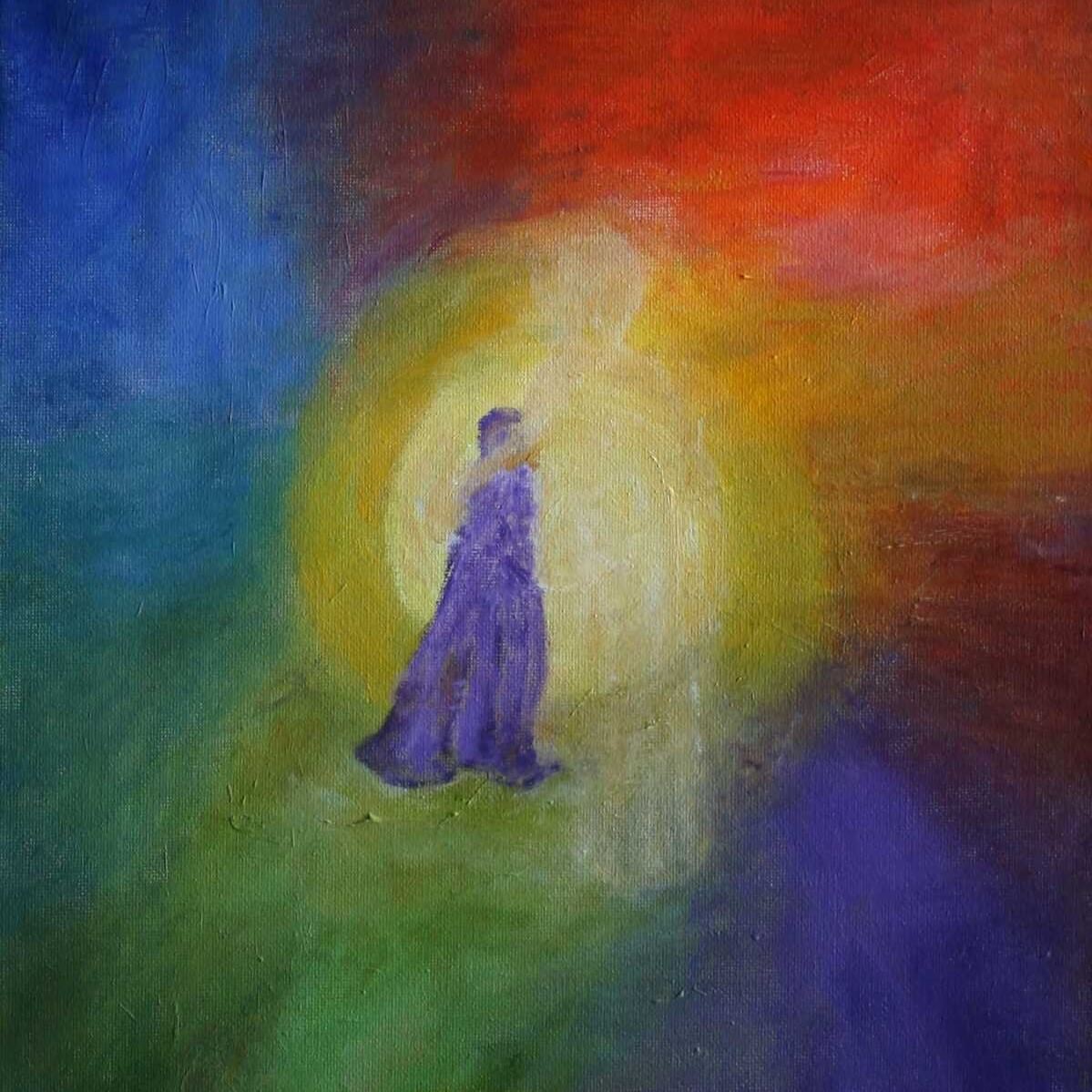
“Do not let your hearts be troubled. You have faith in God; have faith also in me. In my Father’s house there are many dwelling places. If there were not, would I have told you that I am going to prepare a place for you? And if I go and prepare a place for you, I will come back again and take you to myself, so that where I am you also may be.”
John 14:1-3
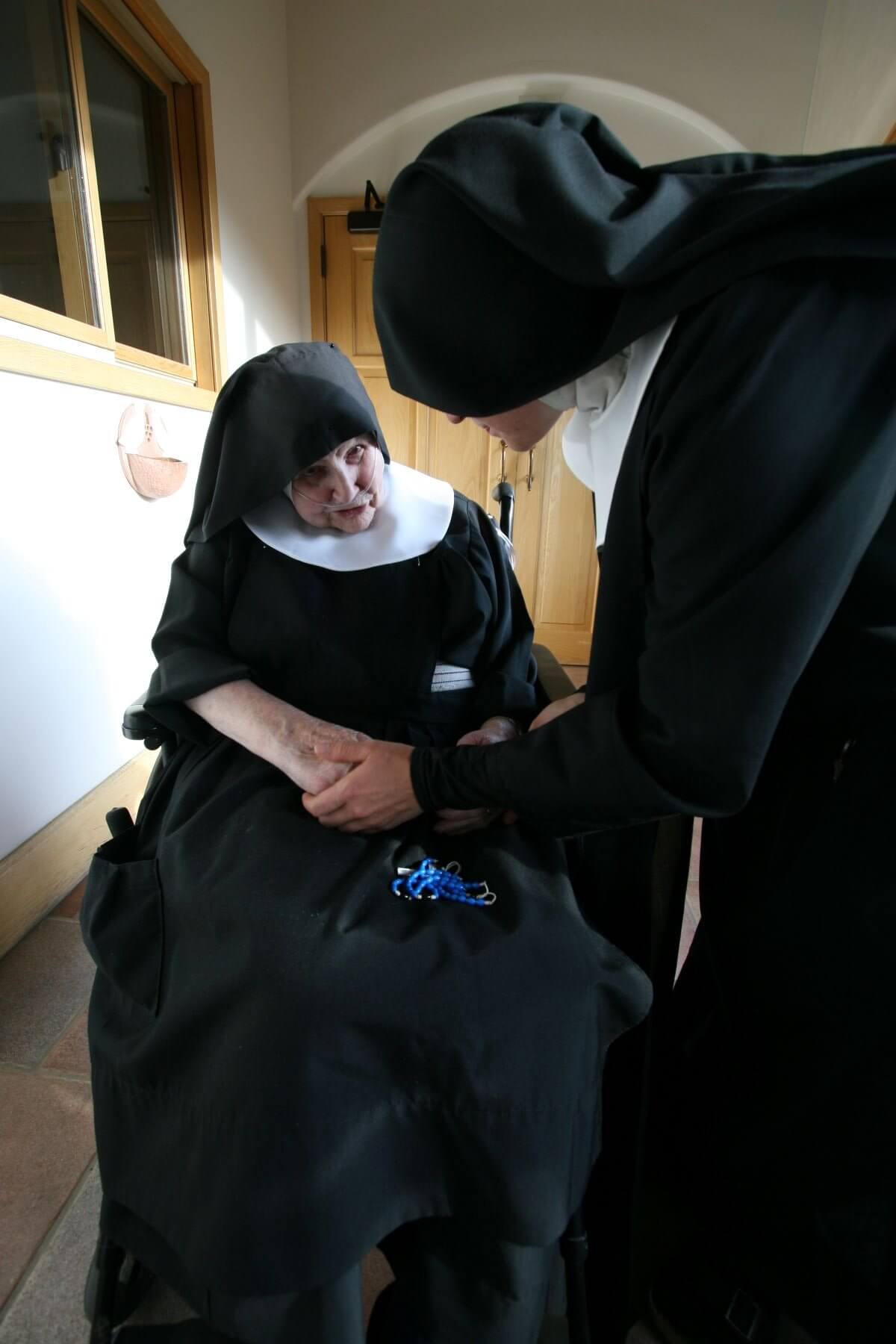
This Gospel is so precious. I love to think about how in heaven, all evil will be forgotten, because evil cannot be in heaven. There will be a holy amnesia. You won’t remember anything evil that has been done to you.
It’s like when you’re working with people with dementia, and they greet you with a big, “Hello! How are you? It’s so good to see you!” no matter who you are. Isn’t that sort of a touch of heaven? It’s a touch of heaven when nothing evil is remembered.
And even those who have hurt us, when we get to heaven, we will be able to greet like our best friends. “How good to see you…”
So holy amnesia is a beautiful thing – we can even try to do it today.
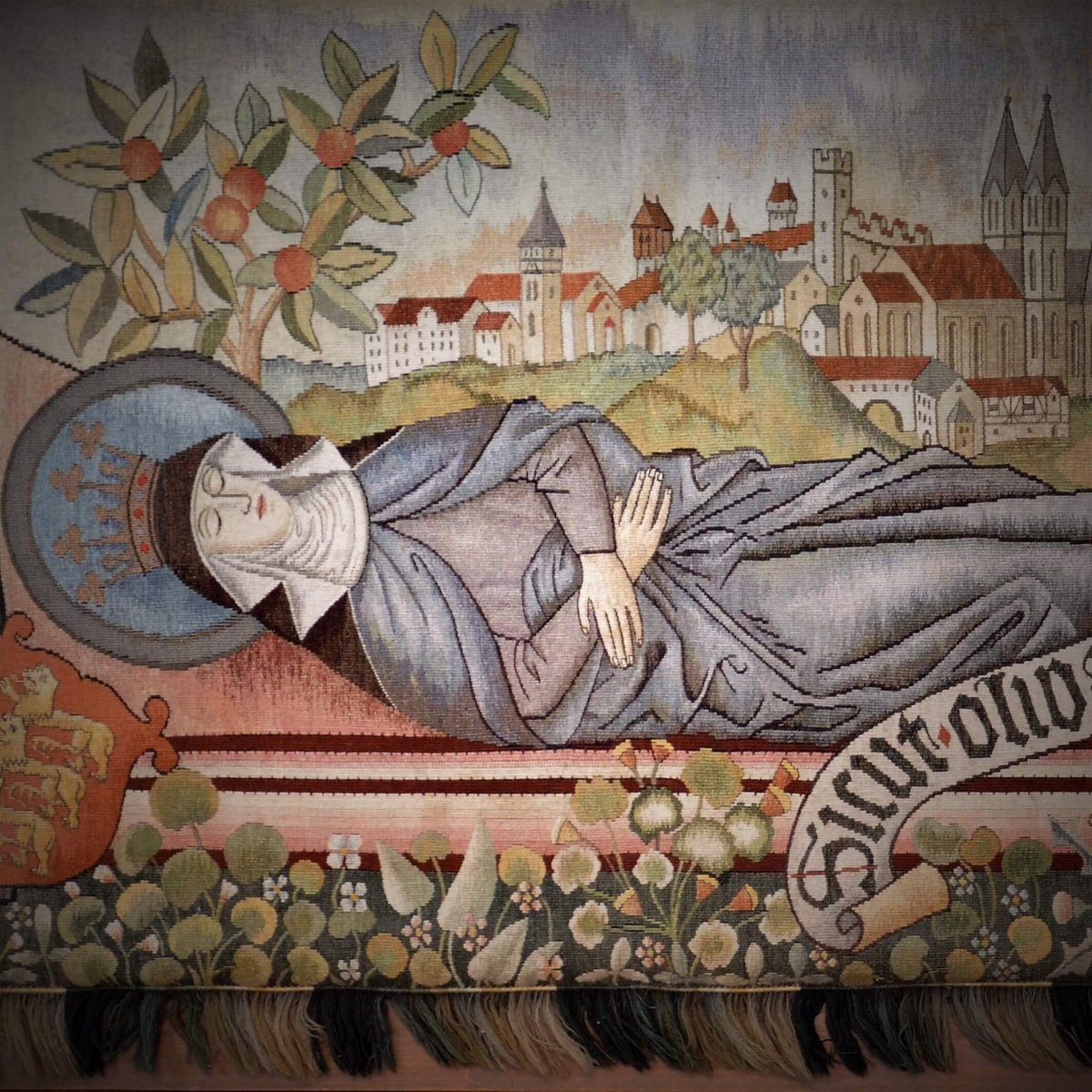
Every year on October 12 the holy oil from Saint Walburga’s tomb in Germany begins to flow, and it continues until her Feast Day on February 25. Due to the testimonies of many people who have experienced God’s healing power after anointing themselves with the oil and asking Saint Walburga to pray for them, it seems that this quote from Saint Thérèse of Lisieux may also be applied to our patroness:
“I wish to spend my heaven in doing good upon the earth.”
Photo of Saint Walburga’s crypt at the Abtei St. Walburg in Eichstätt, taken by one of our Sisters who travelled to Germany for the Abbatial Blessing of Mother Hildegard, OSB. The images on the walls are memorial plaques depicting miracles attributed to Saint Walburga, donated by patrons in gratitude for her intercession.
A reflection on Luke 10:38-42 by Mother Maria-Michael Newe, OSB
It ran through my mind today that Martha was not able to listen to Jesus when serving because she was so mad at Mary. She wasn’t hearing a word He said—she was too busy thinking, “Look at her, she just sits there all day, and I have to do this, I have to do that, look at how unfair it is!” We can recognize this pattern in our own lives: doesn’t it happen that when we’re angry, disturbed, not happy with life, we are not longer able to hear Christ? Our conversation is one-sided, because we’re just complaining to Him, like Martha did. We need to stop and listen, too. If we don’t, we can let disturbances steal our peace of heart, steal our focus, and have say over what’s important in the moment. It takes a lifetime to figure out the answers to the questions, “Why do I give this thing such importance? Why do I let it steal my peace of heart and mind? Can I just let it go?” There are some things we need to address, and there are other things that maybe we need to just let go.
Pictured below, Sisters prepare the meal and wash the dishes without grumbling or complaining!
On September 11, the eve of the day on which the Church commemorates the “Holy Name of Mary,” our Sister Mary was clothed with the Benedictine habit. What a glorious day it was!
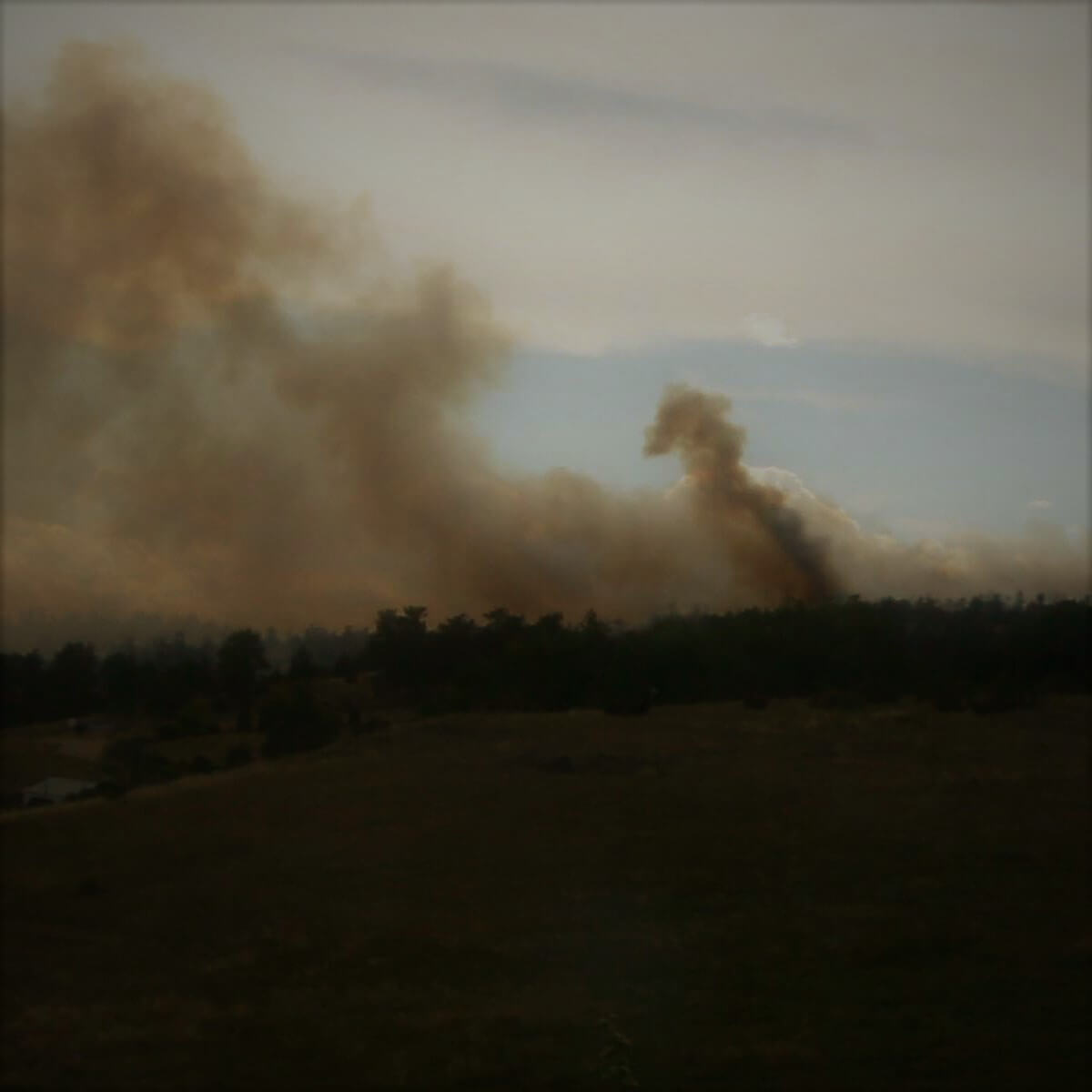
Two days later, a wildfire broke out from a lightning strike on our neighbor’s land, and we spent the day preparing to evacuate. Thankfully, due to the amazing fire fighting squad (on foot and in the air), who worked tirelessly through the night, we were able to safely stay in our monastery. We were also blessed by many friends and oblates who reached out to check on us and let us know that we could stay with them if we needed to leave. Praise the Lord for surrounding us with so many good people!
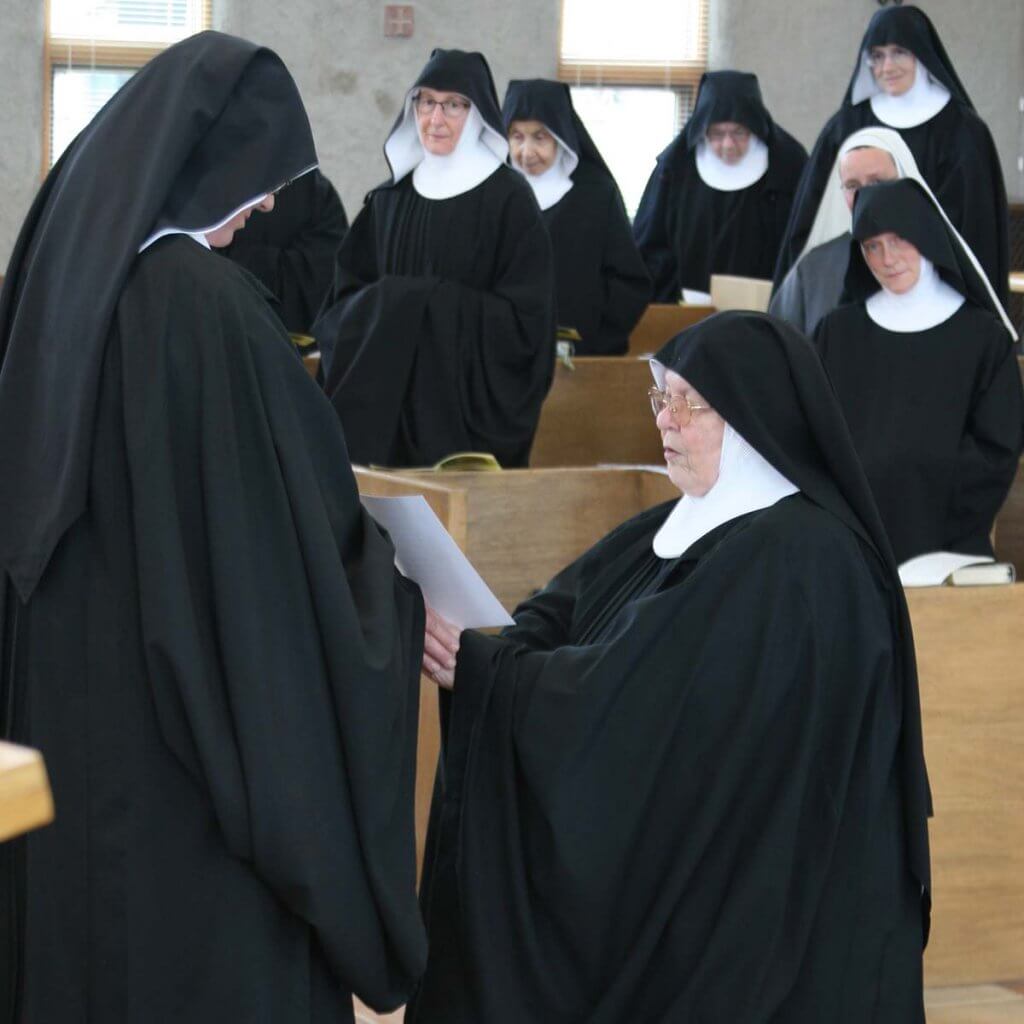
It was a great gift that we did not have to evacuate, because Sister Assunta’s Vow Renewal was set to take place on the next day, September 14, The Feast of the Exaltation of the Holy Cross. After six years here, she has now renewed her vows for another year, bringing her one step closer to her Solemn Profession.
In honor of the Feast of the Exaltation of the Holy Cross celebrated this month, one of our Sisters wrote this reflection:
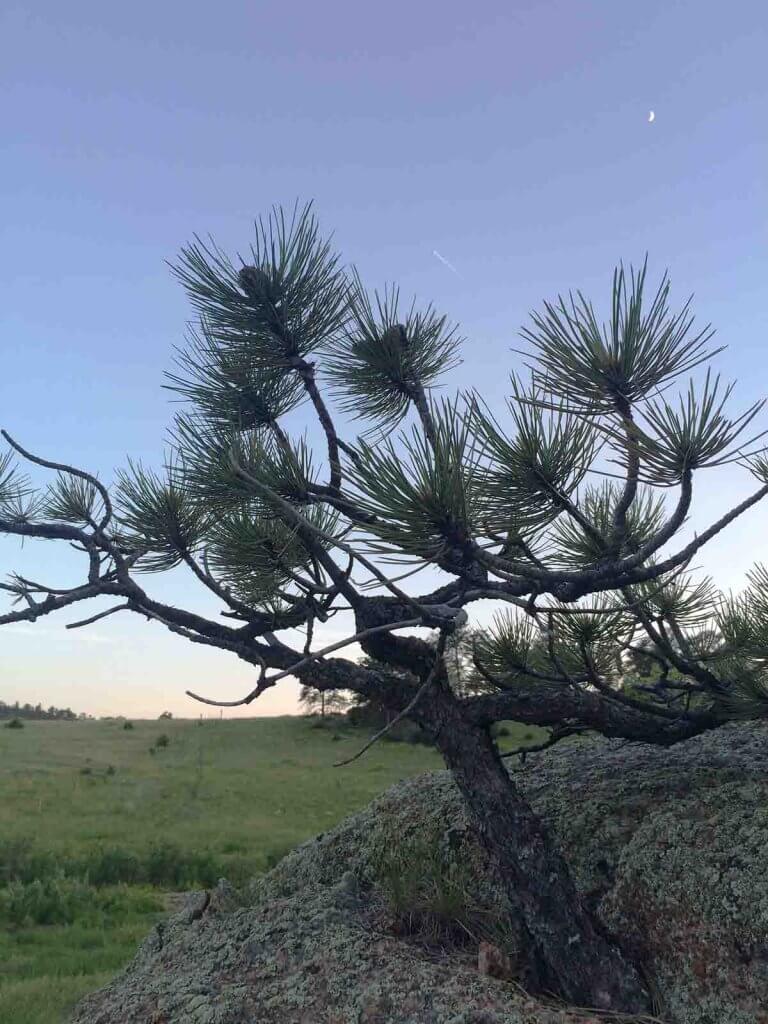
A Rock Beneath the Cross
You have said
To plant in fertile ground
With rich, nutritious soil,
In order to take root
And bear fruit;
But then You go and
Contradict Yourself,
Because I’ve seen
Trees growing out of rocks,
For nothing is impossible
For You…
And it’s a good thing, too,
Because I am like that rock,
Stony, hard, unloving,
Critical, rigid, cold,
But still You give me hope
That if I only keep saying,
“I only want You,
And to love like You,”
Then You will accomplish
A miracle in me,
And a tree will grow
From this rock…
And I think of Moses
Striking the rock,
And water pouring forth,
Just like You were struck
By me on the Cross,
And blood and water
Poured out love and mercy
Upon this very rock
Who struck You…
So there is hope
For this heart of stone,
Because beneath your Cross,
Watered by Your blood,
Anything is possible,
And even a fruit-bearing tree
Can grow.
I will give you a new heart, and a new spirit I will put within you. I will remove the heart of stone from your flesh and give you a heart of flesh.
On August 15, 2021, The Solemnity of the Assumption of Mary, Sister Maria-Raphaelle and Sister Fidelis made their solemn profession of monastic vows. The Holy Mass was presided over by The Most Reverend Samuel J. Aquila, who delivered an eloquent homily about his “dear daughters” being the salt and light of the world, in imitation of the Blessed Mother. It was a day of great rejoicing, and a blessing for our community.
On that day—oracle of the LORD— You shall call me “My husband”… I will betroth you to me forever: I will betroth you to me with justice and with judgment, with loyalty and with compassion; I will betroth you to me with fidelity, and you shall know the LORD.
A reflection on following Christ and not looking back, by Mother Maria-Michael Newe, OSB
We hear about Abraham procuring a wife for his son Isaac, and how he tells his servant, “never take my son back there for any reason” (Genesis 24:6), that is, into to the homeland where Abraham was from, because God had promised him a new land. I think we need to take that message for ourselves as well. Don’t go back. Don’t disbelieve God’s word to you. Everybody’s journey is different, and God is the only one who can follow each one’s journey, because He’s the one who has given it. He has a specific plan for you, and it’s real. He has a specific work for you. You have to follow through with the vocation He has called you to. Once you say yes and take a step forward, don’t step back. It’s not about you—it’s the work of God in you. So don’t look at yourself all the time, because that can get really discouraging—look at God! Look at the work He is doing in you. Don’t stare in the mirror; instead, open the window. It’s beautiful out there!
I found a quote in Venite Seorsum: Instruction on the Contemplative Life and on the Enclosure of Nuns, about the spiritual exodus that is required of each one of us:
“From the dawn of the Chosen People’s history, Abraham is depicted as being called to leave his country, his family and his father’s house, while the Apostle repeatedly teaches that the same calling was the beginning of a long mystical journey to a homeland which is not of this world. What in this way was merely prefigured in the Old Testament, becomes a reality in the New…The Word of God delivered us from the domination of darkness (cf. Col. 1:13), that is from sin, and through His death (cf. John 13:1; 16:28; and Heb. 9:11-12, 10:19-20) He set us on the return road to the Father, who ‘raised us up with him and made us sit with him in the heavenly places in Christ Jesus’ (Eph. 2:6; cf. Col. 2:12-13, 3:1). Herein lies the true-essence of the paschal mystery of Christ and the Church.”
This exodus is true in a particular way for those whom God has called to the contemplative life, those whom He has set aside for Himself. God really does say to those He sets aside for Himself, “I ask you to leave everything, and to follow Me.” It doesn’t matter if home is 10 miles away or another country. Is it hard? Of course it is. But it becomes easier as you get older and heaven becomes closer. Over time you begin to let go of things more and more, and even when someone you love is dying, you have the sense that it’s okay if God takes her, because you know you’re going to see her again.
So the Exodus really is for every single person. Everyone experiences and lives through some sort of Exodus in their lives. But it’s nothing to fear, because you are fed the whole way on the manna. God is Father, and He is a very good Father. He will take care.
Illumination by a nun from the Abtei St. Walburg in Germany
Between battling the weeds, caring for the cattle, and tending the gardens, summer tends to be a busy season for us; but because of our monastic horarium that provides sacred time for prayer, the balance of “ora et labora” keeps our priorities in check.
On the first day of mowing hay this season, our tractor got stuck in the mud. Thankfully, due to the generosity of our neighbors, it wasn’t long before it was rescued!
Sister Magdalena celebrated her Silver Jubilee (25 years of monastic profession) on May 31, Feast of the Visitation.
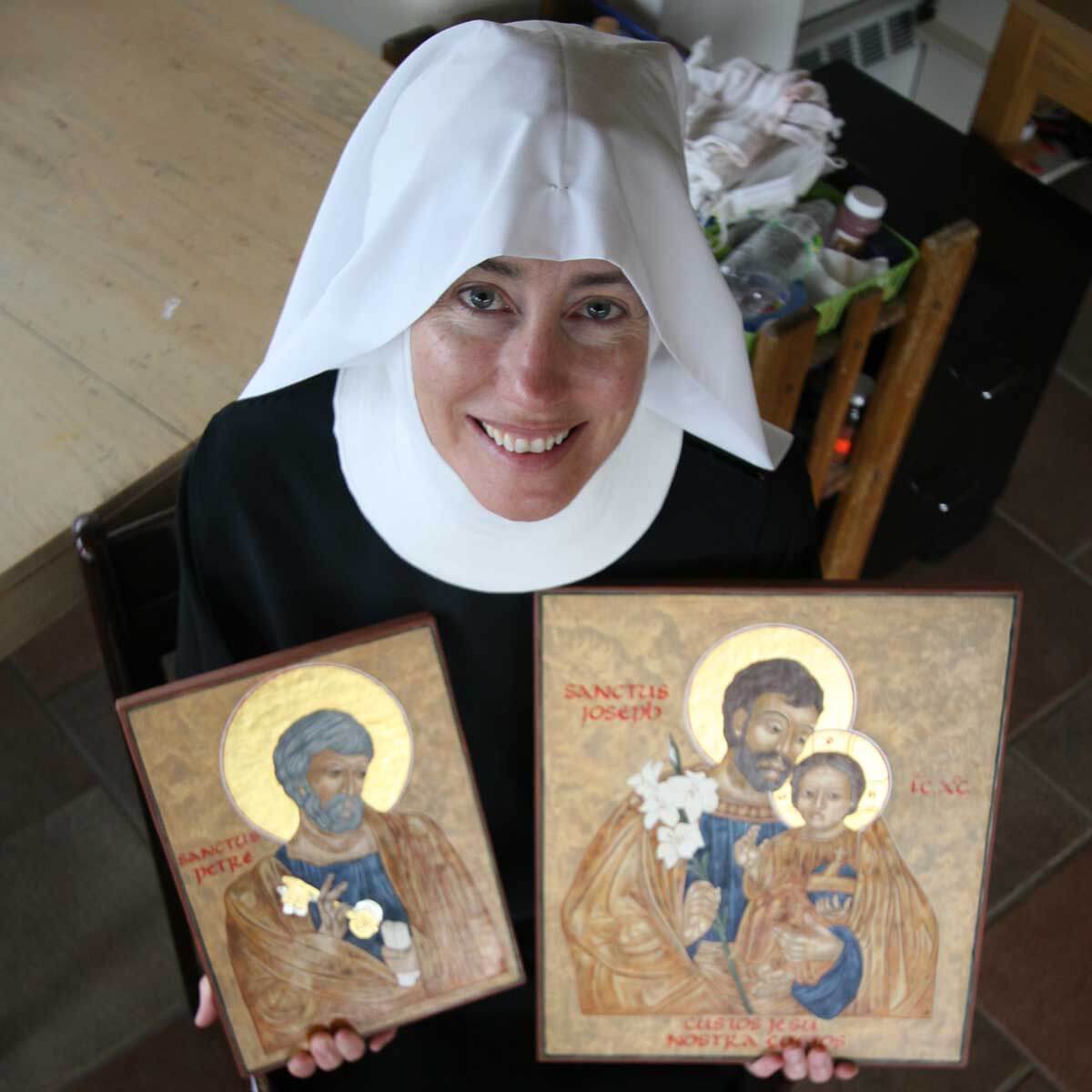
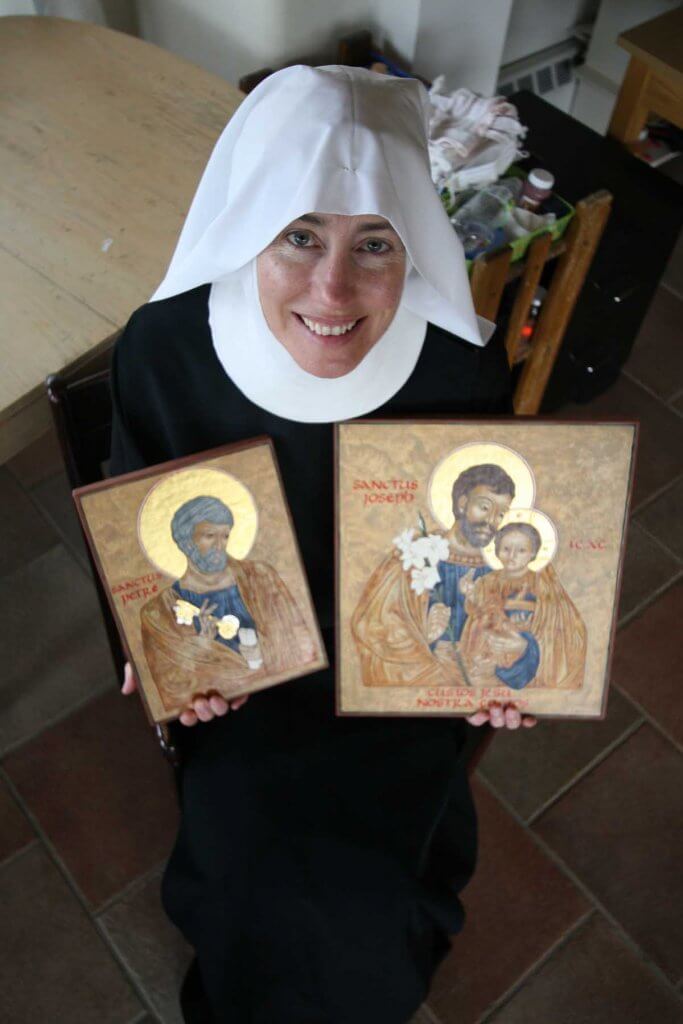
On the memorial of Our Lady of Fatima, May 13, Sister Kathryn was clothed with the Benedictine habit. She is a native Coloradan, and one of her hobbies is writing icons.
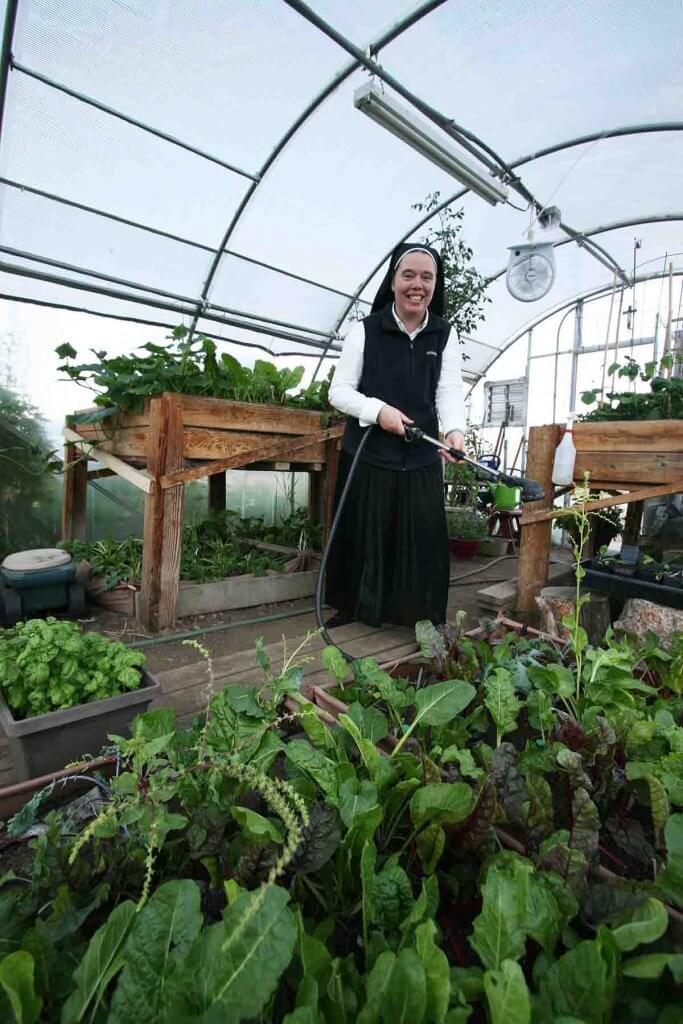
Postulant Mary waters the plants in the greenhouse. We are grateful to have another green thumb in the community!
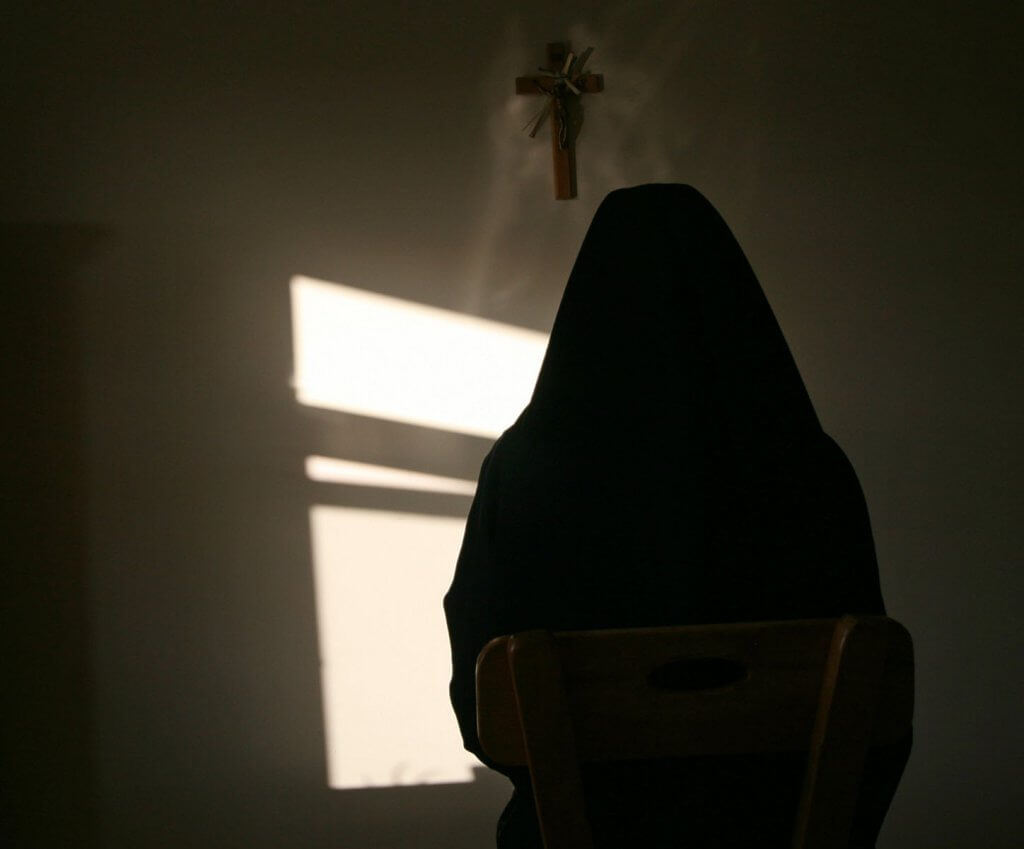
Sister Assunta prays in her cell as the sun reflects a unique pattern onto the crucifix
A reflection on John 17:20-24 by Mother Maria-Michael Newe, OSB
We learn in the Gospel of John what is dearest to the heart of Christ: “I pray not only for them, but also for those who will believe in me through their word, so that they may all be one, as you, Father, are in me and I in you, that they also may be in us, that the world may believe that you sent me. And I have given them the glory you gave me, so that they may be one, as we are one, I in them and you in me, that they may be brought to perfection as one, that the world may know that you sent me, and that you loved them even as you loved me” (John 17:20-23). That unity is so important, and it is only possible through Christ’s prayer in us. A question you can ask yourself (and I ask this too for myself) is, “What is the prayer Christ desires to pray through me?” Because it will take Christ praying in us to accomplish His work of unity; we cannot do it of ourselves.
People who are persons of unity are Christ among us. Are you living as Christ among us? Are you someone who helps to bring unity? Whatever we do that breaks unity is a serious matter. We all need to be aware of the things that cause disunity, even the little things. And we can look at the things we need to work on with great hope, because we know that Christ enjoys projects. I think He is a project person, and finds great joy when He has things to do. So do not fear knowing the things you need to work on. Let Him help you. Listen for that prayer He is praying in you.
One thing to keep in mind that Christ is praying in you is that you are His gift to the Father. “Father, they are your gift to me. I wish that where I am they also may be with me, that they may see my glory that you gave me, because you loved me before the foundation of the world” (John 17:24). That’s you and me: The Father’s gift to the Son, and the gift of Jesus to the Father. You’re a delightful present that’s being passed back and forth between them at all times. It would be a lie to say that you are not a gift. Try to live knowing and believing in that! There is no one who is not a gift from the Father to the Son and from the Son to the Father. That reality should give us so much confidence to want to be with Him always, because He wants us to be with Him always.
A reflection on the example of Jesus’ prayer by Mother Maria-Michael Newe, OSB
I love the story about Jesus and his disciples on the stormy sea. It tells us so much about relationships. We hear that “they had not understood the incident of the loaves. On the contrary, their hearts were hardened” (Mark 6:52), and after that Jesus makes them get in the boat. He doesn’t ask them, he just tells them – maybe because He needed that time to be alone, to work through His human emotions. He was a human man, so He was probably disappointed and hurt at their hardness of heart. Who knows what all was going on with their hardened hearts, but it’s reasonable to imagine that Jesus was hurt because of it. Jesus went up the mountain to pray, and what did prayer do? I think it helped Him overcome those human emotions, and once again go to the need of His disciples. He didn’t pass by when He heard their cries…He answered them, and He got into the boat with them (Mark 6:51).
Sometimes we have to realize that it is only with prayer can we get through it all, especially in relationships. Naturally we will be disappointed, naturally we will be hurt, and naturally there will be times when we’re left wondering, “How did that happen? How was I so misunderstood?” And then you go and pray about it. God will help you overcome those human emotions and rise above them, so that you can still act in a Godly way. It’s such a temptation to run off quickly and tell somebody about our unjust situation. Instead, try to stop and pray first. You may still end up telling somebody about it, but after some time in prayer it won’t be quite so harsh.
Prayer is always the best way to start, because Jesus will show you how to overcome the temptation to anger. Jesus had a just anger in this situation, but that’s not where the story ended. It’s so important to look at the ending. He got in the boat with them and calmed the sea. You can go to Jesus – He’s been through it all. He truly understands, and shows us His compassionate heart. Never, never stop praying.